
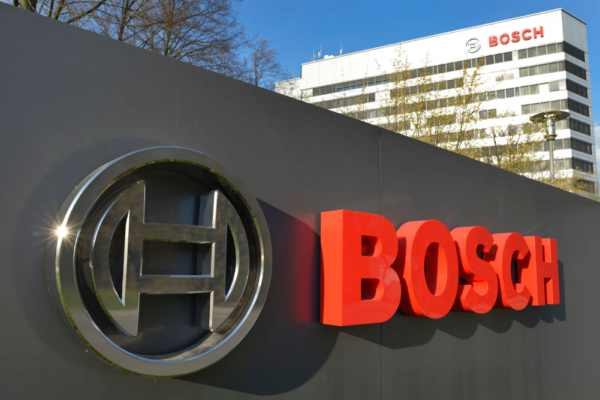
Germany’s Robert Bosch Company, also known as Bosch, announced on Friday that they plan to cut up to 5,550 jobs. Bosch is the world’s largest automotive parts supplier, and this latest decision to downsize is a sign of the challenges facing the German automotive industry. The industry is grappling with competition from cheap Chinese products and weak demand.
This staff reduction on Friday makes Bosch the latest automotive parts supplier to cut jobs in the troubled automotive industry. Their counterparts Michelin and Schaeffler had earlier announced plans to close factories in Europe and lay off thousands of workers.
According to Reuters, Bosch stated that due to weak demand for intelligent driving assistance systems and automotive solutions, the company plans to cut 3,500 jobs in their cross-domain computer solutions department by the end of 2027, with half of the cuts taking place at German factories.
Bosch also plans to cut around 750 jobs at their Hildesheim factory in Germany by 2032, with 600 of the job cuts expected to be completed by the end of 2026.
In addition, Bosch announced position reductions at their plant in Schwaebisch Gmuend near Stuttgart. Bosch plans to eliminate up to 1,300 positions at the factory between 2027 and 2030.
The Bosch Board of Supervisors and the IG Metall union released statements opposing the job cuts.
Frank Sell, Vice Chairman of the Bosch Board of Supervisors, said: “We will organize at all levels to resist these plans.”
The slowdown in the growth of the German automotive industry has also affected automakers such as Volkswagen and Mercedes. Volkswagen plans to close three factories in Germany and cut employee wages by at least 10%, a move that has been met with union resistance. Mercedes has also vowed to implement stricter cost-cutting measures due to a sharp drop in profits.
On November 20th, Ford Motor Company announced the cutting of 4,000 jobs in Europe. Soft demand for electric vehicles, government lack of support for car manufacturers transitioning to electric vehicle production, and increasing competition have led the company to incur losses in recent years.