
The black humor political satire drama “The Endgame of Winnie” has been fermenting since its premiere, accumulating millions of views from a clean world to date. This short drama, updated every Friday and running about 20 minutes per episode, is set in the fictional country of “Luoqi,” boldly satirizing the power struggles of China’s political elite, sparking lively discussions within the global Chinese community.
Directed and written by strict standards, the drama has received praise for its production quality. Some viewers commented on the excellent directing skills of the director, while others praised it as a rare masterpiece in the Chinese film and television industry.
The opening and ending songs adopt a classical music style, with lyrics such as “drumbeat heavy, gong rolls, a throne shaking on the brink,” directly targeting the core of power and receiving much acclaim. Some even suggested the production team release a full song version.
The character settings in the drama have sparked extensive discussions among viewers. According to audience analysis, the protagonist “Winnie” clearly alludes to current leader Xi Jinping, “Lady Li” corresponds to Peng Liyuan, and “General Zhang” is thought to reference Vice Chairman of the Central Military Commission Zhang Youxia. Additionally, “Li Qi” is interpreted as a combination of Li Qiang and Cai Qi.
Many viewers believe that the demeanor and background descriptions of certain characters in the drama, familiar with Chinese politics, provide satisfying experiences, leading to widespread discussions reflecting real-life power struggles.
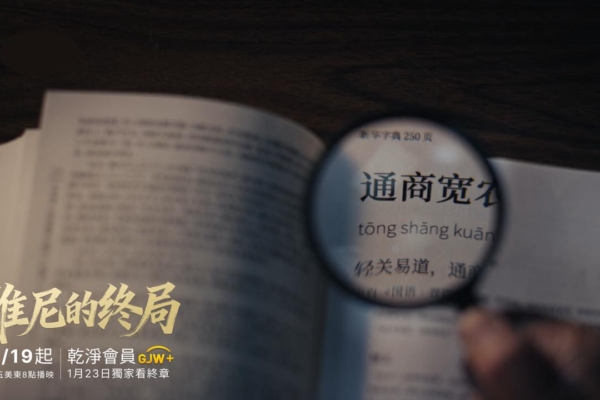
In addition to the classic wordplay of “trade wide clothes,” the drama is densely populated with a plethora of internet memes, making it a comprehensive collection of “Winnie memes culture.”
Folk nicknames such as “carrying 200 catties of wheat for ten miles without changing shoulders,” “Xi Baozi,” and “Qingfeng Emperor” are cleverly presented in the drama. Especially noteworthy is the satire term “serving the mines” adapted from “serving the people,” precisely mocking the communist regime’s governance concept of viewing the people as resources.
The plot involving organ transplants prolonging life has drawn attention. The drama repeatedly shows leaders maintaining health by organ replacement, with lines like “I want to live until 150,” directly echoing rumors that Xi Jinping expressed a desire to live to 150 to Putin. Some viewers commented, “Some high school students can only live to 15 because some old officials want to live to 150.” The drama also features chilling lines like “young people are more valuable than weapons,” reflecting a super-absurd reality.
The changing policy of “hiding one’s capabilities and biding one’s time,” the economic predicament of negative GDP growth, and other real issues are also tackled in the drama. Viewers have discovered that strict internet jargon within the firewall, from “trade wide clothes” to “200 catties,” and from “Xi Baozi” to “Qingfeng Emperor,” are systematically presented in the drama as art.
Furthermore, more sensitive topics such as the virus origin tracing issue are subtly incorporated into the storyline. Reviews have mentioned, “This drama has touched upon all the taboo topics of the past decade, a walking treasury of forbidden words.”
Wordplay nicknames like “leek being chopped in half,” “I didn’t say bear,” and “Gold Three Tons” run throughout the dark humor drama. Lines like “the rocket army was exposed, now relying on the fire head army for support” allude to real-life instances where corruption in the rocket army leadership was investigated, leaving audiences in awe.
This creative technique of “memes within memes, interlocking memes” earns laughs from audience members familiar with Chinese current affairs and piques the curiosity of those unfamiliar with the background. Some viewers have expressed, “Every time you watch, you can discover new memes, the production team truly puts in effort.”
The drama has not only sparked discussions among ordinary viewers but has also been recommended by several well-known overseas Chinese critics. Influential bloggers such as Jiang Feng, Li Muyang, Fuyao, Weiyu, Beiyi, Yingba, and Li Wencheng have all reviewed the series.
Renowned critic Yingba highlighted the deep intentions of the creative team: hoping that through international pressure and the drama itself, more real information can reach decision-makers, “informing him that he is not as powerful as those around him claim,” thus reducing harm to the people.
Historical writer Li Wencheng highly praised the drama from an artistic perspective, stating that it “light-heartedly delves into various ideologies, finding elements of joy regardless of the ideology.” He analyzed, “Dictators may appear arrogant, but in reality, they may be weak. If their power were truly robust, they would appear longer or engage with the public more frequently.” This review unveils the drama’s profound satirical implications.
The production team recently released a statement thanking viewers for their attention and support towards “The Endgame of Winnie” and officially announced, “Since its debut, the drama has been continuously fermenting on various streaming platforms, exceeding expectations in terms of viewership and discussion. We have also received a great number of sincere, sharp, and thought-provoking feedback from the audience. This support and discussion are the biggest encouragement to the entire creative team.”
Given the enthusiastic response from viewers, the production team has decided to commence preparations and creative work on the second season of “The Endgame of Winnie.” Simultaneously, it was announced that the final episode of the first season (the sixth episode) will air as exclusive content for “clean members.”
Some reviews state that “this is the best movie of 2026,” while others mimic lines from the series in comments like “search personally, watch personally, like personally, collect personally.” Some viewers believe that “such high-quality content is worth supporting financially and look forward to a larger production scale in the second season.”
Many are hopeful that the production team will secure investments to create a 40-episode series or edit it into a movie for the Oscars, demonstrating a high level of approval for the quality of the series.
During the airing of the series, coinciding with international events like the arrest of Venezuelan President Maduro and massive protests erupting in Iran, many viewers have drawn parallels between the storyline and reality. Reviews mention, “President Xi did mention a once-in-a-century upheaval, and indeed, less than two weeks into 2026, look at Venezuela and Iran; the Grand Accelerator truly foretold the future.”
The drama integrates real protest footage, including historical segments such as the Fourth Traffic Bridge incident, the Blank Paper Movement, and the Urumqi Road protests, evoking emotional responses and tears from many viewers. Comments suggest, “If this drama were to air on CCTV, it would undoubtedly top the ratings chart.”
Several viewers believe that the series will “go down in history,” with some saying, “I’ll wait for the day it cyclically plays at Tiananmen Square,” while others anticipate the day when “the entire nation can freely watch this movie.”
One viewer commented, “Watching this film is my honor; whether it’s the subject matter or the technical aspects, the intricacy of this work surpasses everything.” Others lamented, “Winnie is not dead yet, but the script is ready, just waiting for karma in this world,” expressing hope for changes in reality.
As the first season nears its conclusion, “How will this game end?” The answer will be revealed on January 3: the final episode of the first season will bring the most crucial power showdown and resolution, with the official confirmation of preparations for the second season.
For those eager to witness the true “endgame,” the resolution of lingering clues, and who will turn the tables, please tune in on January 23 at 8 p.m. EST for the exclusive final episode of the first season of “The Endgame of Winnie.”