
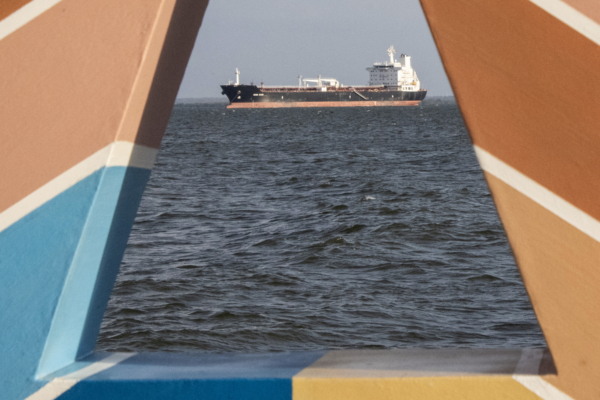
Bloomberg reported on Tuesday (January 20) that the last batch of oil tankers carrying sanctioned Venezuelan crude oil to Asia is expected to arrive in the coming days, marking the end of an era for Beijing’s access to inexpensive Venezuelan oil sources.
These heavy, high-sulfur crude oil shipments from Venezuela were supplied to China during the presidency of the ousted President Nicolas Maduro.
The cheap oil from Venezuela has been a key support for China’s refining industry. Due to sanctions, Venezuela’s export options have been limited and prices have been suppressed, allowing Chinese buyers to potentially gain more profits and cope with the short-term impact of rising international oil prices.
Most of these tankers were loaded and set sail before the United States officially blocked Venezuelan waters in December 2025. They are likely to join the fleet idling in the waters near Malaysia and China.
According to data from analysis companies Kpler and Vortexa, the “Tamia” and “Loyalty” loaded in November and December could be the last batch of oil tankers to arrive in Asia. These two tankers collectively carry about 3.8 million barrels of crude oil, currently sailing around the Cape of Good Hope towards Asia, and are expected to arrive next month.
Kpler estimates that approximately 24 million barrels of Venezuelan crude oil are stored in floating storage facilities around the world, with about half located in Asia.
Since the arrest of Maduro by the United States in early January, the US has been trying to control Venezuela’s oil trade and restore its crude oil shipments to US refineries. Meanwhile, two major international commodity trading giants—Vitol Group and Trafigura Group—play an important role in this new chain as they have obtained special licenses from the US government, allowing them to legally participate in the import and export, logistics, marketing, and trading of Venezuelan oil.
Vitol Group, headquartered in Geneva, Switzerland, is one of the world’s largest independent oil traders. Trafigura Group, headquartered in Singapore (previously in Switzerland), is also a top global commodity trading company, specializing in the buying, selling, transportation, and financing of commodities such as oil and metals.
For Chinese buyers, especially private oil refineries that have long benefited from cheap raw materials, the halt of Venezuelan crude oil supply is bad news. This week, Vitol Group offered Merey crude oil to China at a discount of about $5 per barrel compared to Brent crude, much lower than the discount of up to $15 per barrel before the US intervened in Venezuela.
Traders say the amount of Venezuelan crude oil already sailing at sea and heading to China can meet China’s domestic demand for one to two months. Some ships have already sold their cargo and are waiting to unload, while others are carrying unsold goods.
Once these oil supplies are depleted, China will have to purchase Venezuelan crude oil at international prices or use more expensive alternatives such as Canadian or Iranian oil. China is the world’s largest importer of crude oil.