
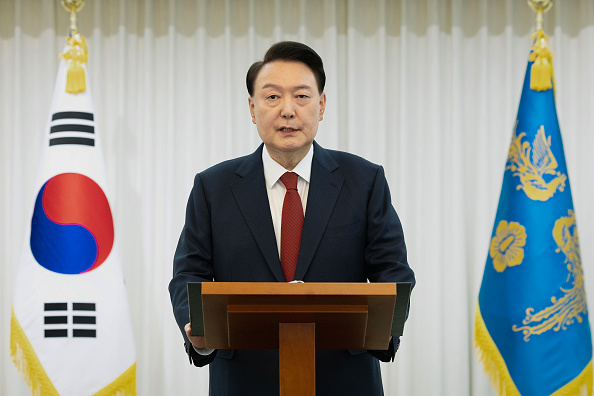
On Wednesday, December 25th, the suspended South Korean President Yoon Suk-yeol did not respond to the second summons from the country’s anti-corruption agency. The agency, along with prosecutors, is investigating the temporary martial law order he issued earlier this month.
According to reports from the Korean news agency, Yoon Suk-yeol did not comply with the request to appear for questioning by the Anti-Corruption Investigation Office for high-ranking officials (CIO). As of 6 PM local time on Christmas Day, investigators had not received a response from Yoon Suk-yeol nor the appointment of his legal advisor. Yoon Suk-yeol had already ignored the first summons last week.
An official from the CIO stated that further review of the case is needed before applying for an arrest warrant, and the team will conduct a review to determine the next course of action.
The report from the news agency mentioned that the investigative team may issue a third summons to Yoon Suk-yeol or request a detention warrant for him, with a decision possibly being made as early as the 26th.
Yoon Suk-yeol’s lawyer and long-time friend, Seok Dong-hyeon, told reporters on Tuesday that it is unlikely for Yoon Suk-yeol to attend the questioning on Wednesday, adding that the conditions are not met yet. He suggested that dealing with the impeachment trial at the Constitutional Court should take precedence over the investigation but did not provide further details.
Yoon Suk-yeol’s repeated disregard for the summons and failure to attend questioning have sparked criticism, with the opposition calling for his arrest out of concern that he might tamper with evidence.
In a televised address on December 7th, just four days after the martial law order was issued, Yoon Suk-yeol stated that he would not evade legal and political responsibility for his actions.
Yoon Suk-yeol was impeached by the National Assembly on December 14th for the brief implementation of martial law and now faces a trial at the Constitutional Court to determine whether he will be removed from office or have his presidential powers reinstated.
Prosecutors, police, and the anti-corruption investigation office in South Korea have initiated investigations on Yoon Suk-yeol and other officials, seeking charges of insurrection, abuse of power, or other offenses against them.
Insurrection is one of the few charges for which a South Korean president does not have immunity.
Seok Dong-hyeon mentioned that Yoon Suk-yeol is willing to personally express his views in the legal proceedings related to the martial law order.
(This article references reports from Reuters and the Korean news agency.)