
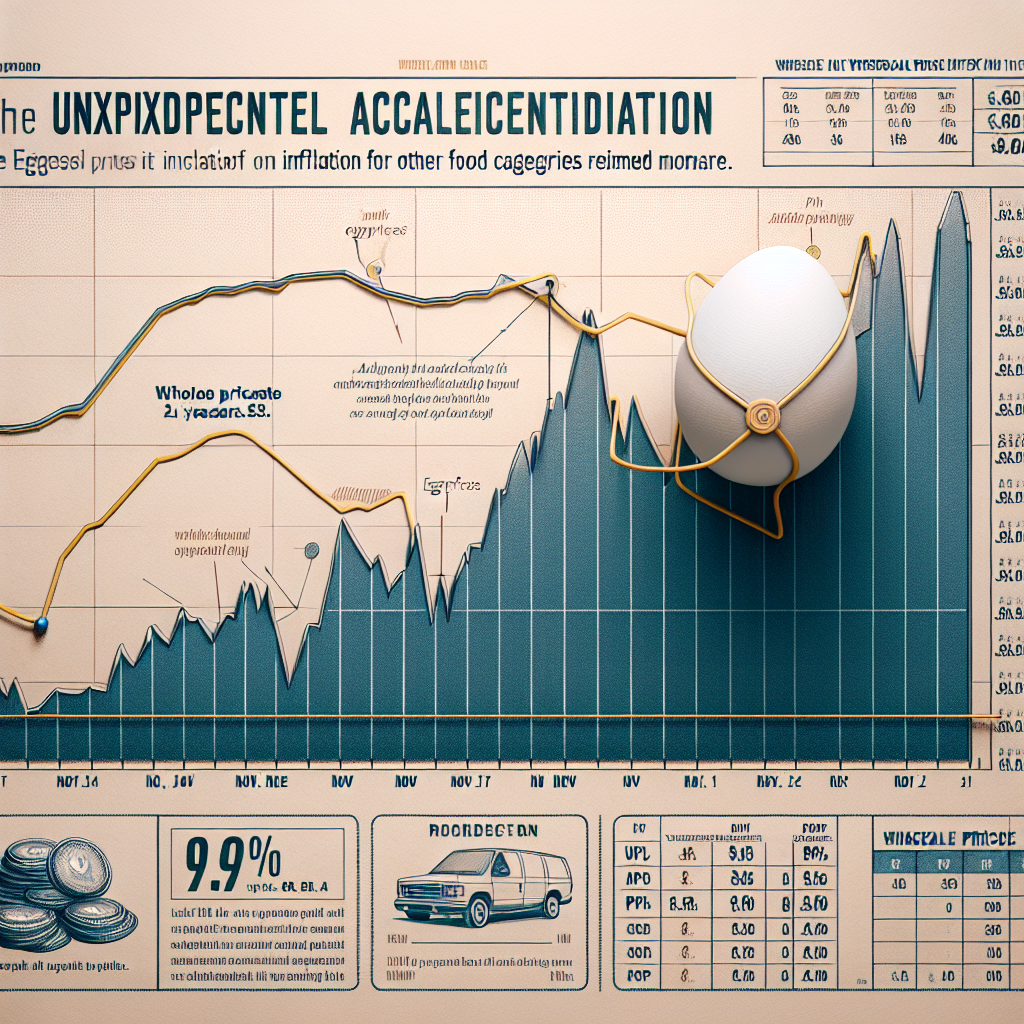
Due to the soaring prices of eggs, the wholesale price index (PPI) for eggs in the United States unexpectedly accelerated in November, while the inflation in other categories remained moderate. Egg suppliers predict that egg prices may soon reach historical highs.
Two years ago, egg prices in the United States hit a historical high, and now Americans are once again facing a situation of soaring egg prices, with the potential for reaching new historical highs.
According to a report released by the U.S. Bureau of Labor Statistics on Thursday, the PPI rose by 0.4% month-on-month, marking the largest increase since June. Detailed data shows that several key service price categories have remained unchanged or even decreased, alleviating some concerns about the recent overall inflation index showing strength.
However, the PPI data also indicates that commodity prices rose by 0.7%, the largest increase since February. The Bureau of Labor Statistics stated that over 80% of this increase comes from food items, with egg prices rising by 55% month-on-month.
According to the Consumer Price Index (CPI) data released on Wednesday, the average retail price of eggs in the United States has risen by 38% since November 2023. Prices have surged by 8% in just the past month.
Based on data from the U.S. Bureau of Labor Statistics, in November, a dozen Grade A large eggs were priced at $3.65, higher than $2.14 during the same period last year.
Brian Moscogiuri, Vice President of Eggs Unlimited, told CNBC: “It is highly likely that we are approaching record-high egg prices.”
Amid persistently high inflation during the pandemic, egg prices have stood out, with the annual inflation rate for the 2022 calendar year reaching 60%. The surge in egg prices has attracted attention, with pop star Taylor Swift mentioning at the 2023 Grammy Awards that her fans would “chip in” to help lower egg prices.
Economists and market analysts attribute the rise in egg prices to two main factors: reduced egg supply due to avian flu and strong consumer demand typical during the winter holidays.
According to data from the Centers for Disease Control and Prevention (CDC), around 33 million commercial egg-laying chickens have died from avian flu in 2024. Ryan Hojnowski, a egg analyst at the agricultural market research firm Expana, stated to CNBC that avian flu has “led to egg supply shortages”.
Since October 15, 2024, approximately half of the commercial egg-laying chickens have died, about 15 million chickens. According to Expana, wholesale egg prices have risen by 97% since mid-October.
In the midst of egg supply shortages, consumer demand is soaring during the year-end holiday season.
“The fourth quarter is typically when egg demand peaks as consumers often bake goods around Thanksgiving and Christmas,” Moscogiuri said.
“When we strip away this holiday effect, I believe we will see the prices soften,” Andrew Novakovic, professor of agricultural economics at the SC Johnson College of Business at Cornell University, said.