
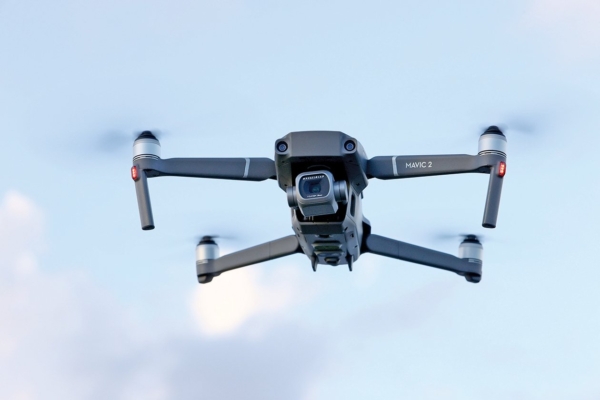
Since May 1st, after the Chinese government implemented new regulations on drone supervision, drone enthusiasts in various regions have reported that regulatory authorities have not only strengthened real-time control but also traced past flight records, leading to multiple individuals being penalized for flying drones illegally.
Starting from May 1st, China officially implemented two mandatory national standards for drones: “Requirements for the Real-Name Registration and Activation of Civil Unmanned Aerial Vehicles” and “Specifications for the Operation Identification of Civil Unmanned Aerial Vehicle Systems.”
The “Requirements for the Real-Name Registration and Activation of Civil Unmanned Aerial Vehicles” stipulates that all civil drones must complete real-name registration and activation before their first use. This requirement aims to establish a full-process traceable management system, and drones that are not registered or activated will not be able to fly normally.
The “Specifications for the Operation Identification of Civil Unmanned Aerial Vehicle Systems” requires drones to continuously send identification information during flight to establish a traceable regulatory mechanism. Failure to comply with identification, registration, or flight declaration requirements may result in being identified as “black flight” and penalized.
According to reports from mainland media, after the new regulations were implemented, penalty cases have emerged in many parts of China. For instance, during a celebrity concert at the Shenyang Olympic Center on May 2nd, a man flew a drone illegally close to the venue while recording a video for social media. The man was promptly apprehended by the Shenyang police and received a 10-day administrative detention.
Drone enthusiasts in Zhejiang, Guizhou, and other regions also reported facing investigations or travel restrictions during the May Day holiday.
A resident of Hangzhou, Zhejiang, mentioned that he flew his drone near West Lake for about 6 minutes in March, staying within the 120-meter altitude limit. However, after the new regulations took effect, his past flight records were traced by the system. On May 1st, the police visited his home for investigation, prompting him to explain the situation at the local police station.
A netizen named Xiaobing from Guizhou encountered travel disruptions on May 5th while traveling from Liupanshui to Guiyang. Due to tight ticket availability, he mistakenly purchased a standing-room-only train ticket bound for Beijing, leading to him being prohibited from boarding the train for carrying a drone during security checks. He expressed frustration, stating, “They said carrying drones on trains to Beijing is forbidden, even if I’m only going to Guiyang.”
Before the implementation of the aforementioned drone regulations, signals of tightened control had already appeared in various parts of China.
On social media, a user shared a post in January where a drone operator in Nanjing, Jiangsu Province, was immediately tracked by the police after launching his drone, causing him to discard the device in a trash bin.
In early April, a mainland netizen warned in a video that drones must transmit flight data every second, accepting full-process dynamic monitoring under the new regulations. He emphasized that drones would become useless in three years, not as an exaggeration but as an inevitable outcome under the new national rules.
In recent years, drones have rapidly gained popularity in aerial photography, logistics, agriculture, surveying, and mapping sectors, yet the issue of illegal drone flights has continued to rise. Some drones have interfered with civil aviation flights, intruded into airport restricted areas, or posed security threats in major events and military-sensitive areas, prompting regulatory authorities to emphasize “low-altitude safety governance.”
In March this year, the Beijing authorities formally implemented the “Beijing Municipal Regulations on the Management of Unmanned Aerial Vehicles” on May 1st.
According to the regulations, the entire administrative area of Beijing is designated as a controlled airspace for drones, requiring all outdoor flight activities to submit applications without any exceptions.
Additionally, the new regulations explicitly prohibit the sale or rental of drones and 17 designated “core components” to individuals or entities within Beijing. It is forbidden to bring drones or core components into the administrative area of Beijing through railway, aviation, road freight, express delivery, or private vehicles. The 17 “core components” cover four categories: airframe structure, flight control system, communication system, and power system.
Professor Sun Guoxiang from the Department of International Affairs and Business at Nanhua University in Taiwan previously stated in an interview with Epoch Times that Beijing was essentially upgrading drones from technological toys to politically sensitive items. This once again demonstrates that under the governance system of the Chinese Communist Party, “any new technology that may affect security and stability may eventually be included in the ‘regulate first, adjust later’ institutional framework.”