
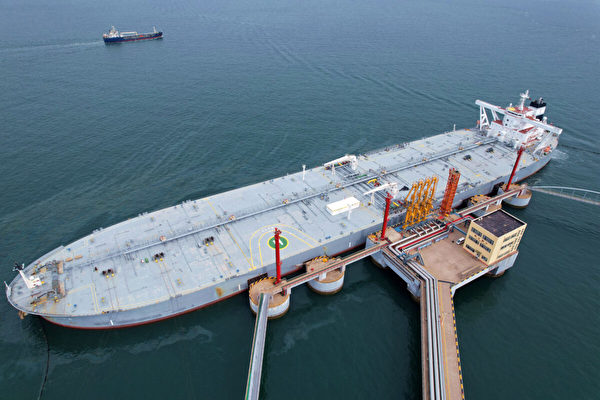
As the energy pressure triggered by the Iran war sweeps across Asia, countries are anxiously looking towards Beijing, demanding that the Chinese authorities fulfill their promises to strengthen energy security cooperation and lift current export restrictions on fertilizers and fuel.
However, so far, China’s attitude remains ambiguous and has not publicly acknowledged the export restrictions widely reported by Western media. Analysts believe that this crisis has fully exposed the “selfish” nature of the Chinese Communist Party.
Under the narrative of the Belt and Road Initiative, China has repeatedly claimed that its relationships with other countries are based on “win-win” cooperation. However, when supply chains face disruptions, the vulnerability of these partnerships becomes glaringly apparent.
China is the second largest exporter of fertilizers globally and a key supplier of fuel. For countries in the Asia-Pacific region, China is an important source of supplies, but these supplies have been disrupted due to China’s export bans.
According to reports from Reuters, BBC, and Foreign Policy magazine, after the outbreak of the Iran war, China strictly restricted the export of fertilizers and fuel, leading neighboring countries that have long relied on Chinese supply chains into crisis.
Bangladesh has reportedly demanded China to fulfill existing fuel contracts this month; Malaysian officials have warned that China’s fertilizer embargo is severely impacting its vital palm oil industry, with fertilizer prices in some areas rising by 100% to 150% within two weeks, leading some producers to halt new orders; Thai officials have also stated that they will send diplomats to negotiate with China to maintain fertilizer supplies from China.
Even the Philippines, which has disagreements with Beijing on the South China Sea issue, has had to seek assistance from China due to pressure on its domestic agriculture.
The Philippine Minister of Agriculture personally visited the Chinese Embassy in Manila on March 17 and subsequently stated that China had agreed to continue supplying fertilizers. However, Beijing only mentioned after the meeting that both sides discussed agricultural issues without making a clear commitment.
Australia, where one-third of aviation fuel relies on imports from China, is also in discussions with Beijing regarding exports.
Eric Olander, co-founder of The China-Global South Project, an organization focusing on China’s influence in the global South, told Reuters, saying, “China may offer some symbolic assistance, but the likelihood of it sharing any substantive food, energy, or other resource reserves with other countries is extremely small, even close to impossible.”
Max J. Zenglein, an economist at the Conference Board of Asia, also stated, “China may provide substantive support only when it is certain that its risks are fully under control.”
Zenglein further added, “I expect any form of assistance to come with a high degree of ‘transactionality’. Unfortunately, for those countries, this is clearly not an optimistic situation.”
Ruby Osman, a senior policy advisor at the Tony Blair Institute for Global Change, noted that Beijing is likely to impose broad and strong restrictions on energy and related exports first and then selectively resume trade once officials are confident that domestic needs are met.
Some analysts suggest that if this shock accelerates trade partners’ investments in green energy, Beijing could benefit. Being subsidized for many years, China is in a leading position in these areas.
Commentator Yue Shan told The Epoch Times, “The energy crisis sparked by the US-Iran war has exposed the unreliability of the Chinese Communist Party. Countries that have long relied on Chinese supply chains are now experiencing what it feels like to be abandoned.”
He analyzed that China’s economic commitments often come with high political purposes; in critical moments, China tends to prioritize preserving its own interests.
“In fact, China tends to give economic commitments only when it needs political favors. When it comes to critical moments, even if it has the ability, it is not willing to help allies in need, which is actually rooted in the selfish nature of the Chinese Communist Party,” Yue Shan added, “In the country, it only cares about the interests of the elite and ignores the ordinary people.”
However, this self-preserving strategy is causing side effects. As countries in Southeast Asia find themselves without help, many have started turning to countries like Russia to seek alternative sources of supplies.
Yue Shan believes that while China may be patting itself on the back for being prepared, this behavior of ignoring the suffering of its “neighbors” is causing it to lose the international trust it has been trying to build for a long time.