
As tensions escalate between the Philippines and Beijing in the South China Sea, Manila is expanding its defense cooperation with allies. On Thursday (26th), the Philippines signed a milestone military agreement with France, allowing their troops to conduct joint operations on each other’s territories.
According to Reuters, on March 26, Philippine Defense Minister Gilberto Teodoro and French Minister of Defense and Veterans Affairs Catherine Vautrin signed the Visiting Forces Agreement (VFA) in Paris, permitting their troops to visit each other’s territories and engage in joint operations.
During the meeting, both sides discussed the security challenges facing the Indo-Pacific region and reiterated their support for a rules-based international order. They also emphasized the importance of peacefully resolving disputes and enhancing supply chain resilience during times of crisis.
The Philippine Defense Department later stated in a release, “This agreement will greatly enhance bilateral cooperation and provide appropriate legal safeguards for joint operations between the armed forces of the Philippines and France.”
In addition to France, the Philippines has signed Visiting Forces Agreements with the United States, Australia, Japan, and New Zealand.
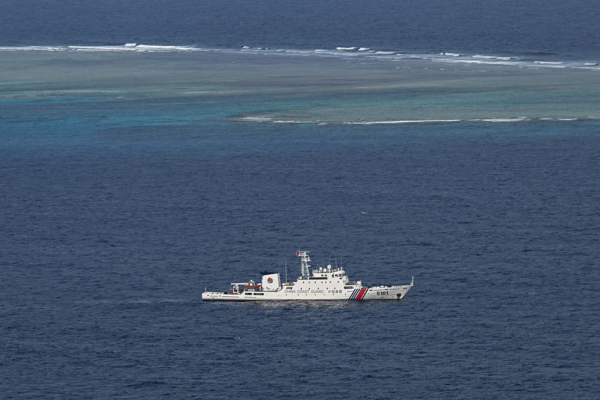
Just a day before signing the VFA with France, the Philippine military issued a statement alleging that in the vicinity of Thitu Island in the disputed South China Sea, a Chinese missile frigate engaged in “unsafe and unprofessional behavior” toward a Philippine navy vessel on a maritime mission.
The Chinese Communist Party claims sovereignty over almost the entirety of the South China Sea, overlapping with sovereignty claims by countries such as the Philippines, Vietnam, Malaysia, and Brunei in the region. As a critical global strategic waterway, the South China Sea carries over $3 trillion worth of trade annually.
On July 12, 2016, the Permanent Court of Arbitration in The Hague ruled on the territorial disputes between the Philippines and China in the South China Sea, declaring that China’s “nine-dash line” claim had no legal basis. However, China has consistently refused to accept the ruling.