
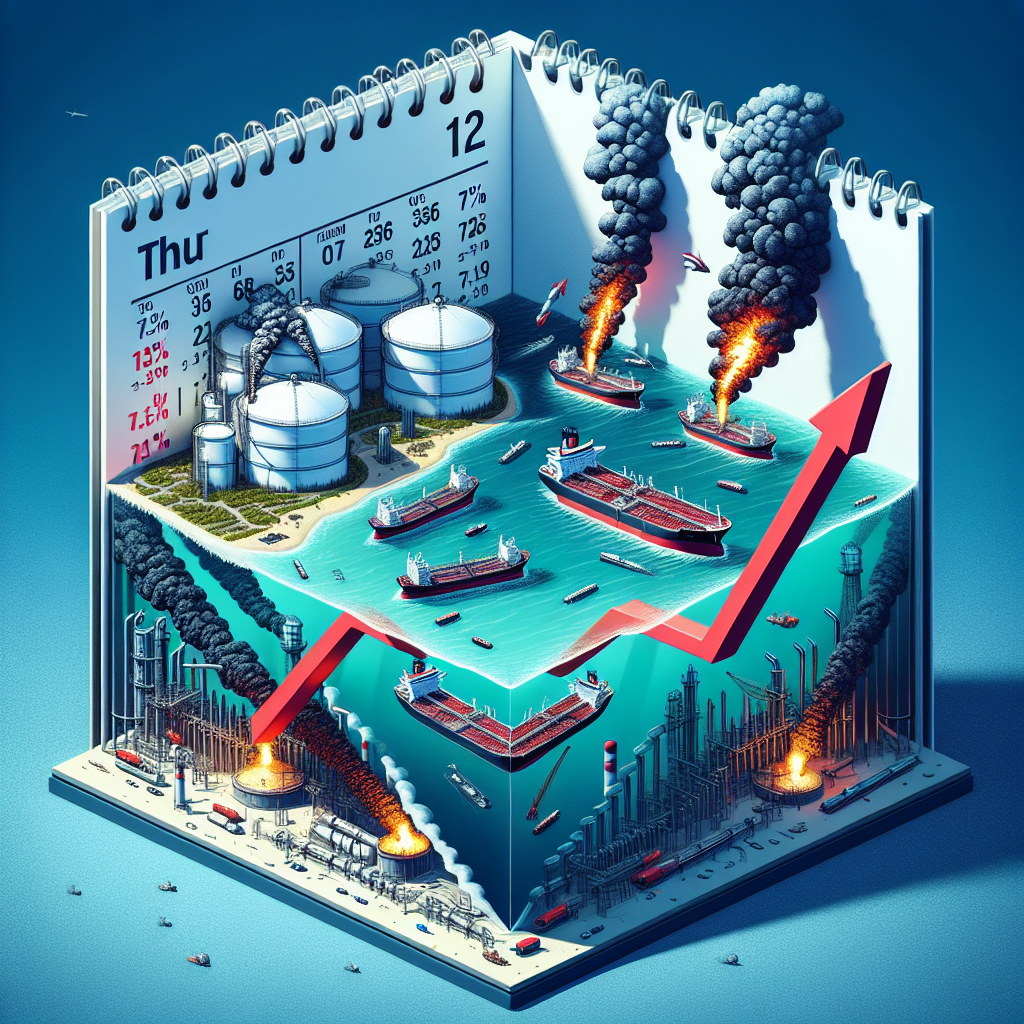
Despite the International Energy Agency (IEA) announcing the largest-ever release of oil reserves, international oil prices surged over 7% on Thursday, March 12, due to escalating conflicts in the Middle East.
The latest reports indicate that another oil tanker attack occurred in Iraqi waters, leading to a complete halt of operations at the country’s oil ports, with market fears of supply disruptions overshadowing governmental intervention efforts.
According to Iraqi security officials, two Iranian ships carrying explosives attacked oil tankers in the waters of Iraq on Thursday morning. An Iraqi official confirmed to the state media that the oil ports in the country had “completely ceased operations.”
IG analyst Tony Sycamore told Reuters, “Reports suggest that multiple oil tankers carrying Iraqi crude are currently on fire and burning off the coast of Basra, with intense fires and spilled oil leaking into the sea.”
He analyzed that this appears to be a direct and forceful response from Iran to the IEA’s announcement of releasing strategic oil reserves.
Amid the threat of supply shortages, West Texas Intermediate (WTI) crude oil rose by 7.5%, reaching $93.80 per barrel, while the global benchmark Brent crude surged 7.7% to $99.03, approaching the $100 mark.
The skyrocketing energy prices have impacted global financial markets. On Thursday, Asian stock markets generally declined, with the Nikkei 225 index falling by 1.6%, the Australian ASX 200 index dropping by 1.56%, the South Korean KOSPI index decreasing by 0.75%, and the Taiwan Weighted Index also falling by 1.1%.
Concerns in the market about energy-induced inflation potentially forcing central banks worldwide to maintain high interest rates led to a cooling of expectations for a Federal Reserve rate cut, resulting in a stronger US dollar, while the yen and euro continued to come under pressure.
In a bid to curb oil prices, the IEA’s 32 member countries agreed on Wednesday to release a total of 400 million barrels of crude oil, marking the largest coordinated action by the organization since its establishment in 1973.
Among them, US President Trump announced the utilization of the Strategic Petroleum Reserve (SPR). US Energy Secretary Chris Wright later confirmed that the US would start releasing 172 million barrels of crude oil from next week.
Trump stated in a speech on Wednesday that the war with Iran had been won, but he would continue to fight to complete subsequent missions.
Despite the staggering release scale, analysts believe it is still insufficient to offset the daily 20 million barrels supply gap caused by the closure of the Hormuz Strait.
MST Marquee energy analyst Saul Kavonic told CNBC, “The IEA’s decision reflects the severity of the oil scarcity risk, implying that the IEA does not believe the conflict will end soon.”
“The released inventory will need to be replenished in the future, indicating that even after the war ends, oil prices will remain at relatively high levels,” Kavonic cautioned.
Raymond James investment strategist Pavel Molchanov pointed out the key concerns in the market. He said, “Current prices are still in ‘panic mode,’ which includes a significant amount of personal emotions, fear, and uncertainty.”
“One of the key questions is how long it will take for these 400 million barrels of oil to actually be delivered to the market,” Molchanov revealed to CNBC, noting that the logistics from announcement to actual market entry of these strategic reserves could take 60 to 90 days, failing to meet the market’s expectations for immediate relief of supply pressures.