
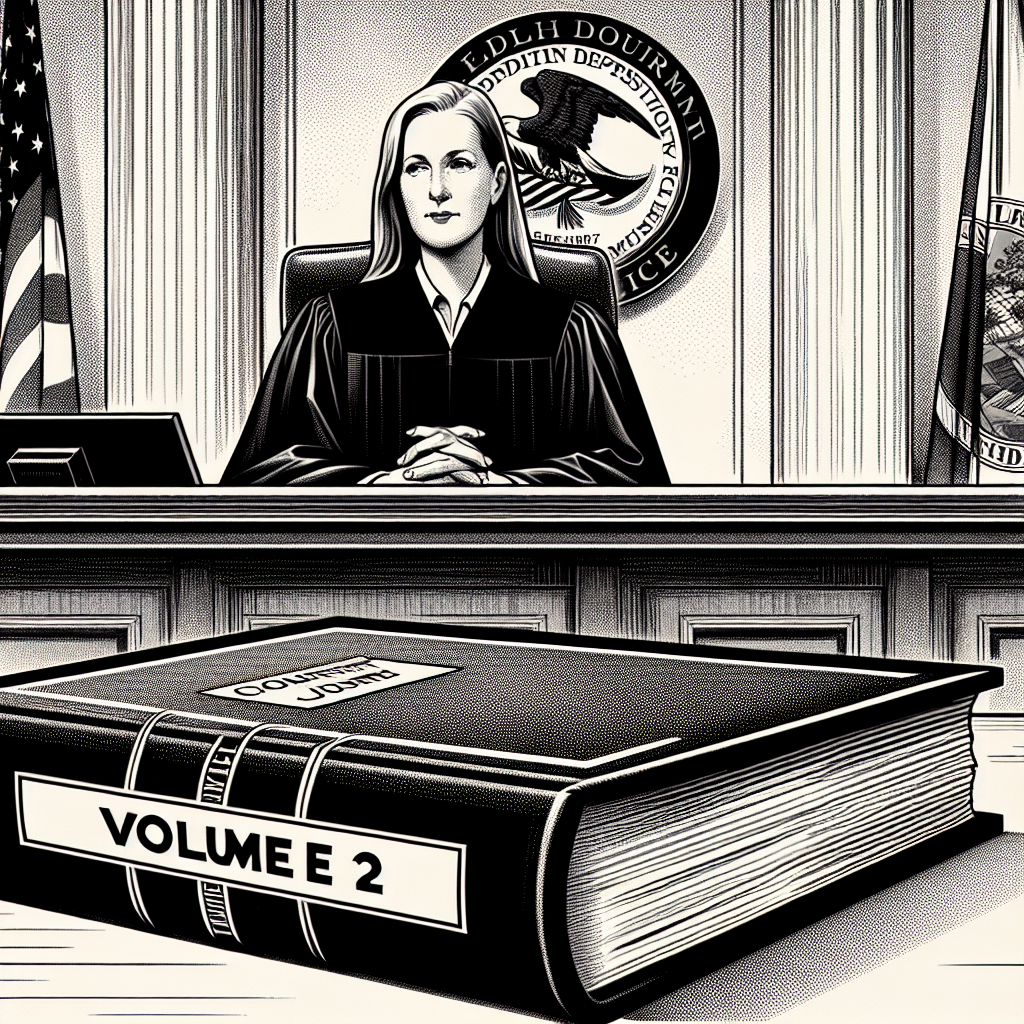
In a recent ruling on Monday, Judge Aileen Cannon of the Florida court permanently prohibited the Department of Justice from releasing the second volume final report of the investigation by former special prosecutor Jack Smith on President Trump. The report alleged that Trump stored confidential documents at his Mar-a-Lago estate in Florida.
Judge Cannon issued a 15-page decision on February 23, stating that “Smith, the special prosecutor, and his team have been continuing to prepare the ‘confidential document report’ for months, using evidence obtained in the case and consuming government funds.” Cannon believed that such actions violated a 2024 ruling.
Smith had conducted an investigation into Trump’s involvement in the 2020 election and alleged retention of confidential documents, resulting in two indictments against Trump. The cases led by Smith on Trump ended in dismissals.
On July 15, 2024, Judge Cannon ruled that Smith’s appointment violated the Appointments Clause of the Constitution, leading to the dismissal of Smith’s federal prosecution of Trump’s handling of confidential documents. The Department of Justice appealed the decision at that time but withdrew the appeal after Trump was re-elected as president.
In her ruling on Monday, Judge Cannon expressed that releasing the report at this time without it being presented to a jury would go against fundamental principles of fairness and justice, constituting “manifest unfairness.” Additionally, the report could potentially disclose information protected by attorney-client privilege and grand jury secrecy rules.
Judge Cannon also noted, “While past special prosecutors have indeed released final reports at the conclusion of their work, it appears to have been either after a decision not to prosecute, or after the defendant’s guilty plea or conviction. The court finds it difficult to find a precedent for releasing a report when criminal charges have been filed but no guilty verdict has been reached.”
Smith currently practices law as a private attorney. In November 2022, he was appointed as a special prosecutor by former Attorney General Merrick Garland. At that time, Trump had announced his intention to run for president again.
In the 2024 ruling, Judge Cannon stated that the Attorney General did not have the authority to appoint Smith as a special prosecutor with broad prosecutorial powers, a role that should have been confirmed by the Senate to be constitutional. Consequently, she revoked Smith’s legal authority to prosecute the case against Trump, leading to the dismissal of Smith’s federal prosecution of Trump’s handling of confidential documents.
In this recent judgment on Monday, Judge Cannon emphasized that “all parties” agreed that Smith’s report should not be made public – after Trump began his second term, the Department of Justice changed its position, stating that the report should not be released; Trump’s personal lawyer, along with his former co-defendant Carlos De Oliveira, the property manager of Mar-a-Lago, and Trump’s former aide Walt Nauta also opposed its disclosure.
Trump’s lawyer, Kendra Wharton, commented on the ruling, saying, “Judge Cannon’s courage and judicial resolve shown on these critical procedural issues should be commended and taught in law schools across the country.”
However, two legal organizations support the release of the report, namely American Oversight and Knight First Amendment Institute. These entities attempted to formally intervene in the dismissed criminal case, but Judge Cannon rejected their intervention applications. Relevant appeals are currently pending in the United States Court of Appeals for the Eleventh Circuit.
The first volume of Smith’s final report involved Trump’s efforts to overturn his defeat in the 2020 presidential election. Before his return to office, Trump had requested Judge Cannon to block the release of both volumes of the report, but at that time, Cannon believed she had no authority to intervene in matters stemming from election investigations. The Department of Justice had released the contents of the first volume in January 2025, just days before President Biden left office.