
Panama’s Supreme Court ruling that the concession rights of the Hutchison Group are unconstitutional has sparked international attention. Professor Xie Tian pointed out that this decision essentially marks the end of the strategic goal of the Chinese Communist Party (CCP) in operating the Panama Canal for many years.
The recent major ruling by Panama’s Supreme Court declared the concession rights for operating the Balboa and Cristobal ports by the “Panama Ports Company” (PPC) under the Hong Kong Hutchison Group unconstitutional.
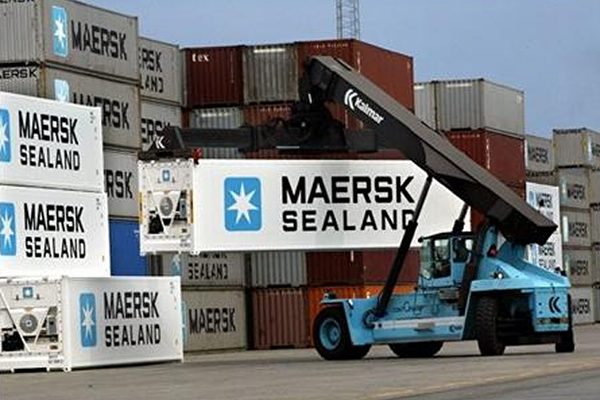
President of Panama, José Raúl Mulino, confirmed that during the transition period before the re-bidding process, APM Terminals, a subsidiary of the Danish shipping giant Maersk, will temporarily manage the ports and take over their operations.
This ruling has caused significant turbulence in global shipping and geopolitics. According to the Panama Maritime Authority (PMA), these two ports handled approximately 3.88 million twenty-foot equivalent units (TEU) in 2025, accounting for nearly 40% of the country’s total container flow, highlighting their vital importance.
To prevent logistics disruptions, the Panamanian government has initiated a technology transfer program. APM Terminals stated that “all operations entering the port will fully comply with all legal requirements and procedures established by law.”
Regarding this event, Professor Xie Tian from the Moore School of Business at the University of South Carolina remarked on Tuesday, February 3rd, that Panama’s decision to have a European company take over the ports is a precise geopolitical strategic consideration.
Xie Tian analyzed that Panama’s choice to have a Danish company manage the ports is not because of Denmark’s neutrality but because the Panamanian government “does not want to antagonize the CCP too much.”
“It seems that if sold directly to an American company, the response from the CCP would be stronger. Of course, now that the Panama Supreme Court has made this ruling, it basically excludes the CCP,” Xie Tian stated.
Xie Tian believes that as long as the CCP’s control is eliminated and operations are carried out by a European company with international credibility and significant business presence in the United States, it is an acceptable strategic security solution for the United States.
However, this change effectively ends Beijing’s attempt to exert influence over the Panama Canal through Hong Kong-backed enterprises. Xie Tian bluntly stated that this ruling has essentially excluded the CCP, and “their dream of the Panama Canal has been thoroughly shattered.”
In its judgment, Panama’s Supreme Court pointed out that the concession contract signed in 1997 and its automatic renewal clauses granted tax exemptions to PPC and veto power over competitors, creating a “de facto monopoly,” violating constitutional principles of “equality before the law, free competition, and priority of public interest.”
The US State Department openly expressed support for this ruling, praising it as embodying the “rule of law spirit” and showcasing Panama’s status as a mature democratic country.
Currently, the Panamanian government has pledged to ensure the job security of port workers and is actively preparing for a new round of international bidding to establish long-term operators for these two strategic gateways.