
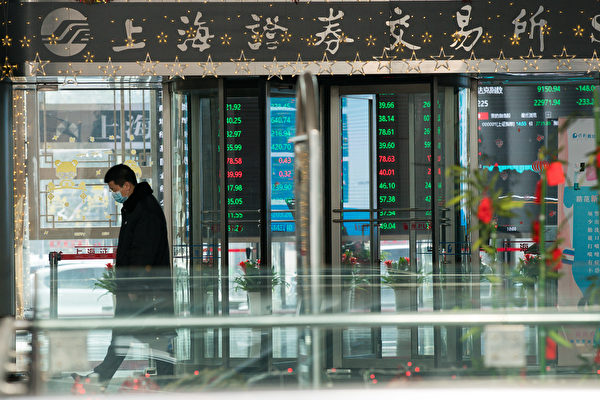
The A-share market has suffered consecutive heavy losses for two days. Following a significant decline in trading volume at the end of 2024, the first trading day of 2025 (January 2) once again witnessed a “green opening,” with the three major indices experiencing sharp declines, and the Growth Enterprise Market Index plummeting by nearly 4%. Additionally, the Hong Kong stock market shed 436 points, breaking through the key level of 20,000 points.
As of the close of trading, the Shanghai Composite Index fell by 2.66% to 3262.56 points; the Shenzhen Component Index dropped by 3.14% to 10088.06 points; the Growth Enterprise Market Index declined by 3.79% to 2060.44 points; and the ChiNext Index dropped by 3.4% to 955.33 points.
The first trading day after the New Year saw a deeper decline compared to the last trading day of 2024.
On December 31, the A-share market closed with the Shanghai Composite Index down 1.63% at 3351.76 points; the Shenzhen Component Index fell by 2.4% to 10414.61 points; the Growth Enterprise Market Index dropped 2.93% to 2141.60 points; and the ChiNext Index ended with a decrease of 3.11%.
According to data from Wind, on January 2, a total of 924 stocks rose, 4378 stocks fell, and 76 stocks remained unchanged on the Shanghai and Shenzhen stock exchanges as well as the Beijing Stock Exchange. The total turnover of the Shanghai and Shenzhen markets amounted to 1396.5 billion yuan (RMB), an increase of 50.7 billion yuan compared to the previous trading day’s turnover of 1345.8 billion yuan.
In terms of sector performance, brokerage, defense industry, semiconductor, and automobile stocks were among those with significant declines; while financial technology, computing power, innovation in technology, low-altitude economy, and consumer electronics sectors experienced notable pullbacks. Despite the overall downturn, consumer stocks bucked the trend, with retail and e-commerce concept stocks showing active trading.
Huaxin Securities believes that considering the calendar effect, without any unexpected positive external catalysts in domestic policies approaching the Chinese New Year, sentiment in the A-share market remains relatively cautious, with low profit expectations. It is anticipated that the A-share market will return to fluctuation, with a focus on defensive values in the broader market.
Meanwhile, Hong Kong stocks also faced heavy losses on the first trading day of the New Year, as the Hang Seng Index opened below the key level of 20,000 points defended at the end of last year. By the close of trading, it had dropped by 436 points to 19623 points, marking a 2.18% decline. The state-owned enterprises index and the Hang Seng Tech Index also experienced declines of 2.73% and 2.47%, respectively, reflecting a highly subdued market sentiment.
On the market front, technology stocks, major financial stocks (banks, brokerages, insurance companies), semiconductor stocks, and medium-cap stocks collectively saw declines. China United Securities plunged by over 9%, SMIC International dropped by over 8%, China Taiping Insurance Holdings fell by over 7%, and China Merchants Bank declined by over 4%.