
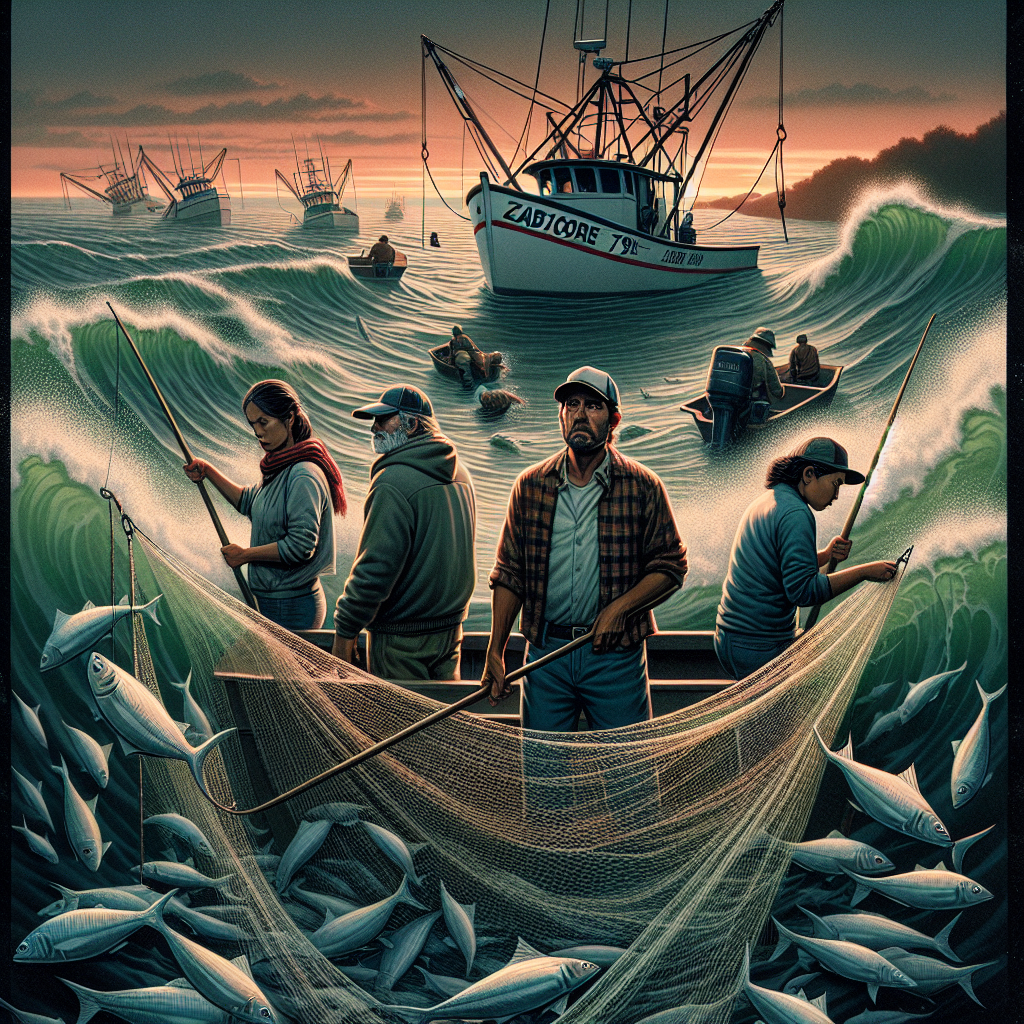
In 2023, California experienced its worst season of albacore tuna fishing in over 30 years. According to the governor’s office, the catch of albacore tuna decreased by 71% during the 2023 fishing season, with a total value drop of 65%, prompting the state to seek federal assistance for fishermen.
On December 24, California Governor Gavin Newsom, along with Oregon Governor Tina Kotek and Washington Governor Jay Inslee, jointly requested the federal government to declare a state of disaster for the commercial albacore tuna fishing industry on the West Coast of the United States. Recognizing a state of disaster is the first step in applying for aid.
In a letter to U.S. Secretary of Commerce Gina Raimondo, the governors wrote, “The 2023 fishing season in the region performed very poorly, putting fishing communities and related industries in distress and causing severe economic impacts.”
The governors stated in the letter that the commercial albacore tuna fishing industry on the West Coast of the U.S. generated a value of $9.5 million during the 2023 season, a significant decrease compared to the five-year average of $24.6 million, resulting in a 61% economic loss; and when considering inflation, equivalent to a 67% economic loss.
“Declaring the fishing industry in a disaster is the first step in initiating the process of applying for federal assistance, which can help these communities reliant on fishing get through tough times,” the governors said.
Craig Shuman, the Marine Regional Manager of the California Department of Fish and Wildlife, told Epoch Times that federal assistance to the affected fishing industry is crucial.
“If fishing communities cannot fish, they have no income, and then the infrastructure starts to collapse. People will start selling their boats, permits, and docks,” he said. However, “We hope that fresh, sustainable seafood continues to enter California’s ports.”
Shuman stated that it is currently unclear why 2023 was a poor year for albacore tuna fishing, with potential influences from climate and market factors. Nonetheless, the government is making efforts to assist affected fishermen. However, he mentioned that the process of fishermen eventually receiving economic relief may take over a year.
In a statement to the Epoch Times, Clayton Wraith, Chairman of the Western Fishboat Owners Association (WFOA), emphasized the importance of maintaining the albacore tuna fishing industry.
Wraith explained that the albacore tuna season typically starts in late June and usually lasts until mid-October. Albacore tuna are migratory fish species, usually swimming from Japan to the U.S. Pacific coast.
He told the Epoch Times, “It was the worst season in 30 years (in 2023)”, “While fishermen still went out to sea as usual, albacore tuna never arrived in large numbers along the Pacific coast.”
However, he mentioned that by 2024, albacore tuna fishing had returned to normal.
Wraith and his organization contacted the governor’s offices of three western states, asking for their help in assisting fishermen in applying for federal aid.
“We want to help the fishermen who have experienced a terrible season,” he said, emphasizing the importance for new fishermen, as it is necessary for all fishermen to continue being part of the fishing fleet.
Wraith noted that albacore tuna fishing fleets usually consist of 300 to 500 vessels, with fishermen coming from various parts of the western U.S., from San Diego in Southern California to Northern California, and further up to Washington State. Their fleets navigate along the Pacific, sometimes staying at sea for over a month, conducting fishing operations.
He mentioned that although the Western albacore tuna fishing industry is not a billion-dollar industry, preserving it is crucial.
“If we lose these fishing experiences and industries, we may not be able to access these natural fishing resources in the future,” Wraith said. He mentioned that the fishing industry is also declining; in the past, fleets could reach over a thousand vessels, but now there are only a few hundred.
Furthermore, he said, “We have imported too many fish, and this brings some problems.” These issues include labor practices, fishing practices, and the quality of fish imported from other countries.
Wraith stressed, “We need to be very clear… about maintaining healthy and sustainable fishing practices. The U.S. does this, and frankly, the U.S. is leading the world in this regard.”