
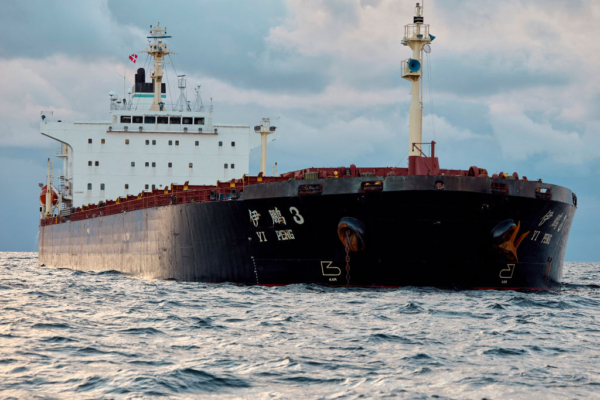
The Baltic Sea’s two undersea cables (fiber optic and submarine cables) appear to have been deliberately cut, escalating global geopolitical tensions. These cables are essential infrastructure supporting cross-border internet connectivity, with Chinese vessels being the prime suspects.
As the conflict in Ukraine further intensifies, the cutting of the Baltic Sea cables has raised concerns about “sabotage” against Western critical infrastructure and the potential for a “hybrid” warfare.
According to CNBC, Germany has not disclosed specific potential suspects but indicated that the cable cuts are an act of “sabotage” and could involve “hybrid warfare.”
The Foreign Ministers of Finland and Germany stated in a joint statement that the incident “immediately raises suspicion of deliberate damage” and added that a “thorough investigation” is underway.
“Our European security is not only threatened by Russia’s aggression in Ukraine but also by malicious actors engaging in hybrid warfare. Protecting our shared critical infrastructure is crucial for our security and societal resilience.”
Comprehensive reports from CNBC and other media outlets provide information on the undersea incident and the latest developments, as well as why this event has heightened global geopolitical tensions.
Last week (November 17-18), two undersea cables in the Baltic Sea were sequentially cut. One of them is the C-Lion1 cable connecting Finland and Germany, owned by the Finnish state IT company Cinia. This cable, spanning nearly 1,200 kilometers (730 miles), is the sole direct route between Finland and Central Europe.
The other damaged cable connects Lithuania and Sweden, known as BCS East West Interlink. Arelion, the company owning the cable, informed CNBC that data traffic originally routed through their cable has been redirected to alternative solutions provided by Telia in Lithuania.
Arelion spokesperson Martin Sjögren told CNBC via email that a ship to repair the cable arrived on site a week ago, and depending on weather conditions, the repairs are expected to be completed in the coming days.
Sjögren stated that Arelion cannot comment on how the cable was damaged, adding that Swedish police are investigating the incident.
However, Andy Champagne, Senior Vice President and Chief Technology Officer at Akamai Labs, emphasized that repairing undersea cables is a complex task.
“Installing undersea cables is indeed complicated,” he told CNBC. “Moreover, repairing them when issues arise is not an easy task.”
Undersea cables are the backbone of the global internet, handling 99% of intercontinental data traffic. Martin Lee, responsible for Europe, Middle East, and Africa (EMEA) regions at Cisco Talos, one of the world’s largest commercial threat intelligence teams, told CNBC that undersea cables, as part of “critical national infrastructure,” face various threats.
“For example, saltwater corrosion and landslides, as well as human threats, …