
On October 31st every year, children enjoy the tradition of trick-or-treating during Halloween. However, a series of dangers have cast a shadow over this holiday.
Law enforcement officials in Los Angeles once again remind parents to carefully inspect the candies their children receive to avoid potential dangers like “poison candies” or snacks that could cause allergic reactions. Drivers on the road, pedestrians, and hosts of Halloween parties are also urged to be aware of the various common dangers during the festive season.
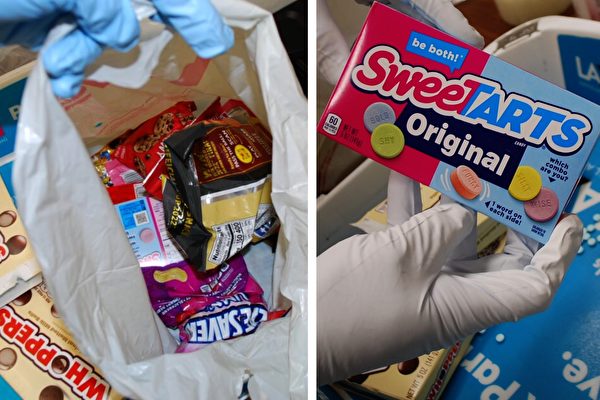
Since 2022, there have been frequent reports across the United States of “rainbow fentanyl” disguised as candies: criminals have been known to disguise fentanyl pills as candies or mix fentanyl into popular candies and snacks loved by children. It is difficult to distinguish fentanyl candies from regular candies based on visual, taste, or smell cues. This danger has yet to be eradicated.
Moreover, in August of this year, California confiscated over 2.27 million marijuana products packaged with counterfeit California marijuana stamps. These illegal goods mostly imitate popular food and candy brands that appeal to children, including cream-filled cakes like Twinkies and mixed fruit candies like Sweet Tarts.
In 2023, a elementary school student in the San Francisco Bay Area was rushed to the hospital after accidentally consuming candies laced with marijuana during a Halloween event, raising concerns among parents. Several parents also discovered their children had received “marijuana fruit candies”.
The rampant spread of drugs has left parents worried. According to data from the U.S. Drug Enforcement Administration, the synthetic opioid fentanyl is deadly, particularly dangerous for young children.
Officers from the Los Angeles County Sheriff’s Department warned parents that candies without proper packaging or any signs of tampering should not be given to children.
The dangers of Halloween go beyond drugs, as food allergies are also a common issue.
Approximately 100 million people in the United States experience allergies to various foods or external factors each year. The Food and Drug Administration (FDA) advises that children should generally not consume non-commercially packaged food and should not gift homemade food items to others.
Therefore, parents should check the labels of candies or snacks their children receive to ensure that they do not contain allergens. Parents should also refrain from letting children consume homemade baked goods from others.
The National Highway Traffic Safety Administration found that Halloween is one of the deadliest nights of the year for pedestrians. With increased foot traffic and drunk driving incidents, caution is crucial.
The non-profit organization Safe Kids Worldwide noted that on average, children are more than twice as likely to be struck by a car during Halloween trick-or-treating compared to other times.
The Automobile Club of Southern California recommends that parents accompany children outside, prohibit children from taking shortcuts through backyards or alleys, choose high-visibility clothing for children, such as reflective tape on clothing or candy bags, opt for non-toxic face paints instead of masks, carry a flashlight for illumination while avoiding shining it directly into others’ eyes, especially drivers passing by.