
On May 5th, the Hong Kong stock market opened lower, with all three major indices falling collectively. The Hang Seng Tech Index dropped nearly 2%, with the automotive sector being hit hard. Shares of BYD fell by 6.97%, while companies like Leapmotor and Guangzhou Automobile Group also saw declines of over 3%.
By the closing bell, the Hang Seng Index fell by 0.76% to 25,898 points, once again breaching the 26,000 level. The Hang Seng Tech Index closed down by 0.94%, and the state-owned enterprise index dropped by 0.5%. New energy vehicle companies led the declines, with BYD falling by 6.97%, Leapmotor by 3.70%, Guangzhou Automobile Group by over 3%, and companies like Xiaomi, NIO, and Li Auto all ending the day in the red.
In response to this, automotive blogger “Duck Feather” wrote, “This downturn is not without reason. The first-quarter financial reports of various companies in the past two days have been released one after another, and the profits are not looking good. Changan’s net profit plummeted by 74%, BYD’s profit was halved, SAIC Motors and BYD remained stagnant, while Guangzhou Automobile Group is still in the red. Although Siemens’ sales and revenue were increasing in the first quarter, a look at the non-GAAP net profit shows a direct drop of over 70%. Most of the profits earned are supported by government subsidies, making the market uncomfortable.”
Moreover, the data released by the China Association of Automobile Manufacturers added fuel to the fire. In the first quarter of 2026, the entire automotive industry saw a year-on-year profit decline of 18%, with profit margins continuing to stagnate at low levels due to a price war that has lasted for over three years, leading to dwindling profits across the board.
Earlier, according to data disclosed by the Secretary-General of the China Association of Automobile Manufacturers, Cui Dongshu, in the first quarter of 2026, the revenue of the Chinese automotive industry was 2.4128 trillion yuan, a decrease of 0.2% year-on-year; costs amounted to 2.1406 trillion yuan, a year-on-year increase of 0.7%; and profits reached 78.4 billion yuan, down by 18% year-on-year.
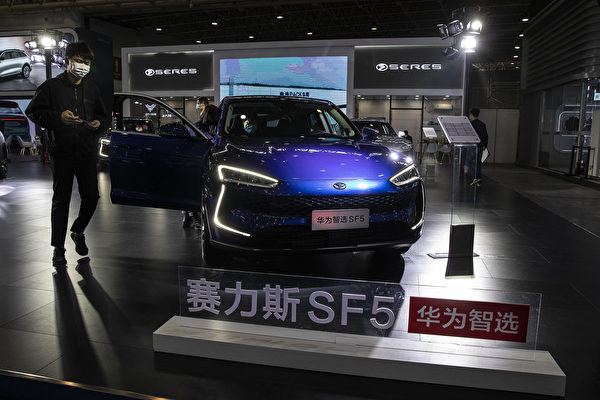
Of note, on May 5th, Siemens (09927.HK) closed at 70.10 Hong Kong dollars, a decrease of 6.97%, hitting a new low since its listing on the Hong Kong Stock Exchange’s main board on November 5, 2025, with cumulative declines of 46.7%.
Subsequently, the topic labeled “Siemens falls by over 6%” surged into the top three hot searches on Weibo.
Netizens commented, “From listing to peak to now, almost halved, is there still a way out?” “The new energy vehicle industry faces three major pressures: policy subsidy reduction, ongoing price wars, and cash flow security. Siemens needs to break free from the dilemma of ‘double payment’ (Huawei revenue sharing + self-research investments), balancing scale expansion with profit restoration, otherwise it will be difficult to reverse the current decline in the short term.”
Financial blogger “Zhang Yixuan” stated, “Siemens’ Hong Kong stocks have been in a continuous decline since its listing? It fell nearly 7% today, making it the worst-performing in the Hong Kong automotive sector. Recent actions in the sector have been continuous; why has the stock price turned out this way?”
Investment content creator “Chen Hong from Shenzhen” analyzed in a blog post, “Did Siemens plummet due to the lower-than-expected reservations for the M9? Introducing so many full-size seven-seaters in the first half of the year, with Land Rover exterior and Li Auto interior, have become too repetitive. The buyers in the 400,000 to 500,000 range are insufficient.”
Siemens Automotive was founded in 2016 and in 2021, it initiated cross-border cooperation with Huawei. Currently, the partnership has evolved from initial business cooperation to a deep integration across capital, technology, and business dimensions.