
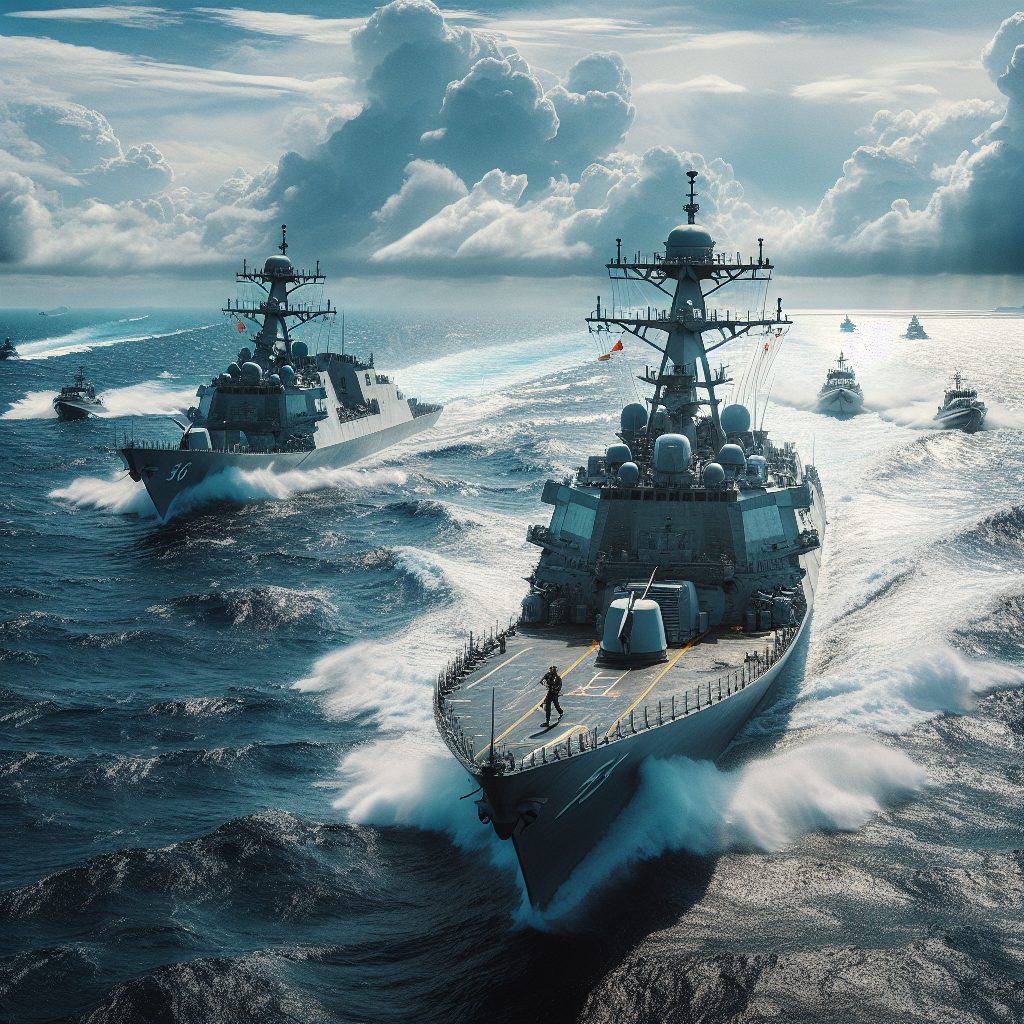
On Monday (May 4), two US Navy destroyers successfully crossed the Strait of Hormuz and entered the Persian Gulf. According to anonymous military officials, despite attempts by Iran to launch intense attacks using fast boats, missiles, and drones during the voyage, the two American ships completed their mission unharmed under strong air support, successfully escorting two merchant ships flying the American flag through the waterway.
Multiple anonymous US defense officials revealed to CBS News that the Burke-class guided-missile destroyers USS Truxtun and USS Mason, part of the US Navy, encountered coordinated attacks by Iran while carrying out the Project Freedom mission.
US forces immediately deployed various air assets including F-16 fighters, F/A-18 Super Hornets, and AH-64 Apache helicopters for defense and interception.
Admiral Brad Cooper, commander of US Central Command, confirmed that Iran attacked American warships and merchant ships passing through the strait, prompting the US military to retaliate and destroy six Iranian fast boats.
Defense officials pointed out that despite the dense fire from Iran, no hits were recorded on US vessels.
According to data released by Central Command, the air support for Project Freedom involved a significant number of over 100 aircraft from land and sea bases.
This operation highlighted the US military’s rule of engagement of “preemptive strikes.” An informed US defense official told Fox News that frontline commanders have been granted full authorization to take proactive defensive measures against threats.
Officials stated, “As soon as US forces see missile launchers moving, confirm missiles are loaded or identify potential threats to merchant ships,” on-site commanders can initiate strikes.
“We reserve the right to eliminate these threats. We don’t need to wait, we can anticipate and strike first. This provides a certain level of operational flexibility,” the official said. “We can target known threats without waiting for Iran to fire first.”
This tactic is described as transitioning from “man-to-man defense” of individual escorts to “zone defense,” using maritime and aerial surveillance and a clear hierarchical protection network to ensure safe passage through the waterway.
President Trump announced for the first time on Sunday that the US military would carry out the Project Freedom operation aimed at reopening the long-blocked Strait of Hormuz.
Since the conflict erupted at the end of February, hundreds of oil tankers have been stranded in the Persian Gulf, causing significant fluctuations in global oil prices. The successful passage of the two merchant ships is seen as an important step towards restoring traffic flow in the region. Central Command stated that the military has contacted dozens of shipping companies to encourage the resumption of navigation.