
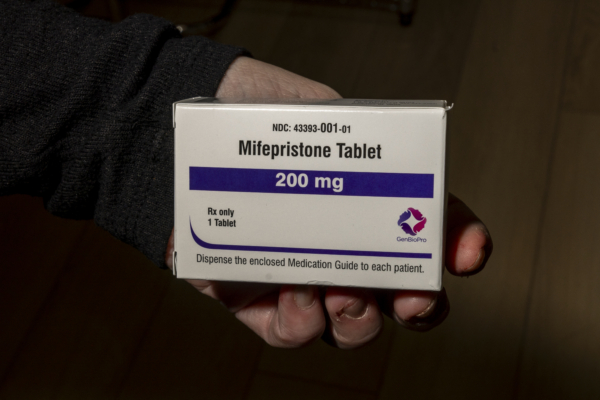
The latest ruling from the United States Federal Appeals Court banning the mailing of a common abortion pill has sparked nationwide attention. However, New York City medical facilities that perform abortions have stated that patients will still be able to obtain the abortion pill through telehealth in the short term without disruption. They will provide patients with an alternative medication. This is seen as another round of legal and policy battle between the pro-choice and anti-abortion camps in the United States.
The three-judge panel of the 5th U.S. Circuit Court of Appeals in New Orleans recently unanimously ruled that mifepristone, one of the two main drugs used for medication abortion, cannot be distributed by mail and must be prescribed and provided in person by medical personnel. The case originated from a lawsuit brought by the Louisiana government, which argued that remote prescribing of medication weakened the state’s abortion restrictions.
However, in New York where abortion is allowed, medical service providers quickly adjusted their strategies. Planned Parenthood of Greater New York stated that they will continue to offer telemedicine abortion services through their “Planned Parenthood Direct” application but will now mail out medication kits containing only misoprostol instead of the original two-step regimen of mifepristone and misoprostol.
Since the end of 2023, the New York City public healthcare system has been offering remote consultation and mail delivery of abortion pills, becoming the first public healthcare system in the U.S. to adopt this model.
Analysts point out that this ruling indicates a gradual clash between federal legal restrictions and some states’ lenient policies.
The case is expected to be appealed to the U.S. Supreme Court. The Court previously overturned national abortion rights protection in the famous Dobbs case in 2022 but in 2024 unanimously ruled to maintain the availability of mifepristone, showing that the judicial stance is still in flux. Data from the Guttmacher Institute shows that after the Dobbs case, the proportion of medication abortions in the U.S. continued to increase, reaching 65% of all abortions provided by healthcare providers in 2023.
This ruling once again highlights the controversy surrounding abortion in the U.S., which has evolved from the question of whether to allow abortion to the aspect of “how to access abortion services.” For supporters, telehealth and mail order medication are means to expand healthcare accessibility, but for opponents, they are seen as loopholes to circumvent state laws. With the possibility of further appeals in the case, this legal battle surrounding abortion is expected to continue brewing.