
In urban planning, considering “walking” not only benefits the physical and mental health of residents but also brings significant advantages to the community and the environment. It is also ideal for out-of-town visitors to explore the city while enjoying its scenery. So, which cities around the world are most suitable for walking?
According to the global renowned magazine “Time Out” 2026 City Survey, a survey was conducted with readers worldwide. This magazine created a snapshot of global city life based on the real feelings of local residents and released the survey results on April 24th.
The survey covered a wide range of aspects, from food, nightlife, to dating, and happiness. This year, in collaboration with “Intrepid Travel,” Time Out collected all these data and compiled a list of the best cities.
The quality of life of local residents is a crucial factor in determining whether a city is livable. Therefore, besides food, culture, and nightlife, the magazine also inquired about community atmosphere, green spaces, and walkability.
Being able to comfortably explore a city on foot is the best way to truly understand local life, discover surprises beyond the map, and unveil the authentic culture behind tourist attractions. Moreover, cities suitable for walking are beneficial for residents and economic development. They not only promote physical and mental well-being but also drive local economic growth.
As a result, the magazine ranked the cities with the highest walkability. The most walkable cities globally refer to those where a majority of local residents consider walking “good” or “excellent.” Each country could only select one city with the highest score. Most cities on the list are European, with four Asian cities, two American cities, and one Oceania city.
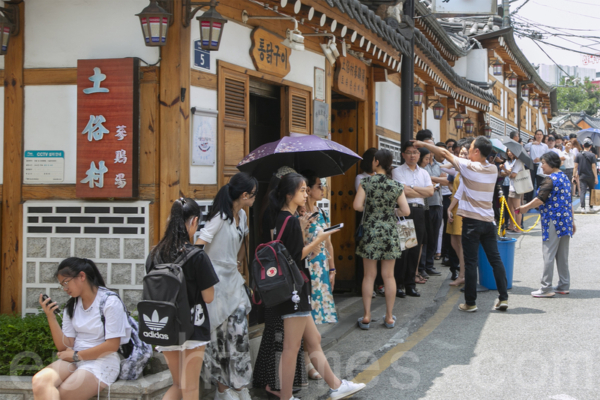
Cities do not necessarily need to be small to be suitable for walking. In fact, Seoul, the capital of South Korea, is one of the largest cities in terms of area and population. With a rating of 93% from local residents, it is not only the most walkable city in Asia but also tops the global list of the most walkable cities.
Seoul is very safe, making it perfect for strolling during both day and night. Areas like Myeongdong, Insadong, and Hongdae are ideal for exploring on foot.
Moreover, Seoul has innovative walking paths, such as Seoullo 7017, a 1074-meter-long “sky garden” converted from an old city highway into a green space with 24,000 different plant species.
In Seoul’s city center, a walking path was built alongside the Cheonggyecheon Stream, connecting many downtown subway stations and landmarks like Gwangjang Market, Jongmyo Shrine, and Changdeokgung Palace.
Gwangjang Market is one of Korea’s oldest and largest traditional markets, known for its variety of gourmet foods and specialty goods like silk, Hanbok (Korean traditional clothing), and quilts.
Additionally, Taipei made it to the list with a walkability score of 79%, ranking 16th. Time Out noted Taipei’s significant progress in improving walkability last year. The famous Shida Road, lined with shops and restaurants, recently underwent a major renovation, expanding sidewalks from 1.3 meters to 3.3 meters. This road also leads to the Hakka Cultural Park, a beautiful green space showcasing Hakka architecture; a few steps away, one can reach the Shida Night Market.
Speaking of night markets, Taipei boasts many and is perfect for evening strolls. Shida Night Market, located near National Taiwan Normal University, is one of Taiwan’s famous night market spots. Comprising shops along Shida Road and Longquan Street, it offers diverse eastern and western cuisine and exotic vibes, perfect for dining and entertainment. Other renowned night markets include Shilin Night Market and Ningxia Night Market.
Furthermore, Singapore ranks 8th globally for the most walkable cities, featuring long arched walkways and wide, clean streets. Macau scores 78% in walkability, securing a place in the top 20.
Dubbed the “Big Apple,” New York City boasts a walkability score of 91%, placing it 3rd in the ranking of most walkable cities.
Despite Manhattan’s endless hustle, bustle, and chaos, its layout is well-organized. Planned during the 19th-century explosive population growth, Manhattan’s central area, the heart of the “Big Apple,” remains easily accessible for walking tours, despite its vast size.
Spanning about a mile long, with twenty blocks, Fifth Avenue serves as the dividing line between East and West Manhattan. This walkability extends to Brooklyn, especially in neighborhoods like DUMBO, Cobble Hill, and Williamsburg.
Let’s not forget the astounding Brooklyn Bridge, a walk-friendly landmark where strolling is a must-do on any New York trip, offering a blend of historical charm and modern urban vibrancy. Particularly during sunrise or sunset, the views are breathtaking.
Of the most walkable cities globally, 13 are from Europe. Here are the European cities on the list along with their rankings:
• Edinburgh, Scotland (2)
• Copenhagen, Denmark (4)
• Oslo, Norway (5)
• Stockholm, Sweden (6)
• Paris, France (7)
• Helsinki, Finland (9)
• Krakow, Poland (10)
• Riga, Latvia (11)
• Vienna, Austria (12)
• Amsterdam, Netherlands (13)
• Tallinn, Estonia (14)
• Zurich, Switzerland (15)
• Munich, Germany (20)
Additionally, Vancouver, Canada, ranks 17th, and Melbourne, Australia, claims the 19th spot.