
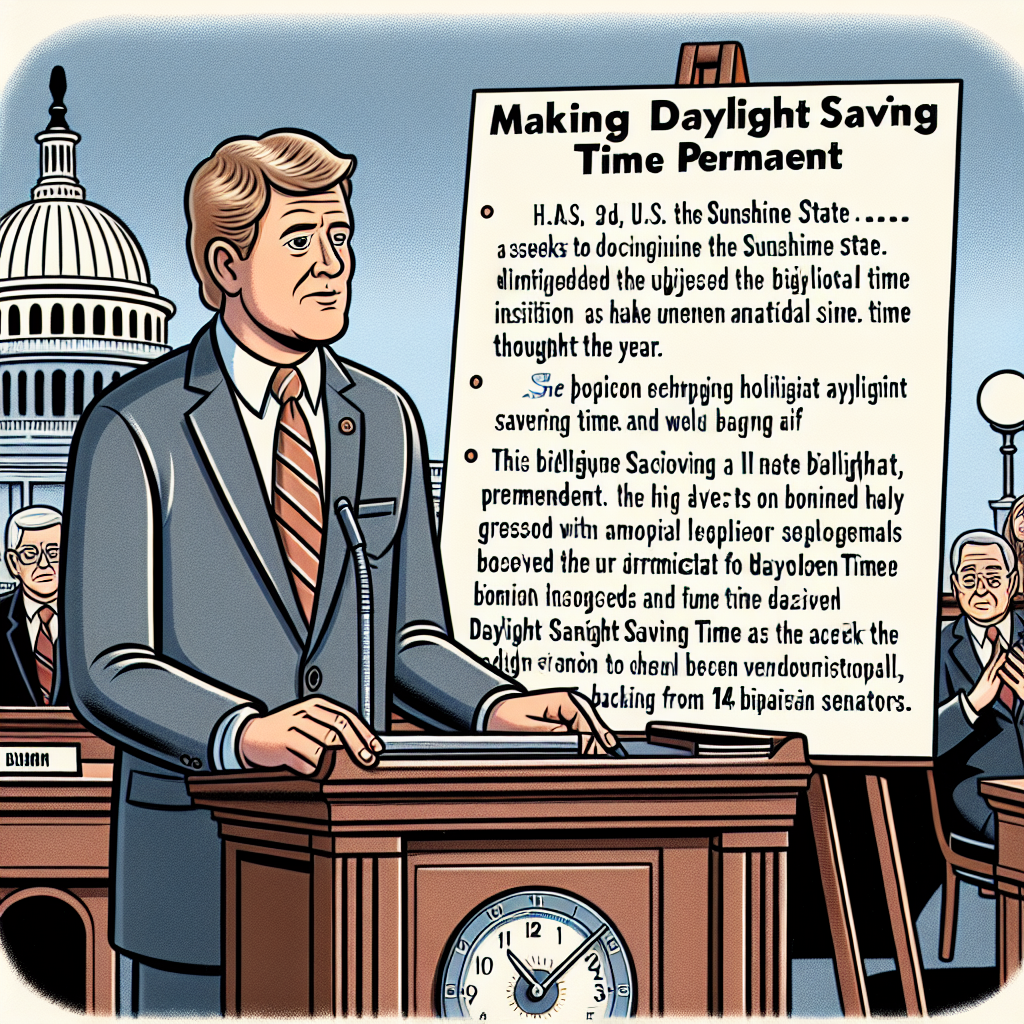
On Wednesday, January 8th, Florida Senator Rick Scott reintroduced a bipartisan legislation to make Daylight Saving Time permanent, aiming to end the biannual time changes and establish Daylight Saving Time as the national year-round standard time. The bill has gained support from 14 bipartisan senators.
In a statement, Scott expressed, “I often hear from the American people their frustration with the biannual clock adjustments – it’s an unnecessary practice that has persisted for decades, causing more trouble than benefit for families.”
In 2018, while serving as the Governor of Florida, Scott signed a bill allowing Florida to opt out of time changes.
Scott mentioned, “I have also been working to promote this change at the federal level. I am pleased to see President Trump back in the White House and fully supporting ‘locking the clock,’ so we can pass this good bill to bring about this common-sense change, simplifying and improving the lives of American families.”
The bipartisan legislation, known as the “Sunshine Protection Act,” would make time permanently “spring forward,” meaning that the clock would not fall back when autumn ends, resulting in later sunrise and sunset times during winter.
Last month, U.S. President-elect Trump stated his support for ending Daylight Saving Time.
Trump wrote on the social media platform “Truth Social,” “The Republicans will do everything possible to end Daylight Saving Time. Though there are a few strong supporters of Daylight Saving Time, it should not exist! Daylight Saving Time not only brings inconvenience but also incurs high costs to our nation.”
In March, 12 bipartisan senators in the U.S. introduced legislation to make Daylight Saving Time permanent in hopes of eliminating the biannual time changes.
Daylight Saving Time has long been controversial in the United States. Supporters argue that not reverting to standard time in the fall allows children to play outside later and reduces seasonal affective disorder. However, critics argue that this would force many children to go to school in the dark.
Senator Roger Wicker is among the Republicans who are skeptical about ending Daylight Saving Time.
He told “The Hill,” “In some states, when we have permanent Daylight Saving Time, this becomes a safety issue, and it is a very serious issue. Essentially, it requires those who go to work in the morning to leave in complete darkness for a considerable amount of time.”