
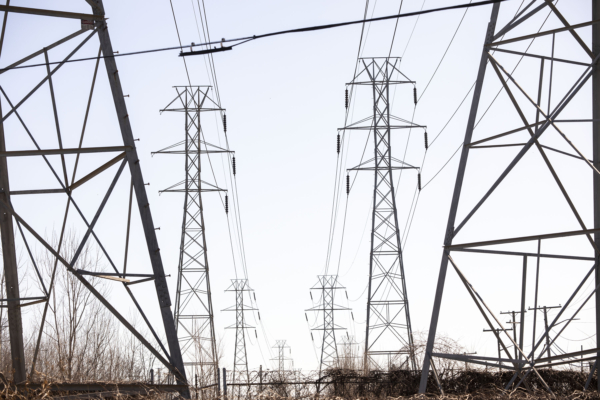
As the peak summer electricity consumption approaches, the power supply in New York State is facing new pressure. According to the latest report from the New York Independent System Operator (NYISO), responsible for statewide grid dispatch, the reserve capacity of the grid for this summer has dropped to a new low in over a decade. With the anticipation of soaring electricity demand during extreme heat waves, officials warn that there may be a possibility of issuing energy conservation alerts again and in extreme cases, implementing rotating power outages.
Based on NYISO’s data, after utilizing all emergency resources, New York State’s grid is left with only about 417 megawatts (MW) of reserve capacity, equivalent to the electricity demand of approximately 250,000 households. This amount not only falls short of last year’s reserve capacity by half but is also significantly lower than the usual safety level of several thousand megawatts in the past. This indicates that if there is a sudden increase in power demand, such as a surge in air conditioning loads due to consecutive high temperatures, the grid’s buffering space will be very limited.
NYISO officials point out that during last summer’s heatwave, the grid was under stress at one point, prompting authorities to issue rare energy conservation alerts to the public, urging them to reduce non-essential electricity usage. With this year’s further decline in reserve capacity, similar situations may arise again. Vice President of Operations Aaron Markham stated that New York’s power system is in a transition period, with some old generation facilities gradually retiring, but alternative sources have not been fully established yet. At the same time, overall electricity demand continues to rise, making the balance between supply and demand more fragile.
While the supply side faces pressure, climate factors may further increase risks. The weather forecast from the US National Oceanic and Atmospheric Administration shows a probability of over 60% for the occurrence of the “El Niño” phenomenon this summer, with a possibility of developing into a strong event. Meteorological agencies indicate that El Niño typically brings hotter weather, increasing the demand for air conditioning.
The meteorological company AccuWeather predicts that the number of days with temperatures exceeding 90 degrees Fahrenheit (approximately 32 degrees Celsius) in New York City this summer may be significantly higher than last year, further increasing the electricity load.
One of the structural reasons for the pressure on New York’s grid is the closure of the Indian Point nuclear power plant on the Hudson River banks several years ago, leaving a significant electricity gap for millions of households. Although the state government is promoting energy transition and clean energy construction, the construction period of new projects is lengthy, making it difficult to fully plug the gap in the short term.
Currently, the highly anticipated Champlain Hudson Power Express transmission project, which is expected to transport hydropower resources from Canada to New York City, covering approximately 1 million households, is seen as an important supplement to alleviate the power shortage. However, before the full operation of this project, the summer grid still faces practical challenges.
Experts warn that in the situation where high temperatures and power supply pressures coexist, the government may once again urge residents to conserve electricity, including reducing electricity usage during peak hours and raising air conditioning set temperatures.