
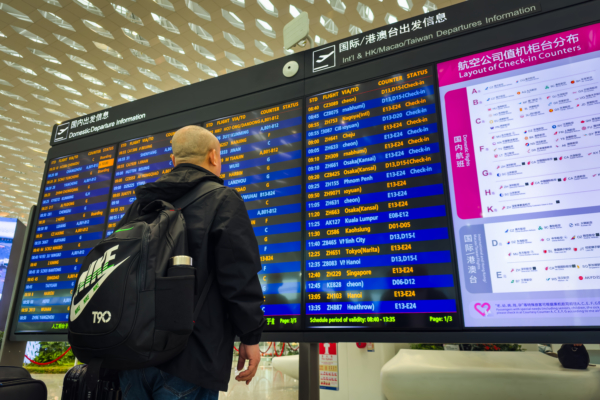
As the five-day “May Day” holiday approaches, many people are opting for budget-friendly short trips to save money amid a sluggish economy, unstable job market, and low consumer spending.
32-year-old bank employee Liu Xiaoting from Beijing plans to self-drive with friends to Handan, Hebei for the holiday, citing the low cost as the main reason. “Even during the holiday, local hotels only cost three to four hundred yuan per night,” she said. “As the saying goes, ‘spend a little money, accomplish big things.'”
Similar trends of cost-conscious travel are spreading across China. The China Railway Group stated that the national railway passenger traffic during this year’s May Day holiday is expected to reach 144 million, setting a new record high. However, most travelers are opting for short trips, indicating a cautious attitude towards expensive long-distance travel.
Several online travel platforms have also indicated a concentration of popular searches and bookings in small towns and rural areas. According to data from Ctrip, searches related to small cities have increased by 25% compared to the same period last year, surpassing first-tier cities by 11 percentage points. Some remote areas such as Boletera in Xinjiang and Puer in Yunnan have seen search volumes spike by over 50%, as these locations offer relatively lower accommodation and transportation costs, making them popular choices for budget-conscious travelers.
In terms of outbound travel, according to data from Air Travel Perimeter, as of April 17, international flight bookings for the May Day holiday have increased by 25% compared to last year, with relatively cheaper destinations like Japan, South Korea, and the UAE being the primary choices.
In terms of civil aviation, the Civil Aviation Administration of China estimates that over 10.75 million people will travel by air during the May Day holiday, averaging 2.15 million passengers per day. While there is an increase, it is considered limited. Meanwhile, self-driving, car rentals, and camping, low-cost and highly flexible travel options, are becoming increasingly popular.
In the midst of weak domestic demand, the Chinese government is attempting to stimulate consumption through policy measures. Starting from April 26, the threshold for tax refunds for foreign tourists at a single store has been lowered from 500 yuan to 200 yuan, with an increase in the refund cap. However, experts generally believe that given the overall low consumer confidence, the effectiveness of this measure may be limited.