
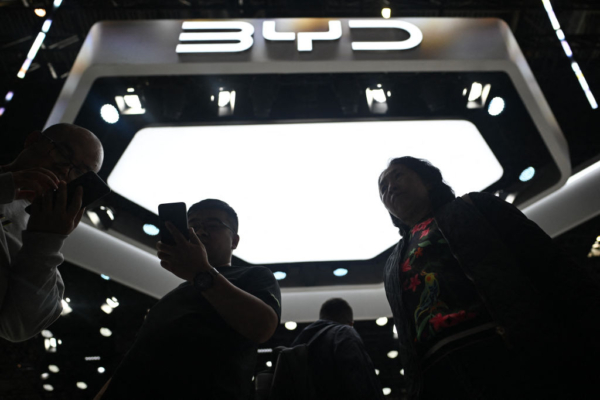
Brazil’s Labor Ministry officials said Tuesday that Chinese electric car maker BYD has brought in hundreds of Chinese workers with irregular visas to build a factory in Brazil. The Brazilian authorities will impose fines on BYD for each case.
Last month, authorities in the state of Bahia, Brazil, found that 163 workers hired by BYD contractor Jinjiang Group were working in “slave-like conditions” and had been illegally brought into Brazil.
On Tuesday, the head of the investigation, Liane Durao, told Reuters that the 163 workers rescued by the Labor Department have gradually left Brazil.
Durao said, “Everyone’s visas were irregular.” She added that for each worker found with an irregular visa, BYD will be fined. However, she did not specify the total amount of fines.
She said that about 500 Chinese workers were brought to work at the Brazilian factory. BYD claimed that for the workers remaining in Brazil, their working conditions would be improved to comply with Brazilian labor laws.
On Tuesday, the Brazilian Labor Ministry held a meeting with BYD and its contractors to discuss how to protect the rights of all workers at the factory.
Durao said that labor inspectors will continue to monitor BYD’s construction site to ensure that workers still working at the factory are not in harsh working conditions.
BYD and Jinjiang Group did not immediately respond to Reuters’ requests for comments. BYD had previously stated that it would terminate its cooperation with Jinjiang Group, but Jinjiang Group objected to the accusations by Brazilian authorities.
Brazil is BYD’s largest market outside of China. In the first 11 months of 2024, nearly one out of every five cars sold overseas by BYD went to Brazil.
BYD has invested $620 million in its factory in Bahia. Prior to the scandal involving enslaved workers, BYD planned to start production in Brazil in early 2025, becoming its first electric car factory outside Asia, with an initial annual production target of 150,000 vehicles.
It is currently unclear whether the Brazilian authorities’ investigation into the factory’s working conditions will delay the construction and production schedule.
In Brazil, investigations into slave labor could have serious consequences, including restricting employers’ access to bank loans. As these workers were found to be in conditions similar to slavery, the Brazilian government has temporarily halted issuing temporary visas to BYD.
This incident may also affect Sino-Brazilian relations.
While Brazil seeks Chinese investment, the practice of bringing Chinese workers to host countries by the Chinese Communist Party poses a challenge to local employment. Creating jobs is the top priority for Brazilian President Luiz Inacio Lula da Silva.