
The world’s largest digital human rights summit, RightsCon 2026, scheduled to be held in the Zambian capital, Lusaka, was forced to cancel on the eve of its opening due to diplomatic pressure from the Chinese Communist regime.
Access Now, the organizing entity, released a statement pointing out that Chinese diplomats pressured the Zambian government to exclude Taiwanese civil society representatives from participating and to scrutinize the agenda, resulting in the cancellation of this international conference that was expected to be attended by 2,600 people in person.
RightsCon is a global summit focusing on human rights and technology, with a primary agenda of formulating strategies to promote a more free, open, and interconnected digital world.
Access Now revealed that the Zambian Ministry of Technology and Science informed them on April 27 that Chinese diplomats were pressuring them, with the core point of contention revolving around the presence of Taiwanese representatives.
Subsequently, the organizers were informally notified that if they wished for RightsCon to continue, they needed to censor specific topics and exclude at-risk communities, including their Taiwanese participants, from both physical and online participation.
In response, Alejandro Mayoral Baños, the executive director of Access Now, stated that the cancellation of RightsCon was a “calculated attempt aimed at silencing the global movement and handing the key of the future over to dictators. But we want to warn them: we will not back down; we are transforming.”
The organization also emphasized in their statement: “As a human rights organization, we condemn these violations of fundamental freedoms of peaceful assembly and association, as well as the interference with freedom and civic space of the entire RightsCon community.”
The conference was originally set to host over 2,600 physical participants from more than 150 countries and 750 organizations, along with 1,100 online participants, with over 500 meetings planned during the summit. Access Now mentioned that they had invested months in establishing relationships with the local government to enhance mutual understanding, only to be asked to “postpone” just five days before the participants were scheduled to arrive. However, for an international conference the size of RightsCon, postponing a week before opening was not feasible, leading to the event being effectively canceled.
In their statement, Access Now mentioned that the initial reason cited by Zambian officials for the postponement was that some speakers and participants still needed to undergo “administrative and security checks.” Subsequently, in a letter, it was stated that the postponement was to ensure that the topics were “fully in line with Zambia’s national values and broader public interest considerations.”
However, it is widely believed that this was due to the deep economic influence exerted by Beijing. China is Zambia’s largest creditor, with Chinese firms playing important roles in local infrastructure projects.
Less than a week before the cancellation of the RightsCon conference, on April 23, the Zambian Development Agency signed a $1.5 billion agreement with a Chinese state-owned enterprise to expand the country’s power generation capacity.
The original summit venue, the Mulungushi International Convention Center, was also renovated with a $30 million grant from the Chinese authorities.
Peter Dahlin, the founder of the human rights group Safeguard Defenders, stated that this once again proves that China’s vigorously promoted “non-interference in internal affairs” is merely a tool to deflect criticism of its own actions.
Zambian scholar Sishuwa Sishuwa suggested that Zambian authorities might fear that most of the conference participants are human rights activists, which would subject the country’s human rights record to scrutiny.
Sishuwa stated, “Zambia faces severe restrictions on peaceful assembly, freedom of speech, and freedom of association, with government critics and political opposition being arrested on various charges such as criminal defamation, sedition, illegal assembly, and the broadly expanded hate speech laws.”
“These issues would have been discussed at the summit, and with the official campaign for the August elections only a few weeks away,” he added.
The conference was also supposed to discuss various sensitive issues related to China, including how Beijing exports digital authoritarianism, spreads misinformation in Africa, and the global proliferation of Chinese surveillance technologies and cyberattacks.
Access Now believes that this event represents a “transnational crackdown on civil society,” significantly shrinking an already limited civic space.
Members of Human Rights Watch had planned to speak at several sessions. Deborah Brown, the deputy director of technology and human rights at the organization, stated, “By shutting down RightsCon, the Zambian government stifled the opportunity to discuss, strategize, and connect on some of today’s most critical human rights issues.”
“It’s a heavy blow to the digital human rights movement in Zambia and globally,” she said.
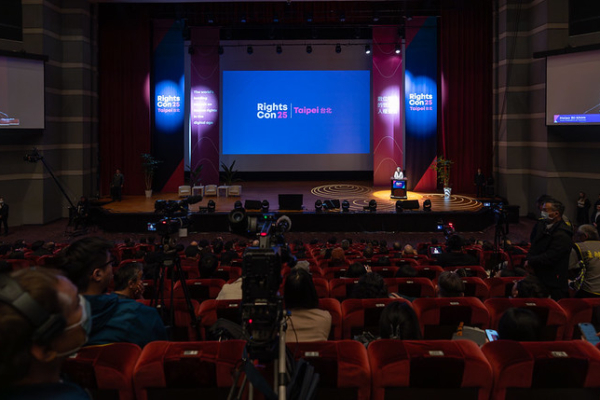
The conference has been held around the world for over a decade, with the organizers consistently striving to host in non-Western countries. Last year, the conference was even held directly in Taipei. The Zambian summit was supposed to be the first time RightsCon was held in southern Africa.
Despite the setback, the organizers stated that they would not be deterred. Access Now said in a statement, “While RightsCon may not take place in Zambia, we will gather again.”
This political tension appears to have also disrupted another event related to human rights issues scheduled to take place in Zambia this month.
The annual “World Press Freedom Day” conference hosted by the United Nations Educational, Scientific, and Cultural Organization (UNESCO) was originally set to coincide with RightsCon in Lusaka. According to the UNESCO website, most activities have been relocated to Paris or online.