
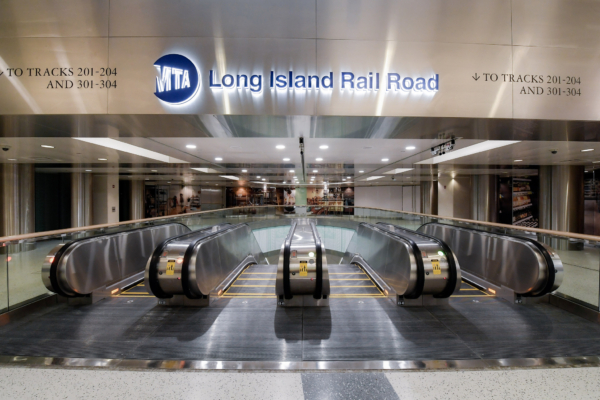
【Epoch Times, May 2, 2026】Due to a deadlock in wage negotiations, the Metropolitan Transportation Authority (MTA) of New York City has issued a latest announcement indicating that some Long Island Rail Road (LIRR) unions have threatened to launch a strike as early as May 16 this year. If realized, the Long Island Rail Road service will be forced to shut down completely, causing significant impact on the transportation in the New York metropolitan area and affecting nearly 300,000 daily commuters. Both sides have agreed to resume negotiations next week, but no agreement has been reached yet.
MTA stated in a declaration that the organization has been negotiating with the union representing LIRR employees “in good faith,” but some unions rejected the proposed three-year contract offering a total of 9.5% wage increase (including 3% wage increase in 2023 and 2024, and 3.5% in 2025), a proposal that has already been accepted by about half of the employees. MTA emphasized that the wage conditions could ensure that Long Island Rail Road employees maintain one of the “highest paid railroad workers in the United States.”
However, there are still significant differences between the two sides in the wage adjustment for the fourth year: the union is demanding a 5% increase, while MTA is only willing to provide 3%, and is also seeking to adjust some work rules. MTA warned that if the union conditions are accepted, the final costs may be passed on to passengers, leading to fare increases.
Officials warned that if a strike occurs, it will have a “devastating impact” on the approximately 300,000 passengers who rely on LIRR for daily commuting. MTA stated that management will continue to negotiate with the union to avoid a strike, while urging passengers to prepare for contingencies in advance.
MTA made it clear that “there is no true alternative to the Long Island Rail Road, and its suspension will result in serious traffic congestion and widespread delays.” Authorities recommend that people consider working from home if possible to avoid non-essential travel. If commuting is necessary, passengers should allow for extra time and expect that all alternative transportation options will be close to or at capacity.
To address the potential crisis, MTA has announced temporary transportation arrangements, providing limited shuttle bus services. During peak hours, buses will operate at a frequency of every 10 minutes: from 4:30 a.m. to 9 a.m., serving the direction towards Manhattan; and from 3 p.m. to 7 p.m., serving the direction towards Long Island.
The shuttle bus services connect five locations in Long Island with transfer stations in Queens. The related shuttle points include Hempstead, Hicksville, Huntington, Mineola, and Ronkonkoma, connecting to major nodes such as the A line Howard Beach-JFK station or the F line Jamaica-179th street station.
Additionally, authorities recommend Nassau County passengers to use the NICE bus system to transfer to the NYC subway line 7 or F, and have announced multiple subway stations as temporary boarding and alighting points, including Far Rockaway, Kew Gardens, Ozone Park, and Sheepshead Bay, to relieve traffic pressure.
In terms of accessibility for travelers with disabilities, MTA stated that special shuttle buses will be provided to serve passengers with limited mobility to and from major transportation hubs between Long Island and Queens, ensuring that basic commuting needs are not completely disrupted.
Regarding ticketing issues, MTA indicated that if the strike causes service suspension, proportional refunds will be provided to May monthly pass holders, with the specific application process to be announced after board approval.
This labor dispute has entered a critical stage. As one of the busiest commuter railroads in North America, the Long Island Rail Road, if shut down, will have a cascading effect on the transportation system in the New York area.