
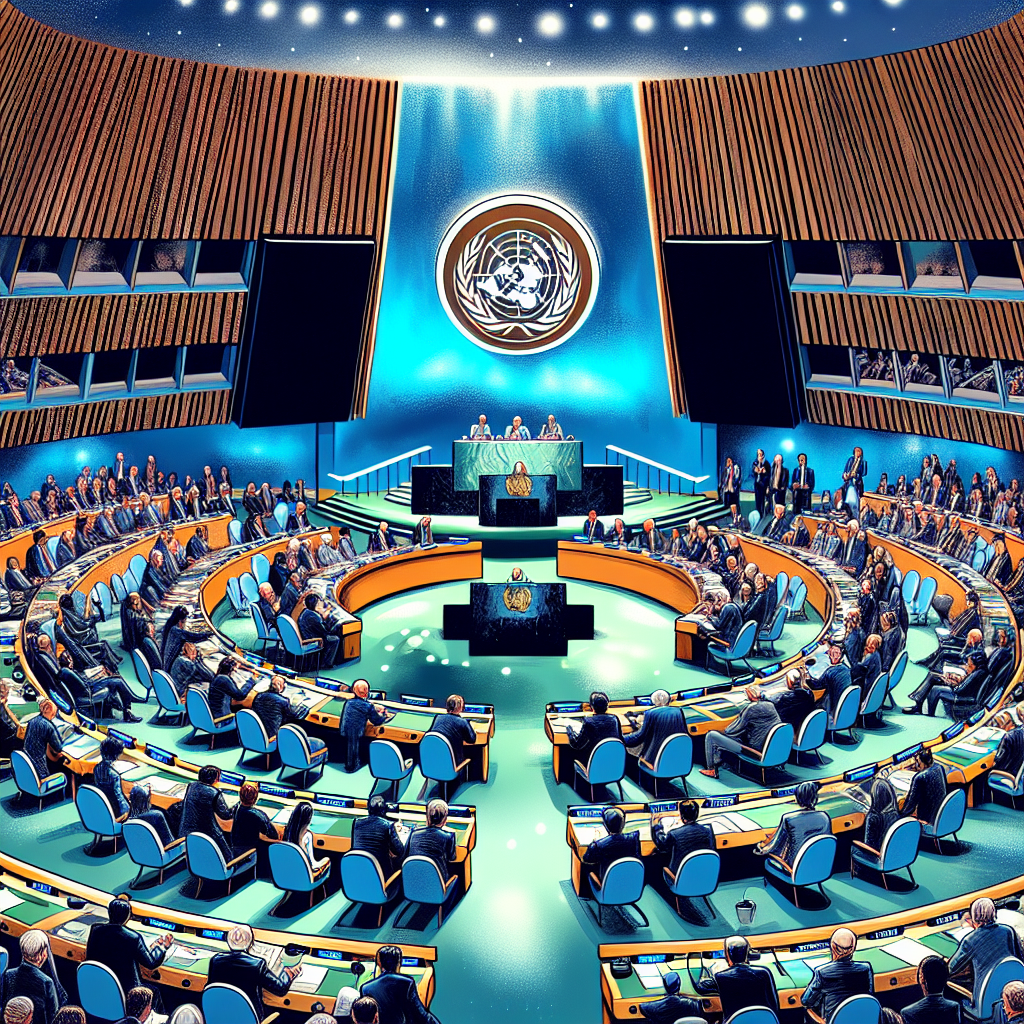
On Monday, April 27, the United States and Iran clashed fiercely at the United Nations over issues related to Iran’s nuclear program and Iran’s selection as Vice-Chair of the Nuclear Non-Proliferation Treaty (NPT) Review Conference.
The 11th NPT Review Conference convened at the United Nations headquarters in New York on April 27 to review the implementation of the treaty that has been in effect since 1970. Groups nominated 34 Vice-Chairs, with Iran among those selected.
Christopher Yeaw, Assistant Secretary of State for Arms Control and Nonproliferation at the U.S. State Department, criticized Iran’s selection as Vice-Chair as a “blatant insult” to the NPT during the conference. He stated that Iran has long flouted its commitments under the NPT and has consistently refused to cooperate with the UN nuclear watchdog to address concerns about its nuclear program, tarnishing the credibility of the conference by allowing Iran to serve as Vice-Chair.
In response, Do HungViet, the conference chair and Vietnamese Ambassador to the UN, stated that Iran was elected by the Non-Aligned Movement group and other country groups.
Iran’s Ambassador to the International Atomic Energy Agency, Reza Najafi, countered the U.S. accusations, calling them unfounded and politically motivated. He claimed that the U.S. itself possesses and develops nuclear weapons while positioning itself as an arbiter of nuclear arms treaties, a stance he deemed untenable.
“Nuclear weapons” have been the central focus of a conflict lasting over two months between Iran, the United States, and Israel. Iran continues to claim its uranium enrichment is for “peaceful” and “energy” purposes, but Western nations believe Iran is attempting to develop nuclear weapons as a means to threaten the globe and the U.S.
Iranian sources revealed that Tehran’s latest proposal to end the conflict involves temporarily shelving discussions on its nuclear program until the conflict ends and the U.S. resolves the dispute over Iranian port blockades. In response, President Trump reiterated the U.S. red line that “Iran must never possess nuclear weapons,” stating that negotiations would be futile and that the U.S. would continue to pressure the Tehran regime.
White House spokesperson Karoline Leavitt informed reporters on April 27 that “President Trump’s red line on Iran is very clear. This is not only true for the American public, but also for them (Iran).”
In addition to nuclear weapons development, Iran has long posed a global security threat through terrorist attacks. Recently, the Tehran regime has threatened the U.S. and global economy by blocking the Strait of Hormuz.
Furthermore, following the killing of Iran’s Supreme Leader Ali Khamenei by the U.S.-Israeli coalition, Iran launched massive missile and drone attacks on Gulf countries, while also directing Hezbollah forces in Lebanon to continue harassing and attacking Israeli civilians.
(Reference: Reuters)