
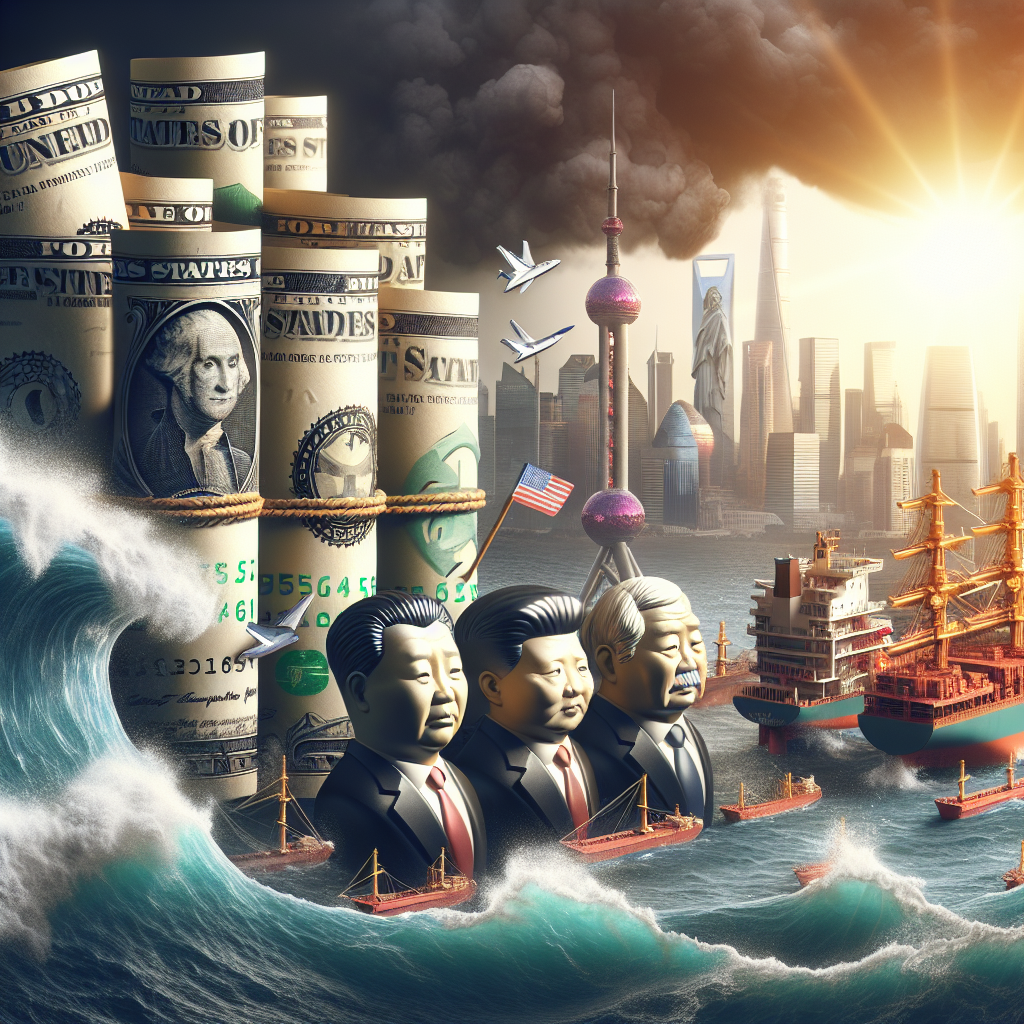
Amidst the strong US dollar and pressures like President Trump’s tariffs, the Chinese yuan has repeatedly fallen against the US dollar. With Chinese companies increasingly going overseas to avoid US tariffs, a large amount of capital outflow has placed further pressure on the yuan.
According to Bloomberg, from automobile manufacturers and electronic companies to mining firms, a large number of Chinese enterprises are ramping up their investments overseas. This outward flow of foreign funds is adding to the pressure on the yuan.
Data released by the Chinese government on Thursday, December 19th showed that in the first 11 months of this year, Chinese non-financial enterprises invested nearly $129 billion overseas. This indicates that capital outflows in 2024 are expected to reach the highest level since 2016. Automobile companies, battery companies, and others are investing overseas to develop new production bases and improve access to raw materials.
A survey by BBVA, a Mexican commercial bank, revealed that in 2018, Chinese companies accounted for 6% of foreign enterprises in Mexico. It is projected that by 2025, this proportion will increase to 20%.
So far this year, foreign companies have withdrawn nearly $13 billion in direct investment, and last month witnessed a historic high in financial market outflows. As Chinese overseas spending continues to rise, it further dims the outlook for the yuan.
On January 20th next year, President-elect Trump will take office in the United States. Following his election victory, Trump had previously stated that if China does not curb the flow of drugs like fentanyl into the US, he will impose an additional 10% tariff on all Chinese goods. During his campaign, Trump even proposed a 60% tariff on Chinese imports to reduce the US-China trade deficit. The final tariff value set by the incoming president is highly anticipated.
Trump’s ally, Republican Senator Tom Cotton, recently mentioned at a Wall Street Journal CEO Council Summit in Washington that Trump might adopt a more open stance in tariff negotiations with Canada and Mexico, possibly making concessions. However, Cotton pointed out that China requires a different approach, as Trump is likely to take a tougher stance against China due to the economic and national security threat that the Chinese Communist Party poses to the US.
Apart from the US, the European Union has also imposed tariffs on Chinese electric vehicles, and other countries are considering slowing down or preventing the influx of cheap Chinese imports. Against this backdrop, Chinese enterprises are increasing their overseas direct investments in hopes of reducing tariff risks and getting closer to customers.
As the yuan has dropped to its lowest level in over a year against the US dollar, there are further risks of depreciation in the future, with more factors potentially exacerbating the downward pressure on the yuan.