
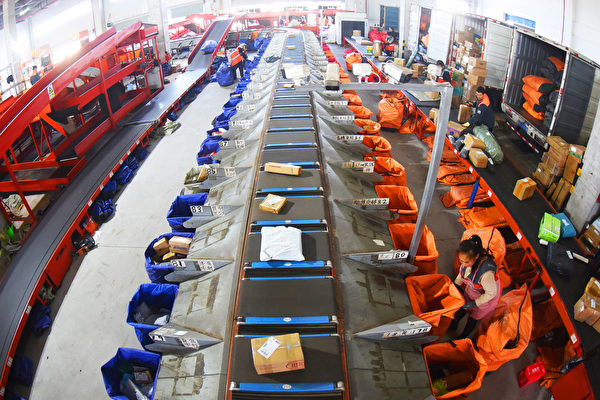
Following the lackluster conclusion of the longest “Double 11” shopping festival in history, Chinese consumers are downsizing their spending, with a significant increase in return rates becoming a hot topic of discussion on mainland China’s internet. Women’s clothing has particularly been hit hard by high return rates, reportedly reaching historic peaks. The wave of returns for women’s clothing from “Double 11” continues, with both buyers and sellers expressing that it has become “too difficult”.
Since last year, the return rate for women’s clothing e-commerce in mainland China has been steadily increasing, with multiple industry insiders stating that this year, the situation has worsened, reaching the highest levels seen in the industry.
Recently, the topic “Historic peak of return rates for women’s clothing stores during Double 11” trended online. One female store owner mentioned, “Out of 2000 orders, 1500 were returned.”
The Shanghai-based “First Financial Daily” quoted the head of the “Seventh Uncle Women’s Clothing Supply Chain” as saying that last year, the return and refund rate for women’s clothing was around 60%, but this year it has increased to 75% to 80%. There are well-known customers with annual turnover amounting to hundreds of millions of yuan, yet after returns, they are left with just over 20 million yuan.
There are even businesses with return rates as high as 80% to 90%.
Consumers have been vocal about their frustrations, with comments like “Buying 10 pieces of women’s clothing and returning 9 is already normal”. Facing a deluge of returned packages, businesses are also facing challenges.
In a recent report by the “Jinling Evening News”, consumer Miss Sun said, “During ‘Double 11’, I bought five pieces of clothing, kept only one, and returned the others because either the color difference was too significant, the size didn’t fit, or the fit was unsatisfactory.” She has had experiences where the clothes she received were completely different from what was showcased by the sellers, which is simply unacceptable.
On social media platforms, the consensus is that “Online shopping for women’s clothing is becoming increasingly difficult”. Issues such as size discrepancies, being able to fit into children’s clothing but not women’s clothing of the same size, differences in color, fabric quality, and style design not matching the description have led to dissatisfaction among consumers in the current e-commerce women’s clothing market, fueling the steady rise in return rates.
With the start of the “Double 11” e-commerce promotions, the high return rate issue in the women’s clothing sector has become particularly pronounced. In response, the Jiangsu Consumer Protection Committee stated that a significant factor is the inconsistency in the quality of goods in the e-commerce women’s clothing market. Businesses have failed to accurately understand the aesthetic preferences, quality requirements, and shopping habits of their target consumers, resulting in a misalignment of supply and demand.
The Jiangsu Consumer Protection Committee also mentioned that online shopping differs from offline shopping, as consumers cannot physically examine the goods. Many women’s clothing models displayed on e-commerce platforms undergo meticulous editing, filtering, and angle selection to present the clothing in the best light. Some stores even directly copy models from other stores. Additionally, some businesses hide critical information such as fabric materials and sizes on the product details page, making it difficult for consumers to assess the actual quality of the products. This leads to significant emotional discrepancies when customers discover serious color variations, improper sizes, poor fabric workmanship, etc., upon receiving the items.
Searching for “women’s clothing returns” on social platforms not only reveals consumer complaints but also showcases many businesses expressing their helplessness. On the Taobao platform, a customer service representative from a women’s clothing store mentioned that the return rate has been steadily increasing over the past few years. Apart from inappropriate return requests, there are also malicious consumers who take advantage, wearing the clothes before returning them. This not only increases the store’s logistics costs but also affects secondary sales.
The head of Metersbonwe once stated that the average return rate for clothing categories has exceeded 70%, with fashion items reaching over 90%. Clothing that has been returned or exchanged more than three times is usually scrapped.
The soaring return rate in the e-commerce women’s clothing sector has disrupted the ecosystem. According to incomplete statistics from the Lian Business Network, no less than 40 women’s clothing online stores have announced closures or have ceased introducing new products this year.
E-commerce women’s clothing businesses are generally considered “difficult to run” and “unprofitable.” This year, a wave of closures has swept through the women’s clothing e-commerce sector. Stores with over 3.07 million fans like “HaGuo HACO” and those with 2.74 million fans like “sunnydand” have closed. There have even been well-known stores that have “shut down”.
With more than 5 million followers, “Little Belle” attracted consumers with extremely low prices in May this year, only to not deliver the products or issue refunds, leaving suppliers unpaid.
Some netizens point out that consumer spending is weak, the current women’s clothing e-commerce market is becoming saturated, and solely relying on high traffic explosive products or low-price promotions makes sustaining long-term competitiveness challenging. Consequently, it is inevitable that there will be a harsh round of eliminations in the future.
Facing the persistently high return rates, there are continually frustrated consumers and distressed business owners. Where lies the way forward for e-commerce women’s clothing?