
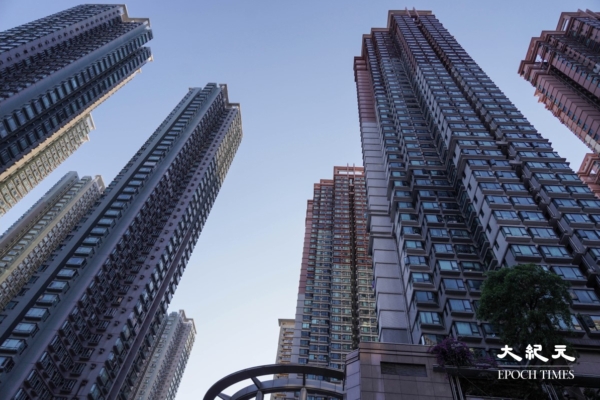
Shenzhen has once again relaxed its real estate purchase restrictions. This move comes as a follow-up to last year’s loosening of restrictions on purchases and loans, once again stimulating the real estate market. The new policy this time focuses on core areas such as Futian, Nanshan, Baoan Xin’an Street, while significantly increasing the loan amounts from the housing provident fund. Analysis indicates that the current performance of the Shenzhen market is weaker compared to Beijing and Shanghai. The Shenzhen authorities rushed to announce the relaxation of real estate policies before the “May Day” holiday, and the effects are still pending observation.
On the evening of April 29, the Housing and Construction Bureau of Shenzhen issued a notice titled “About Further Optimizing and Adjusting the Real Estate Related Policies of the City,” primarily opening up core areas such as Futian, Nanshan, and Baoan Xin’an. Building upon the existing limit of 2 properties per person, individuals are now allowed to purchase an additional property, up to a maximum of 3 residential properties. Non-Shenzhen residents who have paid social security or personal income tax for a full year can purchase 2 properties in the core areas (Futian, Nanshan, Baoan Xin’an Street) instead of the previous limit of 1 property. Non-Shenzhen residents holding residence permits no longer need to provide proof of social security or personal income tax to buy 1 property in the core areas.
Simultaneously, there are enhancements in the housing provident fund credit incentives, with the individual housing provident fund loan limit raised to 700,000 yuan, and 1.3 million yuan for families. The preferential rates for first-time homeowners, families with multiple children, and newlyweds have been comprehensively increased. Multiple conditions can be combined, allowing families to borrow up to a maximum of 3.51 million yuan.
This notice will come into effect from April 30, 2026.
Industry insiders believe that Shenzhen’s decision to introduce policies before the “May Day” holiday might be related to the local market performance.
According to a report from Caixin, Li Yujia, Chief Researcher of the Guangdong Housing Policy Research Center, introduced that the current performance of the Shenzhen market is weaker compared to Beijing and Shanghai. There is significant pressure on the sales of new properties in Shenzhen, with some projects still having subscription rates below 20%, indicating that some newly listed properties remain unsold. Additionally, the decline in prices of second-hand homes and dominance of low-priced transactions pose challenges for selling properties in the mid to high price range, competing with new properties.
Data from Anjuke showed a decrease in the housing search activity in Shenzhen: the housing search heat for new properties in Shenzhen was 59.1 in the 17th week of this year, a slight year-on-year decrease of 0.3% and a 1.7% decrease from the previous week; while the housing search heat for second-hand properties was 57.9, down 3.5% year-on-year and 3.0% week-on-week, suggesting a relatively weak recovery trend compared to other first-tier cities.
According to monitoring data from Zhongyuan Real Estate, as of April 28, the Shenzhen real estate market has shown an uneven distribution of heat. New residential properties have totaled 3,033 transactions, a decrease of 11.8% year-on-year, while second-hand residential properties have seen 5,333 transactions, down 3.6% year-on-year.
The news of Shenzhen once again introducing new policies to relax the real estate market has been circulating on social media platforms. Some opinions suggest that the policies are still relatively complex and have not completely lifted purchase restrictions (in contrast to Guangzhou’s 2024 policies), and the effects are yet to be observed.
Some users on Weibo have raised questions about Shenzhen’s so-called “minor spring.”
User “MayorIsHandsome” remarked: “Some Shenzhen agents were saying we need to rush to buy houses? How come the purchase restrictions are now being relaxed?”
User “MasterOfChineseStudies” made a meaningful statement, saying that Shenzhen’s reintroduction of real estate easing policies makes one think under what circumstances such relaxation policies would appear. The policies now further clarify the direction of the market trend.
User “ChengduRealEstateJokes” expressed that this move by Shenzhen, following the September 2024 relaxation of non-core area purchase restrictions, is almost a complete openness – Shenzhen’s real estate market is almost baring it all; only time will tell its effects.
In a report by Securities Times, Li Yujia, Chief Researcher of the Guangdong Urban and Rural Planning Institute’s Housing Policy Research Center, mentioned that the current foundation for stabilizing the real estate market is not yet solid. He proposed strengthening supply-side management, strictly controlling the scale of land supply, promoting the exchange of old homes for new ones in the second-hand housing market, increasing the flow of housing provident fund transfers across regions, and coordinating the effective use of policies such as housing purchase incentives and fiscal subsidies to create a systemic integration effect.
It is worth noting that the Central Political Bureau of the Communist Party of China held a meeting on April 28 to analyze and research the current economic situation and economic work, stating the need to “effectively prevent and defuse risks in key areas and make efforts to stabilize the real estate market.”