
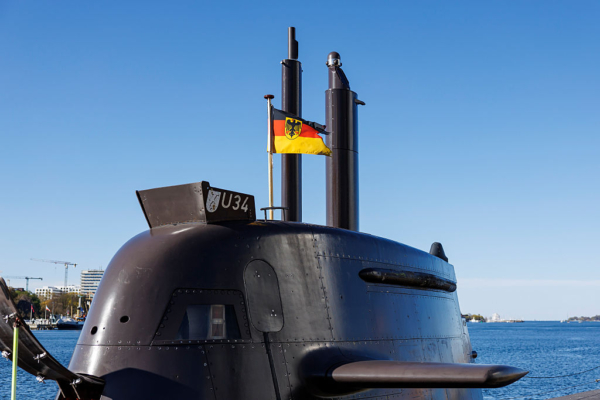
Driven by wars, uncertainty, and geopolitical tensions, global military spending continues to reach new highs, as reported by the Stockholm International Peace Research Institute (SIPRI). Germany ranks first in Europe and fourth in the world, following only the United States, China, and Russia.
According to SIPRI’s latest report, global military expenditure in 2025 marked a record high for the 11th consecutive year, with a projection for this trend to persist in the near future. Inflation-adjusted figures show a 2.9% increase in global military spending in 2025 compared to the previous year, with a staggering 41% rise over the past decade, totaling nearly $2.89 trillion.
Of note, the rate of increase in military spending in 2025 was lower than in 2024, attributed primarily to reduced U.S. aid to Ukraine. However, the U.S. simultaneously increased investments in its nuclear and conventional military capabilities.
Despite fluctuations, the U.S. remains the world’s highest spender on military, dedicating around €814 billion, far surpassing other countries. SIPRI expert Diego Lopes da Silva noted the U.S. plans to further bolster military spending in the future.
The main driver of global military spending growth in 2025 came from Europe, with European countries increasing military expenditures by 14% annually, reflecting intensified security concerns.
Experts suggest doubts among European nations about the reliability of the U.S. as a NATO ally in the future. Concerns over a deteriorating international security environment often prompt countries to boost military spending to enhance their sense of security.
Germany ranked fourth globally in military spending in 2025, trailing the U.S., China, and Russia, and led among European countries. Its military expenditure surged by 24% to around €114 billion, reaching the NATO goal of 2% of GDP for the first time since 1990, with 22 European NATO members meeting the benchmark.
Amid the fourth year of the Russia-Ukraine conflict, both Russia and Ukraine saw significant increases in military spending. Ukraine, in particular, allocated 40% of its GDP to military expenses, surpassing even the high levels seen in 2024.
Furthermore, over 60% of Ukraine’s government spending went to military purposes. Experts warn that such a high proportion, if further elevated, could severely impact essential public service expenditures.
Asian countries, including China, Japan, Taiwan, India, and Pakistan, continued to ramp up military spending, reflecting escalating regional tensions.
Conversely, the Middle East saw a smaller overall increase in military spending. Notably, Israel witnessed a decrease in military spending, attributed to reduced conflict intensity following the Gaza ceasefire agreement in early 2025.
Iran, facing economic challenges, experienced a slight drop in inflation-adjusted military expenditure. However, disregarding inflation, SIPRI data indicates a rise in actual military spending, suggesting Iran may be leveraging unaccounted-for oil revenues to fund military developments, including missile and drone projects.
SIPRI forecasts a continuation of the upward trend in global military spending in 2026. Researchers point to the numerous global conflicts as a factor hindering significant improvements in the short term security landscape. Da Silva expressed skepticism about any significant turnaround in global conditions in the next year that could reverse the upward trajectory of military spending.
SIPRI’s annual report on global military expenditure is considered the most comprehensive compilation of such data, encompassing expenses on military personnel, arms imports, and military research and development.