
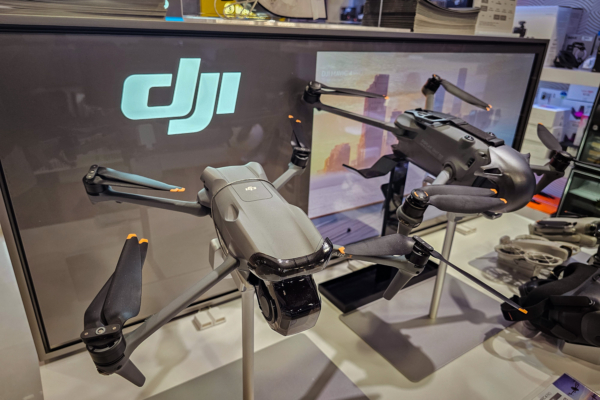
Beijing is about to implement the strictest regulations on unmanned aerial vehicles in history. Starting from May 1, all unmanned aerial vehicles will be banned from flying, selling, and transporting in Beijing. The industry leader, DJI Innovation in Beijing, has initiated the process of removing products from all its stores. This new regulation has sparked discussions online, with analysts suggesting that the top Chinese Communist Party leaders fear attacks and information leaks by drones.
On April 27, the Beijing Municipal Government website announced that the “Beijing Municipality Regulations on Unmanned Aircraft” will officially take effect from May 1, 2026.
Under the new regulation, the entire administrative region of Beijing will be designated as controlled airspace for unmanned aircraft. All outdoor flight activities will require prior approval, meaning that in all areas of Beijing, whether it be parks, scenic spots, or wildlands, flights must be approved by the air traffic management authorities and cannot be conducted without authorization.
The new regulations explicitly prohibit individuals from outside Beijing from transporting or carrying unmanned aerial vehicles and their core components into the administrative region of Beijing. This includes individuals arriving in Beijing by high-speed rail, inter-provincial buses, airplanes, or driving into Beijing (including transiting or passing through Beijing).
Those planning to carry unmanned aerial vehicles out of Beijing can only do so with drones that have undergone information verification by the Beijing Public Security Bureau and must be carried back to Beijing by the owner (or a designated manager).
Furthermore, the new regulations state that both physical stores and online platforms are prohibited from selling or renting various types of unmanned aerial vehicles and their core components to individuals and entities within the administrative region of Beijing.
According to reports from The Interface News, DJI Innovation has begun the process of removing products from all its stores in Beijing. On April 29, a staff member at the DJI Guomao flagship store confirmed that starting from 4 p.m. that day, all Beijing stores would no longer sell DJI drones. Prior to 4 p.m., only the DJI Guomao flagship store in Beijing had a limited selection of drone models available for sale, with prices matching those on the official website and no discounts offered.
The staff member mentioned that all drone products in Beijing must be cleared by April 30, and online platforms have ceased shipping to Beijing. Regarding existing drone users in Beijing needing repairs, the staff stated that the Beijing DJI stores do not provide repair services and advised customers to either send their drones for self-repair in other provinces or have them replaced at authorized service centers locally.
It was reported that some DJI drones can still be ordered normally on JD.com, with orders before 23:10 on April 29 expected to be delivered on April 30. However, the majority of drone products in the official DJI flagship store on Tmall display a message stating, “This product does not support sales in the current area (Beijing).”
Recently, Chinese expert Wang He expressed to The Epoch Times that Beijing is where the top leaders of the Chinese Communist Party work and live. Instances like the capture of Venezuelan President Maduro and the killing of Iran’s Supreme Leader Khamenei indicate that the United States may have obtained their information precisely through various means. This has posed a significant deterrent to the Chinese Communist Party. Since drones can collect data through low-altitude flights, the CCP has issued strict regulations across Beijing.
Assistant Researcher Wang Xiaowen from the PLA’s Political-Military and Operational Concept Research Institute at the Taiwan Institute for National Defense and Security Studies told The Epoch Times that China’s fear of drones has heightened following the precise elimination of Iranian leadership by the U.S. military in the Middle East. If precautions are necessary against foreign drones, there is no reason to allow free takeoffs and landings of domestic drones, as it’s challenging to distinguish between what is safe and what poses a threat, hence the strict control measures. As for whether this will ultimately lead to the demise of the industry, it may not be a consideration at the top levels of the CCP.
On April 29, the topic labeled “Beijing to ban drones from flying and selling starting May 1” surged to the top of Weibo’s hot search list.
Netizens commented, “Why is that? Drones contribute to the low-altitude economy.” “Then what’s the point of advocating for the low-altitude economy if even passenger VTOLs are restricted, the low-altitude economy is already dead.”
“Why is this happening? The United States might impose sanctions, but why China???” “Is Beijing now managing drones as weapons? Are purchased drones from other places not allowed back to Beijing?” “Both sales and transport are banned. Drones and parts cannot be shipped to Beijing.” “DJI drones have lost the Beijing market.” “Comprehensive and strict control has become inevitable.”
“I was discussing the ban on flying with colleagues a while back, and at that time, I learned that each individual in Beijing has a limited quota for consumer-grade drones. After this ban, new purchases are not possible, and existing users are allowed a maximum of three drones each; should any of them be compromised, they’ll be out of options.”
“I just wonder, does Washington or Tokyo also prohibit drone flights and sales??” “It seems a bit excessive to not trust one’s own people. They are afraid of a drone flying over their heads one day.” “Regions are tightening controls, and the process is more stringent.”
“Will other places follow suit? Will there be a nationwide ban on drones?” “Will the policy of banning drone flights and sales be extended to the entire country? Will the consumer-grade drone industry collapse?” “It’s predicted that regions nationwide will gradually follow suit, leading to the complete exit of drones from the personal consumer market.”