
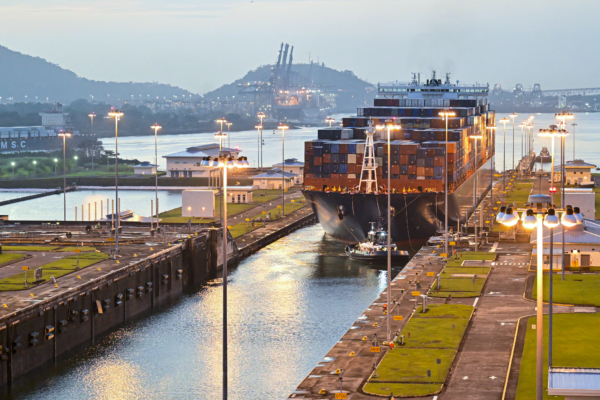
Due to the closure of the Hormuz Strait caused by the Middle East conflict, global energy trade routes are experiencing a rare structural reshuffle. The latest shipping data shows that Asian countries, which used to purchase energy from the Middle East, have begun to buy US crude oil, leading to Panama Canal experiencing its highest oil transit volume in nearly four years in April, with auction prices reaching a staggering $4 million.
Affected by the disruption of the Hormuz Strait route, Asian refinery companies in countries such as Japan, South Korea, India, and China have quickly shifted their purchasing focus from Gulf countries to the United States.
According to data from maritime intelligence agency Kpler, the amount of US crude oil shipped to Asia through the Panama Canal in April has exceeded 200,000 barrels per day, close to the highest level since July 2022.
Lloyd’s List Intelligence commented on this unusual phenomenon, stating that “crude cargoes typically do not flow from the Atlantic basin to Asia via the Panama-type locks, but this is now happening.”
Currently, the waiting time for fleets to enter the canal has reached 3.5 days.
Due to the surge in transit demand, auction prices for canal passage rights have skyrocketed. Victor Vial, financial director of the Panama Canal Authority, pointed out that the average auction price before the conflict was around $135,000 to $140,000, but in March and April, the average prices have risen to $385,000 to $425,000. In comparison, the previous expedited transit fee was only $250,000 to $300,000.
Ricaurte Vásquez Morales, the administrator of the canal, further revealed that a company paid up to $4 million in auction premium to purchase “last-minute crossing slots” to secure immediate passage.
Vásquez explained, “It was a ship carrying fuel to Europe, which was redirected midstream to Singapore and had to arrive there quickly because fuel in Singapore was running low.”
With Brent crude oil prices surpassing $110 per barrel and Asia’s refining margins remaining high, such high premiums still make economic sense for shipping companies.
The Panama Canal Authority stated that it is making increased efforts to maintain the canal’s continuous operation in the face of soaring traffic demand and tonnage.
Vásquez emphasized, “Amid the complex and changing global geopolitical situation and various factors affecting international trade, the Panama Canal remains open and reliable. Especially now, as water levels are ideal, we are accommodating growing traffic.”
Statistics show that from October 2025 to March 2026, the canal recorded 6,288 transits, an increase of 224 compared to the same period in the previous fiscal year, with the highest daily transit exceeding 40 sailings.
Vial expects, “This situation will continue until the resolution of the Middle East situation.”
However, the transport capacity of the Panama Canal still has physical limits. For the Panama locks designed specifically for container ships, large oil tankers are too massive, so the waterway can only transport approximately 1 to 2 million barrels of US crude oil per day, not enough to fully replace the 20 million barrels flowing through the Hormuz Strait daily.
Internationally, there is also close attention to whether Panama Canal’s shipping volume will remain high or return to normal levels of 2024 once the Hormuz Strait reopens.