
The Chinese Ministry of State Security disclosed three cases of industrial chain supply chain leaks through its official public account on April 23. The official statement also called for strengthening control measures for hardware, software, and personnel. Sources indicate that the Chinese authorities have elevated industrial competition to the level of national security, with corporate information now being subjected to tighter controls.
The Ministry of State Security released an article on April 23 titled “No Room for ‘Broken Links'” which highlighted the increasing covert and systematic infiltration activities by foreign spy agencies targeting China’s industrial chain supply chain. The article revealed three cases, including a deputy general manager of a rare earth company providing 7 national secrets to foreign entities and a semiconductor engineer leaking core technologies.
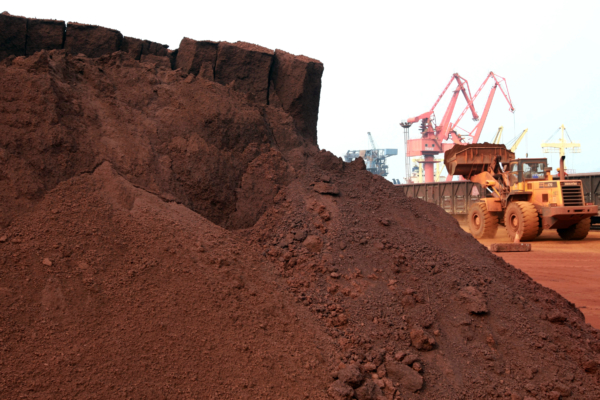
A source in the field of non-ferrous metals industry in China, referred to as Ji Nan, told reporters that recent “anti-spy” propaganda by the authorities has significantly expanded the scope of confidentiality outward, serving as a warning internally. Ji Nan stated, “Rare earth and related mineral resources are not exclusive to China, but due to the pollution-intensive nature of mining and refining, this responsibility has traditionally been borne by China. These technologies are not considered top-notch hi-tech, but in recent years, they have been elevated to the level of national secrecy, increasing their strategic importance.”
The disclosure revealed that a foreign non-ferrous metal company made contact with a deputy general manager of a rare earth company named Cheng through a Chinese employee named Ye, enticing Cheng with money to divulge seven confidential national secrets on rare earth storage categories, quantities, and prices. The individuals involved have been dealt with by authorities.
Ji Nan disclosed that the Chinese authorities are elevating industrial competition to a national security level, redefining many aspects that were formerly within the realm of the market. Following China’s restrictions on the export of rare earths, gallium, germanium, and tungsten to countries like the US and Japan, engineers and technical personnel in related fields have been placed on restricted exit lists. According to information from a friend, experts in mining and refining from regions like Inner Mongolia, Jiangxi, Guizhou, and Guangxi are currently unable to leave the country. Strict orders have been issued, prohibiting the sharing of any work-related information on social platforms and discussing business details externally.
Apart from rare earth companies, the authorities also reported a case involving a former engineer at a Chinese semiconductor company named Zhang who breached confidentiality agreements post-resignation by providing core production process parameters and design drawings to foreign organizations. The report stated that such actions could result in losses in research and development investments for the company and impact its position in the industrial chain. It was further revealed that a certain company infiltrated the e-commerce platform system through technical means, daily stealing over a million pieces of operational data and illicitly profiting millions of yuan.
A semiconductor engineer named Yao Ping expressed that China lags far behind Western countries in semiconductor technology and suggested that the authorities are more concerned about potential revelations of their outdated semiconductor technologies being mocked by the West. He stated, “The technology gap between our semiconductor technology and the West is already decades-old, with another 10-year lag now. Our materials science is not on par with Japan or Germany, and even the core technologies belong to the West; it’s safe to say they were acquired through means like students studying abroad and hackers stealing information. They may fear the leakage of their supposedly antiquated core processes, which would expose that they are merely superficial.”
Yao Ping believes that in certain technological areas like drones, cameras, and lithium battery manufacturing, China may lead, but not in terms of technological advancement. He said, “Ukraine’s drone technology has surpassed China’s, and instead of fearing leaks, you could say the authorities fear the exposure of China’s technological deficiencies to foreign entities.”
The Ministry of State Security in China announced the implementation of security reviews for chips, servers, and industrial control equipment, conducting vulnerability assessments for software and open-source components, enhancing data encryption and cross-border management, and reinforcing background checks and confidential training for key personnel.
In response to these developments, a network engineer, Mr. Wang, stated in an interview, “Now the priority is on ‘security’, while the focus on technology itself has taken a back seat. The background checks and restrictions on key personnel have left many colleagues feeling anxious. Previously, discussions revolved around performance and architecture, but now compliance and risk mitigation take precedence. This comprehensive control places network security and personal responsibility directly at the forefront. For technical professionals, this is not just a professional test but also psychological pressure.”