
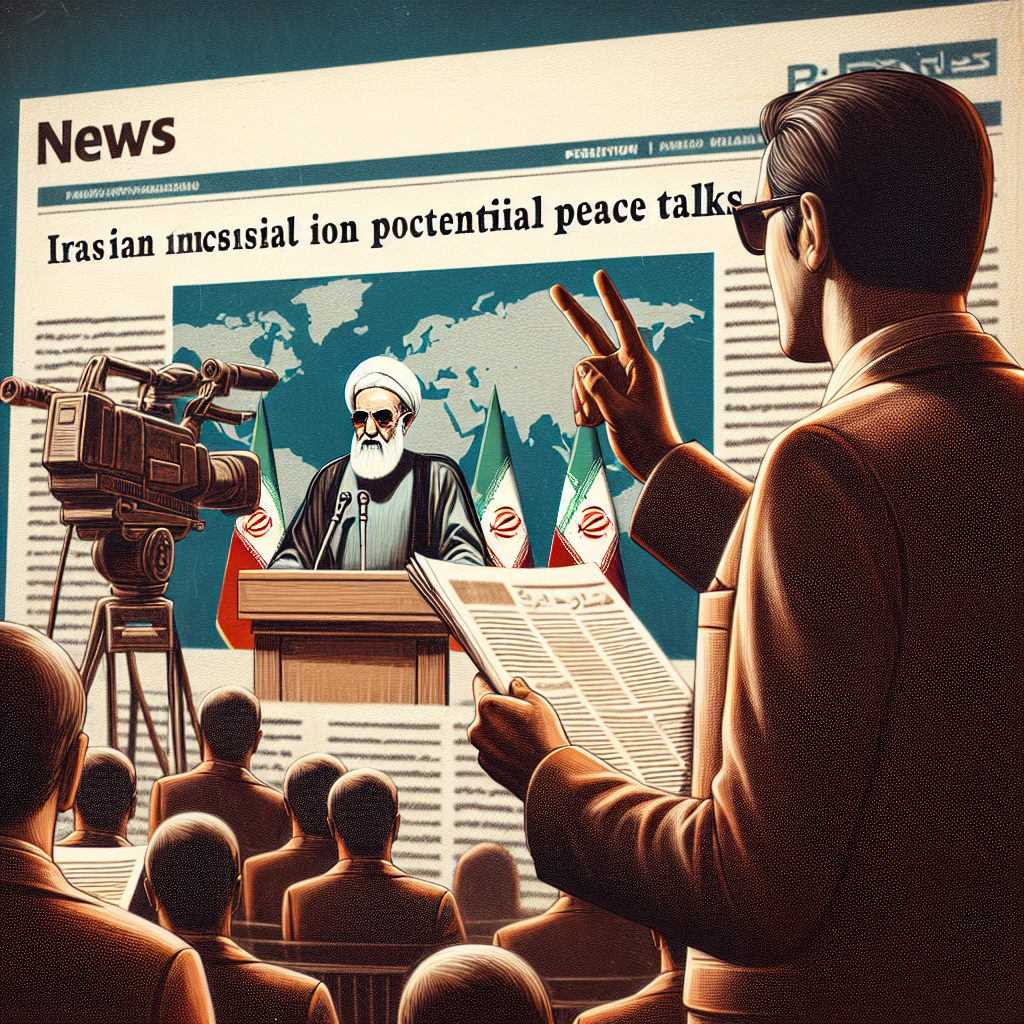
United States President Trump told the New York Post on Wednesday (April 22) that the second round of peace talks between the US and Iran “may be possible” in the coming days. However, Iran has stated that it has not yet decided whether to participate in the talks with the US later this week.
Pakistan is the key mediator for the US-Iran negotiations. According to sources from Pakistan, cited by the New York Post, the US-Iran talks may take place as early as Friday (April 24).
Sources from Pakistan mentioned that mediation efforts with Iran have made positive progress, and there is a possibility of further peace talks between the US and Iran in the next 36 to 72 hours. In response to this news, President Trump told the New York Post via text message, “This is possible.”
Iran’s state television quoted Foreign Ministry spokesperson Esmaeil Baqaei as saying, “Iran has not yet decided whether to participate in the new round of peace talks with the United States later this week.”
A White House official confirmed to Fox News on Wednesday that President Trump was considering extending the ceasefire agreement between the US and Iran for only three to five days. However, Reuters reported Wednesday, citing an insider, that President Trump has not set a timetable for extending the US-Iran ceasefire agreement.
The ceasefire agreement was originally set to expire on Tuesday (April 21). However, on Tuesday, President Trump announced that due to severe internal divisions within the Iranian government, he would extend the US-Iran ceasefire to give Iran more time to present a “unified proposal” for both sides to discuss at the Pakistan talks. Nevertheless, the President also emphasized that the US military would continue to enforce a naval blockade against Iran.
A source from Pakistan informed the New York Post that within hours of Trump’s announcement of the ceasefire extension, Pakistan continued diplomatic communication with Iran through channels.
“Despite the heated rhetoric, the ceasefire agreement remains valid, indicating both sides have a positive willingness. Neither side has taken any military escalation actions,” the source said, adding, “Pakistan remains a key mediator.”
A strategic affairs analyst with deep insights into the discussions within Pakistan’s Foreign Ministry and Defense Ministry stated that the success of diplomacy depends on Iran first resolving its internal issues.
“Currently, any peace talks are essentially predicated on Iran providing a unified response. The US position is that no further negotiations will take place until the Tehran authorities present a unified proposal representing their leadership consensus,” the analyst said.
The analyst added, “This is why the current negotiation phase is effectively in a state of pause until Iran can consolidate its position into a unified negotiation stance.”
This point of contention reflects a deeper fragmentation within Iran’s ruling system, with decision-making authority dispersed among multiple competing power centers, including the elected government, the Guardian Council, the Supreme National Security Council, and the Islamic Revolutionary Guard Corps.