
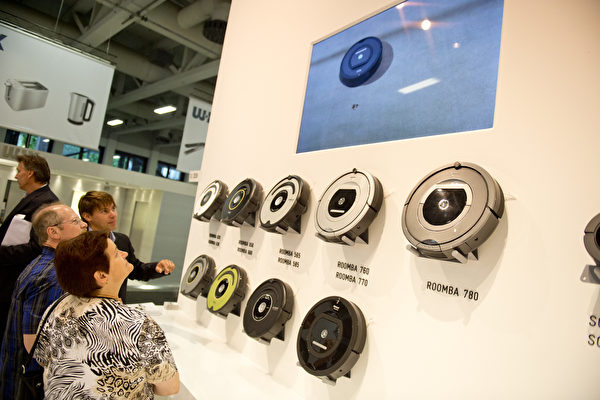
The bankruptcy reorganization deal of the American consumer robot company iRobot continues to raise high concerns in Washington D.C. Two U.S. congressmen recently sent a letter to the U.S. Treasury Department warning that if the related transaction is completed, the control of iRobot may transfer to a supplier with ties to the Chinese Communist Party, potentially exposing sensitive data of many American households to national security risks.
According to the congressional letter, iRobot has filed for bankruptcy protection under Chapter 11 of the Bankruptcy Code in Delaware and has reached a restructuring arrangement with its major supplier, Shenzhen-based Picea Robotics. Under the agreement, a Hong Kong subsidiary of Picea Robotics will acquire full control of iRobot.
The letter points out that Picea Robotics was included in the list of “Specialized and Innovative ‘Little Giants'” by the Chinese Ministry of Industry and Information Technology as early as 2022, indicating it is a company receiving support from the Chinese government, making the transaction particularly sensitive.
The letter, jointly sent by Democratic U.S. Congressman Ritchie Torres and Republican U.S. Congressman Zach Nunn to Treasury Secretary Scott Bessent with copies to Secretary of State Marco Rubio and National Intelligence Director Tulsi Gabbard, emphasizes that transferring control of the Roomba vacuum robot manufacturer to a Chinese supplier through bankruptcy proceedings is essentially equivalent to a merger and could potentially bypass existing U.S. foreign investment security review mechanisms, necessitating vigilance.
Torres and Nunn stress that iRobot’s products have entered millions of American homes, collecting not only cleaning paths but also highly sensitive information such as residential floor plans, interior space layouts, and operational patterns.
Once controlled by an entity with ties to the Chinese Communist Party, this data could be used for monitoring, intelligence analysis, and even in alignment with China’s broader intelligence gathering and technology strategies.
The letter further points out that China’s 2017 National Intelligence Law requires companies and their overseas subsidiaries to comply with data retrieval requests from Chinese intelligence agencies. Even if the transaction structure is completed through a Hong Kong subsidiary, it may not completely exclude the impact of relevant legal obligations on iRobot’s data and technology.
In addition, iRobot possesses a significant amount of intellectual property in autonomous navigation, artificial intelligence, and core robotics technologies, which have dual-use potential and could be integrated into China’s civil-military fusion system.
Given the mentioned risks, the two congressmen are requesting the Committee on Foreign Investment in the United States (CFIUS) to immediately intervene, conduct a comprehensive national security review of the transaction, and assess whether there are mitigating measures sufficient to alleviate concerns. If the risks cannot be effectively mitigated, they recommend considering directly rejecting the transaction. They also request the Treasury Department to report the review progress to Congress no later than February 8 this year.
This matter has also drawn high attention from the U.S. House “Committee on the China Challenge,” which has posted on social media to explain the relevant background, emphasizing that the event involves the data security of the American people and overall national security risks.
Founded by MIT robotics scholars in 1990, iRobot initially focused on military and exploratory robots and opened up the global market with the Roomba vacuum robot in 2002. In recent years, faced with increasing competition and rising costs, financial pressures have mounted, leading to the initiation of bankruptcy reorganization.