
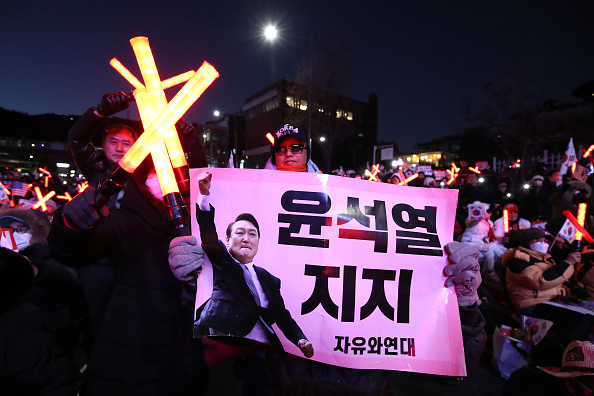
On January 1st, the senior aides of impeached South Korean President Yoon Seok-yool collectively submitted their resignations. However, Acting President Choi Sang-mok stated that he would not accept their resignations.
The presidential office released a statement saying that Yoon Seok-yool’s chief of staff, policy chief, national security adviser, and other senior secretaries have all submitted their resignations, but did not provide further details.
Choi Sang-mok mentioned that he would not accept their resignations as the current priority is to focus on improving the economy and stabilizing national affairs.
The day before, he approved the appointment of two new judges to the Constitutional Court that will determine Yoon Seok-yool’s fate.
Originally, the Constitutional Court only had six judges. Under South Korean law, the impeachment of a president requires the agreement of at least six judges of the Constitutional Court.
If there are only six judges, it means they must all agree on impeaching Yoon Seok-yool for it to happen, which could be more challenging. With an increased number of judges, the difficulty of meeting the requirement of six judges would decrease.
Yoon Seok-yool’s ruling party, the People’s Power Party, criticized Choi Sang-mok’s decision as “dogmatism” and lacking sufficient consultation.
Yoon Seok-yool’s office expressed regret over Choi Sang-mok’s decision.
Last Friday (December 27), Acting President Han Deok-soo was impeached, and Finance Minister Choi Sang-mok took over as acting president.
On Tuesday (December 31), a court in the Seoul area approved the arrest of Yoon Seok-yool, marking the first arrest of a sitting president. Yoon Seok-yool faces charges of rebellion for issuing martial law.
(This article is based on a report by Reuters)