
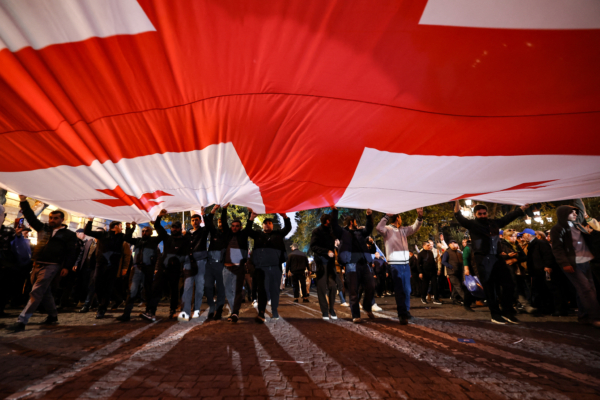
Georgia’s ruling party announced on Thursday (November 28) that the country will delay its negotiations to join the European Union until the end of 2028. At the same time, they have rejected budget allocations from Brussels, citing a series of insults by the EU towards the country.
According to reports by Reuters, Georgia’s ruling alliance, “Georgian Dream,” stated in a press release that the EU has been using the prospect of joining negotiations to “blackmail” Georgia and attempt to “orchestrate a revolution within the country.”
The Georgian Dream party is seen as pro-Russia in its policies.
On Thursday, the European Parliament passed a resolution calling for the annulment of the results of the ruling coalition in October’s elections, suggesting a re-election in the country and imposing sanctions on key figures of the “Georgian Dream” alliance.
In their statement, the alliance declared, “We have decided to suspend negotiations with the EU until the end of 2028. In addition, we reject any budget allocations from the EU until the end of 2028.”
This South Caucasus country with a population of about 4 million had set the goal of joining the EU in its constitution, but relations with Brussels have sharply deteriorated in recent months. The EU has announced a freeze on Georgia’s application.
—
The decision to postpone EU negotiations and reject budget funds has highlighted the growing tensions between Georgia and the European Union. The accusations of blackmail and interference in internal affairs raised by the ruling party have further strained the relationship between the two entities.
The European Parliament’s call for new elections and sanctions against Georgian Dream members reflects the deepening divide over governance and democratic principles within Georgia.
The suspension of negotiations until 2028 marks a significant setback for Georgia’s aspirations to join the EU, as the country had previously embedded this goal in its constitutional framework.
As Georgia reassesses its relationship with the EU, regional dynamics and geopolitical considerations may play a crucial role in shaping the future direction of the country’s foreign policy.
—
The decision by Georgia’s ruling party to push back EU talks and reject financial support signals a shift in the country’s approach to its European integration process. The move is likely to have repercussions on Georgia’s relationship with the EU and could impact the region’s broader political landscape.