
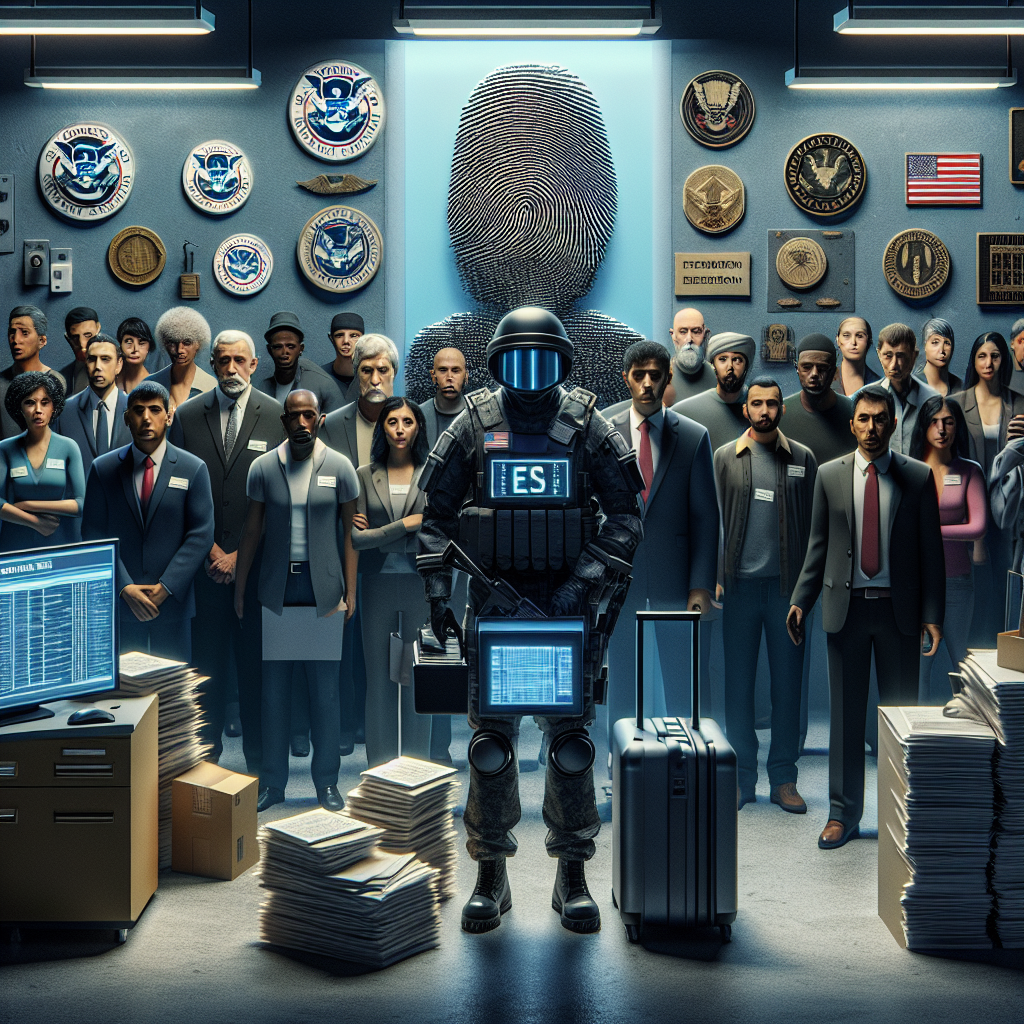
In recent times, the US government has introduced a new mechanism called “Enhanced Security Checks” for immigration applicants. The US authorities emphasize that this move is aimed at upgrading national security, leading to a significant backlog in the processing of immigration cases.
According to an internal guideline obtained by CBS News, the US Citizenship and Immigration Services (USCIS) has ordered officials to immediately halt the approval of all pending green card, asylum, citizenship, and family sponsorship applications until the completion of enhanced background checks by the Federal Bureau of Investigation (FBI).
The new regulation covers all applications requiring fingerprint submissions for biometric identification. If an applicant’s FBI background data was received before April 27th, officials must resubmit fingerprints for a secondary screening.
Due to the requirement not to finalize cases without completing the new round of screening, thousands of cases in the final stages are now forced to pause.
This new policy is in line with an executive order signed by President Trump in February of this year, stating that the Department of Homeland Security (DHS) immigration agencies must gain access to criminal history record information (CHRI) stored by federal law enforcement agencies to the maximum extent permitted by law.
This signifies an unprecedented level of data sharing between USCIS and the FBI, utilizing the FBI’s “Next Generation Identification system” to identify any potential criminal risks.
Based on reports from Business Standard and Reuters, the new regulation has three key impacts on applicants:
Previously, background checks may have relied on limited datasets, but now it shifts towards a “highly controlled, highly verified” mode.
This means that the immigration department will access more extensive criminal history record information of applicants. Applicants will face more comprehensive cross-departmental data comparisons, where even minor record discrepancies could trigger in-depth investigations.
USCIS spokesperson, Zach Kahler, stated in a statement to CBS that the delay will be “temporary,” but the general view within the immigration law community is not very optimistic.
They believe that the resubmission of fingerprints and secondary screening adds to administrative burdens and may lead to chain reactions.
Large-scale rechecks could further paralyze a system already burdened by backlogs, especially for major applicant countries like India and China.
Individuals transitioning from student visas or work visas to permanent residency (green card) will face longer waiting periods.
For citizenship applicants, the final stage before the oath-taking could be delayed by “rechecks” for several months.
Currently, the US immigration system is undergoing a transformation from being “process-driven” to “extreme security-focused.” For applicants, this means that having a clean background record and accurate documentation is more critical than ever before.
USCIS spokesperson Kahler stated, “USCIS will always prioritize the safety of the American people.”