
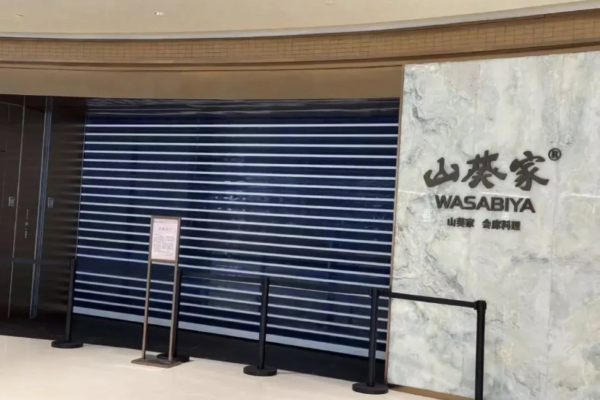
Due to the prolonged economic downturn in China, a large number of businesses have been closing down, giving rise to a new profession known as “store-closing specialists” or “debt-bearing individuals.” These individuals not only help former business owners evade debts but also exploit consumers for their money.
In Shanghai, a “store-closing specialist” took over four gyms for a token fee and then fled after pocketing 750,000 yuan in membership fees from over 200 members. Recently, insiders have revealed more about the dark industry chain of “professional store-closing” schemes.
These “store-closing specialists” are specifically designed to help poorly managed businesses or those looking to skip town with a plan to close their stores, transfer assets, and change the legal entity to a “debt-bearing individual” who lacks the ability to repay, thereby aiding businesses in evading debts, employee salaries, and consumer prepaid expenses.
According to reports from various Chinese media outlets like Red Star News and Xinmin Evening News on Wednesday (April 29), in a case disclosed by the Shanghai Prosecutor’s Office, between October 2023 and September 2024, a person named Tao in Shanghai’s Baoshan, Putuo, Jiading, and Minhang districts took over four gyms for “zero yuan,” collected over 750,000 yuan in total from more than 200 consumers for annual membership and private coaching fees, and these gyms closed within a few months.
Tao took over the gyms via a shell company with a “figurehead representative” named Bai, then had Bai entrust him to run and manage the gyms to conceal his actual controlling identity. In reality, Bai had been farming in another province and had no connection to the organization.
Tao’s modus operandi of deceiving consumers and profiting from them was relatively straightforward. Firstly, he would take over poorly managed stores for free, using tactics like appointing a figurehead representative and delaying commercial registration changes to evade legal risks.
Secondly, by enticing consumers with low-priced memberships, he would delay various expenses while focusing solely on profiteering rather than proper management.
Lastly, after making a quick profit, he would swiftly close down the stores and abscond.
In a report by the China Consumers Association on the top ten consumer rights protection issues in 2024, the phenomenon of “professional store-closing” scams targeting consumers ranked first.
Xie Hui, an associate professor at the Law School of Shandong Normal University, has delved deeper into the dark industry chain of “professional store-closing” schemes. She stated that there is a well-organized gray industry chain behind these schemes. The operator team adopts an “online teaching promotion” model, forming a closed loop consisting of intermediaries, debt-bearing individuals, and legal advisors, along with a standardized process of “orders-reception-packaging-monetization.”
Xie Hui explained that intermediaries even offer “verbal training,” teaching the original owners how to achieve a “soft landing” through methods like phased employee layoffs and gradually suspending services. “Professional store-closing specialists” charge fees based on the proportion of debt, ranging from tens of thousands to hundreds of thousands of yuan.
Former Beijing practicing lawyer and current chairman of the Canadian Alliance, Lai Jianping, previously told media outlets that the decline in China’s economic vitality has led many low-income individuals to struggle with livelihoods, pushing them towards unconventional means for profit by resorting to various fraudulent schemes.
Facing such gray industry chains, Lai Jianping advised lower-income individuals to maintain basic legal knowledge and ethical principles, stating that it is better to endure economic difficulties than to sacrifice personal integrity and social responsibility for short-term gains.
The case of Tao is not isolated, as another report on Wednesday by Chinese media outlets highlighted another instance of a “store-closing specialist.”
In 2024, a poorly managed education consulting company in Shandong in the business of early childhood education and child care became unsustainable. The majority shareholder, Wang, connected with Chen through a social networking platform and signed an agreement with him. Chen promised a comprehensive handover of the company’s equity, business registration changes, and handling disputes related to closing down.
Just three days after the shareholder transfer, the education consulting company abruptly closed its doors. When parents demanded answers, they discovered that the company’s owner had changed, leaving over 1.7 million yuan in prepaid fees from parents unpaid and over 100,000 yuan in employee wages pending.
It is worth noting that Bai from the Shanghai case involving Tao and Chen from the early childhood education case in Shandong are also referred to as “professional debt-bearing individuals.”
These “professional debt-bearing individuals” may have no credit record in the bank’s credit information system or may be individuals in urgent need of money who specifically undertake debts for others, lacking actual financial capacity. Even if held accountable, they have no ability to repay debts, typically carrying a large number of unresolved cases as legal representatives and shareholders in civil matters.