
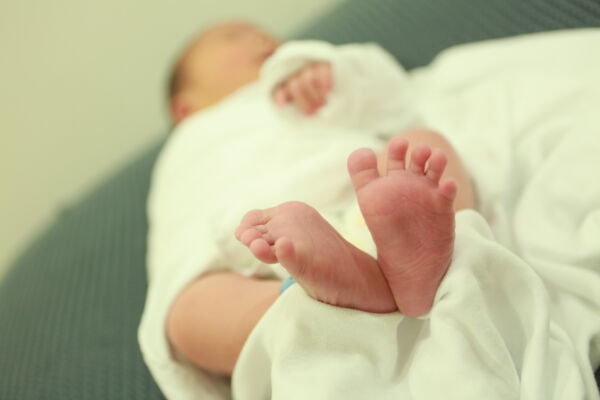
Recently, a woman named Zhou in Hangzhou, Zhejiang Province, accused that she spent nearly 300,000 yuan to stay at a luxury postpartum care center, only to find a stark contrast between the meals provided and the advertised ones. She even discovered strange-smelling chicken wings and ceramic shards in the food. After transferring to another location, she found many bugs in the baby crib, stating that she spent the entire postpartum period “almost every day in shock”.
According to the Chinese media outlet “1818 Gold Eyes”, Zhou spent nearly 200,000 yuan in September 2024 to stay at the “Xiao Beila” luxury postpartum care center under the Shengbeila brand in Hangzhou, and an additional nearly 100,000 yuan for postpartum recovery.
The services at the postpartum care center included 24-hour one-on-one care by professional nurses, rounds by chief obstetricians and pediatricians, and energetic postpartum meals. The postpartum meals were advertised as “low oil, low salt, five-star chef prepared, customized meals”, and there were also phased postpartum tea drinks available.
However, Zhou claimed that upon actual stay, unhealthy fried foods like French fries and fried mushrooms were served instead of the promoted healthy meals, and her dietary restrictions were not taken into consideration. The postpartum tea drink was only provided once on the first day of arrival and was not offered thereafter, with no follow-up on her physical condition.
Furthermore, she encountered chicken wings with strange odors and even found thumb-sized ceramic shards in the soup. Unable to tolerate the poor food quality, she was transferred to another center after staying for 10 days, but the situation worsened.
“I found multiple bugs in the baby crib,” which made her scalp tingle instantly. She mentioned that although there were two caregivers, a nanny, and a housekeeper present 24/7 in the room, none of them noticed the situation until she discovered it and reported it. Only after her report did the nanny and housekeeper remove and handle the baby crib and related items.
Zhou questioned the lack of proper cleaning procedures before the incident, as she found hair, dandruff, and various debris accumulated under the mattress when she lifted it.
What disturbed Zhou even more was that although the postpartum care center had pediatricians regularly check the infants, they failed to notice any issues such as torticollis or facial asymmetry in her baby, which prevented them from promptly advising her, a new mother, to take the baby to the hospital for examination. “It is not at all up to the standards of a high-priced postpartum care center,” Zhou said, mentioning that she still harbors psychological distress and finds it difficult to reconcile.
In response, the postpartum care center and Zhou have been continuously negotiating for improvements, but concrete changes have been delayed. It was not until recently when the center requested Zhou to sign a confidentiality agreement, which stipulated a penalty of 20,000 yuan for breach, that she could no longer endure and chose to make the issue public online.
Following the exposure of the incident, many mothers who had stayed at the postpartum care center left comments, saying they found foreign objects in their juice, even encountering things like “chicken heads”. Some mentioned frequent occurrences of hair in the meals, leading many mothers to resort to ordering takeout for their meals. A mother from Jiangsu commented that after reading the posts, she immediately checked her baby’s mattress and discovered multiple mold spots at the bottom with accompanying photos, although her comment was quickly deleted.
In response, the operators acknowledged shortcomings in food management, attributing them to a lack of strict supervision over the meals provided by partner hotels and a failure to implement ingredient inspection and risk control measures.
Regarding the presence of bugs in the baby crib, the operators explained that at that time, Zhou’s baby crib used a buckwheat pillow, and it could not be ruled out that booklice appeared due to the dampness and rainy weather in the south. Once the issue was identified, the use of similar products was promptly discontinued.
As the largest postpartum care and recovery group in China, Shengbeila was established in 2017. Currently, they own a total of 96 high-end postpartum care centers, including the ultra-high-end flagship center brand Shengbeila, the brand Aiyu designed for middle-to-high-income families, and the brand Xiao Beila targeted at young middle-income families.
The price list provided by Shengbeila’s customer service shows that their most expensive postpartum care package (56 days) costs 1.248 million yuan, equivalent to a daily cost of 22,300 yuan for postpartum care. Even the packages for postpartum care at the relatively lower-positioned Aiyu and Xiao Beila centers require a minimum of 98,800 yuan and 68,000 yuan, respectively.
Data from Ifind shows that from 2021 to 2024, Shengbeila’s net profit was -119 million yuan, -407 million yuan, -239 million yuan, and -547 million yuan, with a cumulative loss of 1.312 billion yuan over four years.