
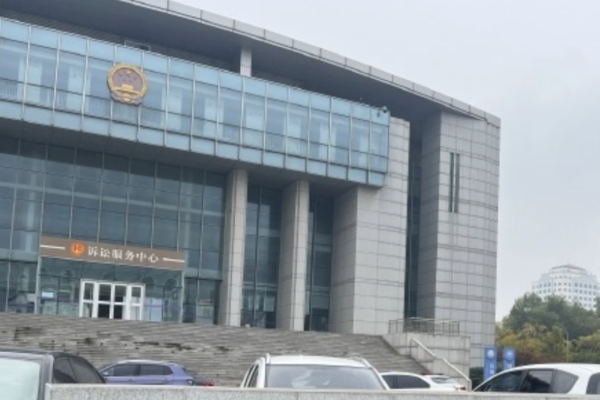
Recently, a court in Sichuan Province, China, made a mistake in citing legal provisions, attracting widespread attention. According to official Chinese media, similar incidents of misquoting laws have been found in several provinces for several years.
On January 14, 2026, the Batang County Court in Sichuan Province issued a notice about “replacing the official seal.” The notice stated that due to the prolonged use of the court’s seal and severe wear on some parts of the seal, a new seal was approved and issued by the Supreme Court in accordance with the “Regulations on Seal Management” and the Supreme Court’s regulations on seal management. The notice included images of the new and old seals.
It wasn’t until three months later that the higher-level Ganzi Intermediate Court in Sichuan Province issued a reminder on April 12 in a work group chat, indicating that some courts had mistakenly cited legal rules in their public announcements, prompting all courts in the jurisdiction to conduct self-inspections. It turned out that the so-called “Regulations on Seal Management” did not actually exist.
How did this mistake happen? The Batang County Court explained in its submission to the higher court that when the office staff of the court drafted the notice, they referenced similar announcements from many other courts and procuratorates found on the internet, all citing the “Regulations on Seal Management.” They mistakenly believed this to be a common practice and directly copied it without independent judgment and review.
A journalist from the Beijing-based media outlet “New Beijing News,” under the local party committee, discovered that since 2019, over 30 courts and procuratorates in more than 10 provinces have cited the so-called “Regulations on Seal Management” in their seal activation notices.
When courts issue public notices, they usually undergo three layers of review and three levels of proofreading. However, numerous judicial institutions failed to detect this error even after going through the full review process.
Apart from citing the “Regulations on Seal Management,” the journalist also found that several judicial institutions have cited the so-called “Regulations on Seal Management by the Ministry of Public Security.”
In response to the inquiries, the Government Information Office of the Ministry of Public Security stated on April 15 that neither of the two “Regulations on Seal Management” had been issued or implemented, and therefore, they did not carry legal weight. The official emphasized that all references made by the units were incorrect.
Under the Chinese Communist Party system, the act of affixing an official seal often holds more legal and practical power than a signature. Whoever controls the “official seal” can sign contracts and issue official letters on behalf of the institution. Therefore, a seal is not just a seal; it serves as a symbol of authority.