
On Thursday, April 23, Goldman Sachs stated that the oil production in the Persian Gulf, severely impacted by the Middle East conflict, is expected to gradually recover in the months following the reopening of the Strait of Hormuz. However, the speed of recovery depends on the duration of the strait’s closure, as the longer it remains closed, the greater the time and difficulty required for production to resume.
Goldman Sachs estimated that in April, approximately 14.5 million barrels of crude oil production were halted in the Persian Gulf daily, equivalent to 57% of pre-war supply levels. However, this is mainly due to precautionary shutdowns and inventory management, rather than physical damage to oil fields.
This distinction is crucial for the outlook of recovery. If the oil fields and infrastructure are largely undamaged, the time for oil production capacity to return to normal will be significantly shortened; otherwise, the recovery time will be prolonged. Under normal circumstances, the Strait of Hormuz accounts for about one-fifth of global oil transport, and a prolonged interruption will have a significant impact on the global energy market.
Goldman Sachs predicted in a research report that if the Strait of Hormuz can reopen safely and sustainably, and the oil infrastructure is no longer under attack, Saudi Arabia and the UAE’s idle production capacity could quickly fill the energy gap.
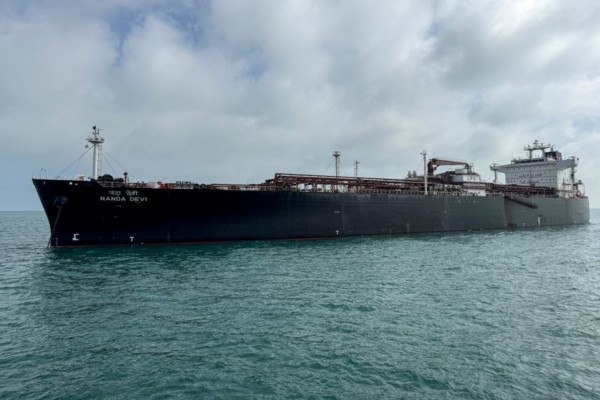
The report also mentioned two major constraints on oil transportation. Firstly, the available tanker capacity in the Persian Gulf region has decreased by about 130 million barrels, a 50% reduction. This means that as oil fields resume production, the logistics chain for transporting oil to the market will need time to rebuild, limiting actual oil export capacity.
Secondly, prolonged shutdowns of oil wells may lead to a decrease in production, especially in low-pressure and aging fields that require “well restoration operations” to fully resume production. Therefore, the longer the shutdown period, the slower the recovery rate.
Furthermore, Goldman Sachs predicts significant differences in the recovery prospects of various countries. Saudi Arabia, with its good infrastructure and ample remaining production capacity, is considered to be the most capable of rapid recovery, while Iraq is affected by oil field characteristics and infrastructure limitations, and Iran faces stricter international sanctions, hindering the oil production recovery in both countries.
According to external organizations’ average predictions, oil-producing countries in the Persian Gulf region are expected to recover approximately 70% of reduced production within three months of the strait reopening and around 88% within six months.
These figures provide some assurance to the market, but also highlight the magnitude of the supply gap that will take time to fill. However, the key variable for the energy market remains how long the Strait of Hormuz will remain closed, as a longer closure poses higher risks of damage to the oil supply chain.
(Reference: Reuters)