
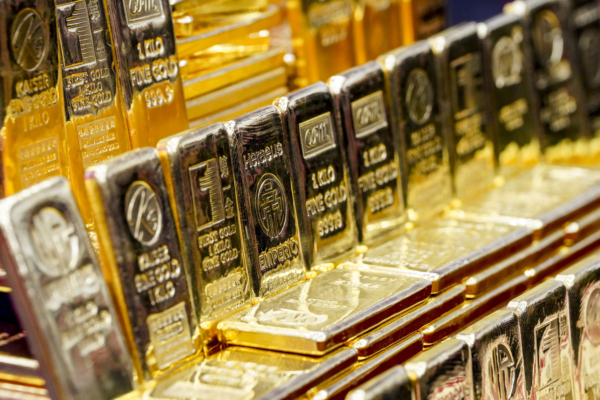
Gold prices continued to rise on Wednesday, January 28th, surpassing the $5300 per ounce mark for the first time, driven by economic and geopolitical uncertainties. Experts suggest that if the Federal Reserve implements a looser monetary policy this year and geopolitical risks continue to weaken the US dollar, the price of gold could potentially exceed $10,000 per ounce.
As of 2:40 PM Eastern Time on Wednesday, spot gold prices rose by 2.2% to $5301.60 per ounce, reaching a peak of $5325.56 per ounce during the day, a historic record.
According to Reuters, Peter Grant, Vice President and Senior Metals Strategist at Zaner Metals, stated that gold is currently in an overbought condition. Despite the risk of price corrections, strong buying support during price declines is expected to drive gold prices up to the next target of $5400.
SBG Securities believes that if monetary policy becomes more accommodative and geopolitical factors continue to weaken the US dollar, gold prices could surpass the $10,000 mark this year. Analyst Adrian Hammond from SBG Securities mentioned that the upward momentum in gold prices is more influenced by macroeconomic factors rather than mining leverage.
Expectations of interest rate cuts in the United States remain a key driver for gold prices. While the market anticipates two rate cuts by the Federal Reserve this year, Hammond forecasts that there could be even more significant cuts, potentially leading gold prices to $7000 per ounce by the end of the year. If the Federal Reserve adopts a more dovish stance, gold prices could surge to $10,000.
However, Hammond emphasized that maintaining stable interest rates is a more cautious approach. He believes that the weakening US dollar is already fueling inflation in the United States, and with the added impact of rising energy prices, inflation could intensify further.
The Federal Reserve announced on Wednesday its decision to keep interest rates unchanged, citing slightly elevated inflation levels and steady economic growth in the US. The Fed did not disclose when the next rate cut might occur, but the market expects any adjustment to rates to be delayed until at least June.
Gold, being a non-interest bearing hedge asset, typically performs well in low-interest-rate environments. Since the beginning of this year, gold prices have surged by over 20%, continuing the record-breaking gains from last year.
Central bank purchases of gold from various countries continue to support the demand for gold. In November last year, global gold reserves increased by 45 tons, with official gold reserves of the People’s Republic of China climbing to a record 2304 tons by the end of the third quarter of 2025. The People’s Bank of China has been increasing its gold holdings every month since last year.
(This article is for general information purposes only and does not constitute any recommendation. The Epoch Times does not provide investment, tax, legal, financial planning, or other personal financial advice. For specific investment matters, please consult with your financial advisor. The Epoch Times does not assume any investment responsibility.)