
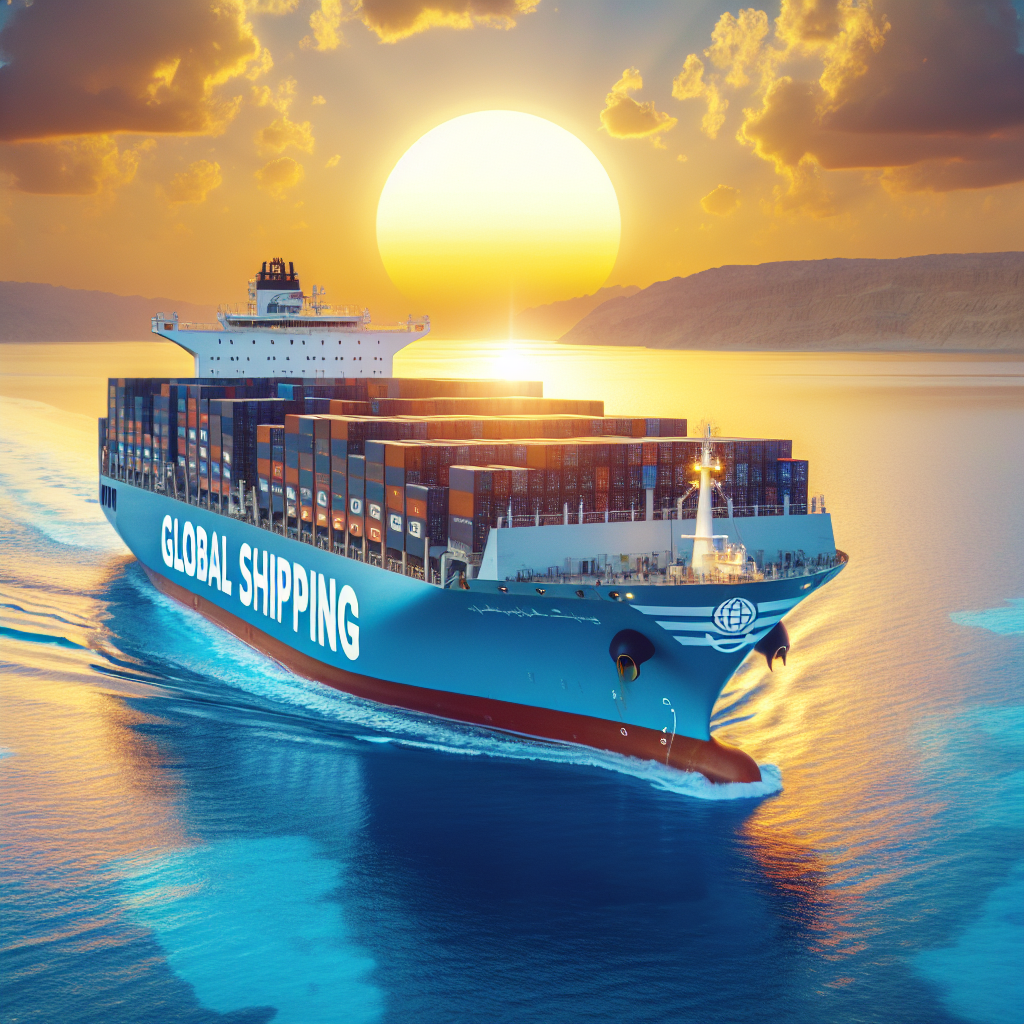
Global shipping giant Maersk confirmed on Friday that its vessels have successfully crossed the Red Sea and the Strait of Mandeb, marking the first attempt to return to this vital trade route connecting Asia and Europe since the Red Sea crisis at the end of 2023. This signifies the imminent revival of the critical global trade route that had been absent for nearly two years amid easing geopolitical tensions.
In a statement, Maersk verified that its container ship, the Maersk Sebarok, safely transited the Red Sea from Thursday to Friday.
Despite the successful passage, Maersk has not announced a full return. The company stated that it will adopt a gradual approach to resuming operations and currently has no further large-scale resumption plans.
This breakthrough by Maersk is seen as the first economic benefit following the “Gaza 20-Point Peace Plan” brokered by former US President Donald Trump in October. The agreement not only led to the release of hostages and a comprehensive ceasefire but also saw the establishment of an “International Stability Force” comprising multiple countries to take over security monitoring, effectively eliminating the political pretext for Houthi attacks on commercial vessels.
As the peace agreement progresses into its advanced stages, the once turbulent Red Sea region is returning to normalcy in terms of trade. Major shipping companies are shifting from “case-by-case assessments” to “structural adjustments,” including CMA CGM.
According to reports by Reuters, CMA CGM plans to restore its “India-US INDAMEX” route using the Suez Canal from January 2026, as indicated in the latest shipping schedules.
The CEO of Hapag-Lloyd also stated that they plan to transition gradually, closely monitoring safety data. An estimated transition period of 60 to 90 days is anticipated to adjust logistics systems to prevent port congestions resulting from a sudden influx of ships.
The reopening of the Red Sea route is undoubtedly a significant positive development after two years of high global freight rates and supply chain delays.
Compared to the circumvention of the Cape of Good Hope in Africa, returning to the Suez Canal can shorten the voyage by approximately 10 to 14 days, significantly reducing fuel costs.
Analysts from the shipping association BIMCO suggest that if normal sailings are restored, global ship demand could decrease by around 10%, aiding in the return of freight rates to normal levels.
With improved logistics efficiency, the costs of goods in Asia-Europe trade are expected to decrease, alleviating inflation pressures in end consumer markets.
Despite the successful trial voyage, risks have not been entirely eliminated. Maersk emphasized in its statement that “this does not mean that we will immediately switch the entire East-West network back to the Suez Canal corridor.”
Industry analysts believe that the first quarter of 2026 will serve as an observation period. If the Red Sea passage remains calm in the coming weeks, it is anticipated that more large cargo ships will reappear on this critical trade route in the first quarter of 2026.