
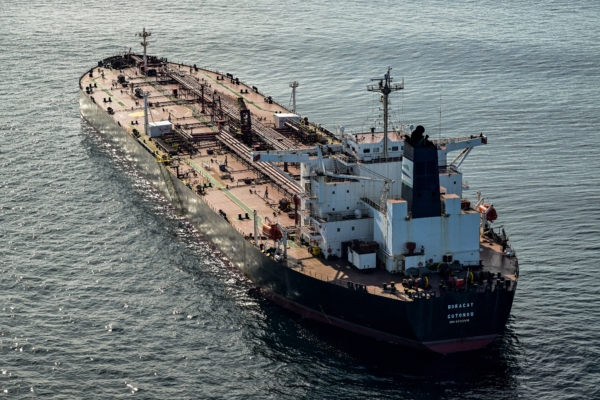
On December 15, the European Union officially announced the 19th round of sanctions targeting Russian oil interests (Council Decision L 2025/2588), focusing on traders and entities assisting Russia in evading Western sanctions to cut off the oil export revenue that funds Russia’s war in Ukraine.
The sanctions specifically target nine individuals and entities supporting the Russian oil tanker “shadow fleet,” including businessmen associated with Rosneft and Lukoil, as well as shipping companies managing the tankers. Since the outbreak of the Russia-Ukraine war, the EU has sanctioned over 2,600 individuals and companies in total.
The fundamental reason behind the latest sanctions on individuals and entities is that the EU has identified their active involvement in or support for helping Russia establish and operate a maritime network to evade Western sanctions, especially price caps and service bans, known as the “shadow fleet.”
Murtaza Lakhani, a Canadian-Pakistani oil trader and CEO of Mercantile & Maritime, was named in the sanctions for using vessels under his control to transport Russian oil, bypassing Western regulations requiring compliance with price caps for maritime services. This directly supports the activities of the “shadow fleet” in evading EU and G7 maritime service restrictions.
The EU Official Journal cited that Lakhani was sanctioned for facilitating the transportation and export of Russian oil, particularly from state-owned Russian oil companies.
It emphasized that “Murtaza Lakhani particularly controls vessels transporting crude oil or petroleum products originating from or exported from Russia.”
According to Reuters, Lakhani had close cooperation with Igor Sechin, CEO of a Russian oil company, and invested in the Vostok Oil project in the Arctic.
Vostok Oil is one of Russia’s largest emerging energy projects in the Arctic region, representing not only significant commercial interests but also deep ties between Lakhani and Russia’s core resource assets.
The EU also included Valery Kildiyarov, the Chief Financial Officer of Lukoil’s trading subsidiary, Litasco Middle East DMCC, on the sanctions list. He also serves as a manager at Alghaf Marine DMCC, another Lukoil business in Dubai.
Kildiyarov was targeted because these companies actively participated in supporting the transportation and trading of Russian crude oil and petroleum products.
Additionally, individuals such as Etibar Eyyub, Anar Madatli, and Talat Safarov linked to the trading company Coral Energy (now renamed 2Rivers Group) were also listed in the sanctions.
Coral Energy was one of the top Russian oil traders. Despite 2Rivers claiming to have largely ceased Russian oil trading in 2023 and dissolved in August 2024, its affiliates were sanctioned for their past support of the Russian oil system.
The EU’s latest sanctions measures prohibit EU citizens from engaging in any business dealings with the companies and individuals on the list, significantly reducing their reliance on Western shipping and insurance services.