
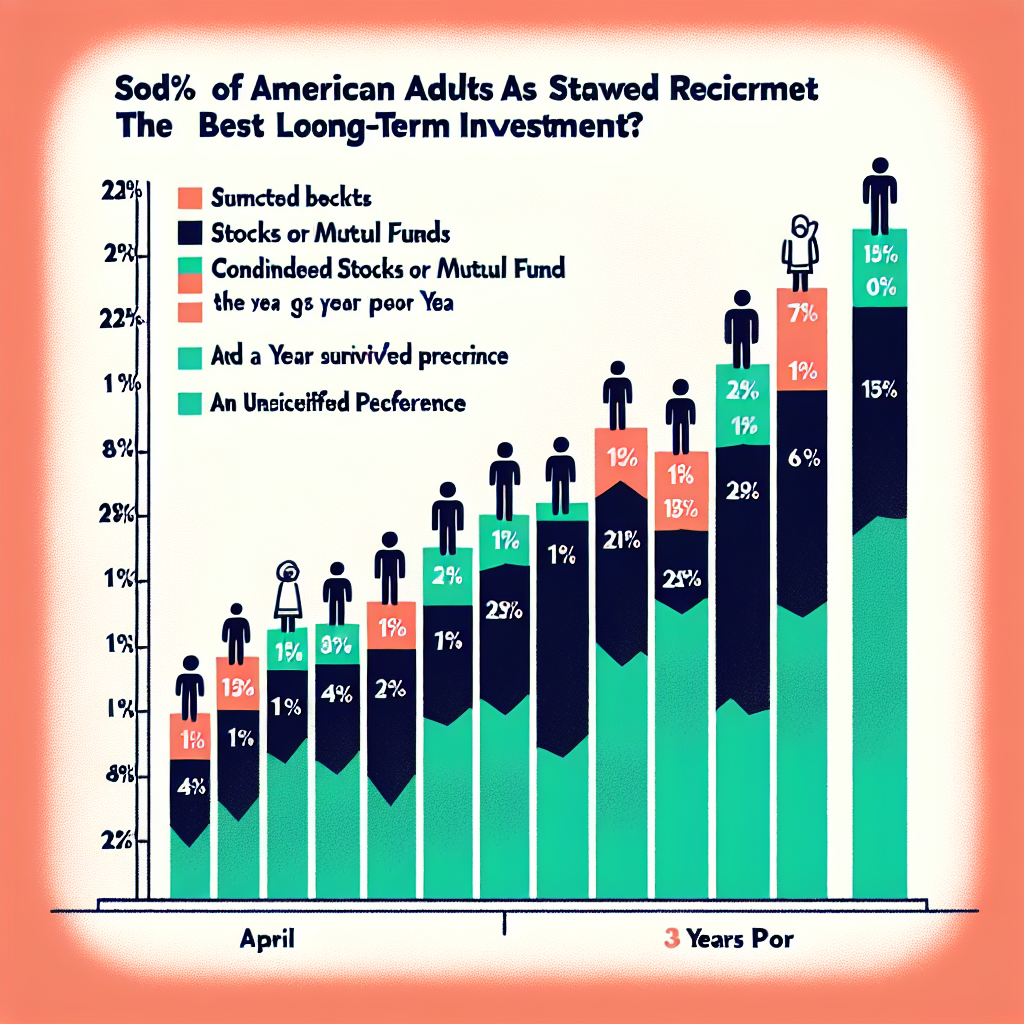
According to the latest Gallup poll in April, only 16% of American adults consider stocks or mutual funds as the best long-term investment, which has decreased from 22% at the same period last year. In 2023, this percentage was 15%, lower than 18% in 2022 and 26% in 2021. Nonetheless, 62% of American adults still hold stocks.
Gallup’s survey this year added a new question asking Americans whether they have invested in retirement plans [such as 401(k), 403(b), or IRA], with 59% of respondents indicating they have.
The proportion of adults owning stocks and participating in retirement plans is higher among wealthier, married, more educated, and older adults. Those with an annual income of $100,000 or more are more inclined to choose stocks and retirement plans, while those with lower incomes tend to opt for safer or more traditional options such as gold and savings accounts.
Moreover, the survey shows a slight increase in the popularity of gold as a long-term investment in 2025, with 23% of people considering this hedge asset as the best option, up from 18% in April last year.
Despite the increased attractiveness of gold as a long-term investment this year, the percentage is still below the record high of 34% set in 2011. During the years following the financial crisis, investors sought hedge assets amidst high unemployment rates, a sluggish real estate market, and market fluctuations.
37% of American adults believe real estate is the best investment, which is consistent with last year’s findings. Americans across all income levels view real estate as the best long-term investment, with similar proportions among low-income, middle-income, and high-income groups choosing real estate.
Low-income Americans tend to opt for safer investments, with 13% preferring savings accounts and regular deposits.
5% of people choose bonds, despite President Trump’s strong promotion of cryptocurrencies, only 4% of respondents choose this type of investment.
The latest survey was conducted from April 1 to April 14, covering 1006 adults, with a margin of error of 4 percentage points. The survey was mainly conducted after President Trump announced comprehensive tariffs on April 2, leading to a stock market plunge.
Subsequently, the market has rebounded significantly but still faces volatility.