
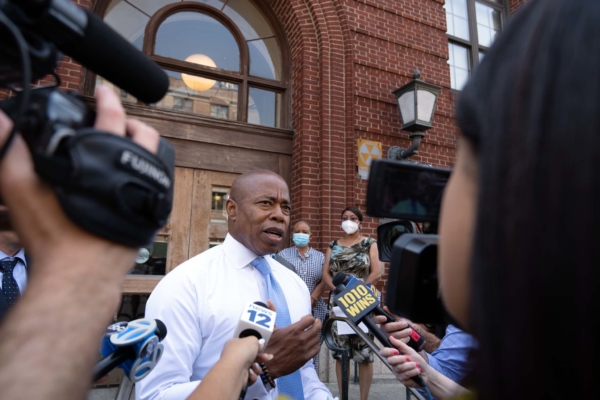
In the political arena of New York City, 2024 was a turbulent year: the incumbent mayor, Adams, faced federal prosecution, intense competition in the congressional elections, the passage of the “City of Yes” housing reform bill, and the cancellation and subsequent reduction of congestion pricing. Looking ahead to 2025, the focus will be on the mayoral election and the allocation of three casino licenses in the state.
The three previous mayors of New York City were easily re-elected, but the current mayor, Adams, is facing a tough battle. He is facing multiple charges including bribery, wire fraud, and illegal receipt of foreign donations, which have tarnished his reputation. Seven Democrats within the party have already voiced their intention to challenge him. The court is set to commence Adams’ corruption trial on April 21 next year, with the primary elections scheduled for June 24, posing two major challenges for him to overcome. Additionally, the city council will also see elections next year with 10 incumbent council members unable to seek re-election due to term limits, creating opportunities for new contenders.
The competition for the allocation of the three large casino licenses in the state of New York began as early as 2023, and it wasn’t until March this year that the state government established a clear timeline: the deadline for applications is in June next year, and licenses will be issued in June of the following year. Currently, 11 casino operators are vying for the three licenses, and the winners are expected to be announced by October next year.
Commercial magazine Crains predicts that as each casino license is expected to generate up to $2 billion in revenue annually, this competition is not only significant for the gaming industry but also impacts real estate development. Operators are sparing no expense in promoting and lobbying, making it one of the costliest battles in New York in recent years.
Finally, the state and city of New York took actions this year to address the housing crisis. The state legislature approved a budget in April, which included measures such as tax breaks under the 485-X provision for housing development, as well as tenant protection legislation like the “just cause eviction” act and easing office to residential conversions. It remains unclear whether the state government will introduce new policies next year. In December of this year, the “City of Yes” housing reform bill was also passed in New York City, easing zoning restrictions. Mayor Adams subsequently established a Charter Revision Commission and may propose further land use regulations next year to promote zoning changes in four communities, including Midtown South Manhattan, Jamaica in Queens, Long Island City, and Atlantic Avenue in Brooklyn, to add tens of thousands of new homes. With preliminary support from local council members, approval for these four plans is expected next year.
Currently, Governor Hochul’s approval ratings are low, prompting members of her party like Congressman Ritchie Torres to express interest in seeking the party’s gubernatorial nomination. Meanwhile, Republican Congressman Mike Lawler from the Hudson Valley region has also indicated interest in running for governor. Therefore, even though the gubernatorial election is not until 2026, the campaign may kick off early next year. In an effort to boost support, Hochul proposed the “Inflation Refund” plan this month, aiming to distribute a $3 billion tax refund in the fall of next year, with eligible residents in New York State possibly receiving up to $300 each.