
In the past year of 2024, the Chinese Communist Party (CCP) has persistently focused on “maintaining political security” and exerted its utmost efforts to safeguard the party, its power, and its survival. However, despite all its efforts, the CCP has been unable to prevent its imminent downfall.
Throughout 2024, Beijing witnessed a series of strange celestial phenomena: on May 11, an unprecedented red aurora appeared in the sky; on September 20, meteorites suddenly fell from the sky; on October 1 and 2, a comet that only passes every 60,000 years swept across the Beijing sky; on November 27, despite being past the Little Snow period, peach trees in various parts of Beijing bloomed; on December 10 at noon, three suns appeared in the sky; and on December 16 in the morning, the sky turned blood-red.
Historical records indicate that these are all ominous celestial signs. Surrounded by such foreboding omens, the CCP faced at least six major signs of decline:
The CCP places the utmost emphasis on political discipline, political standards, and political positioning, constantly demanding that party members and leadership elevate their political judgment, comprehension, and execution; strengthen their political awareness, stance, and responsibility; and clarify political principles, directions, and paths.
In short, the CCP places politics above all else.
However, on November 28, 2024, the CCP’s Ministry of National Defense spokesperson announced that General Miao Hua, a member of the Central Military Commission and Director of the Political Work Department of the Military Commission, was suspended for serious violations of discipline and law. This is not a minor issue; it concerns a major event affecting the entire military.
Miao Hua was the most important assistant to Xi Jinping’s “political military building,” responsible for selecting and appointing senior military leaders and serving as the overall political commissar of the entire military. According to expectations, Miao Hua should have been the most politically astute. However, Miao Hua’s downfall indicates that his political acumen was merely a facade put on for show, a deception.
Furthermore, Miao Hua took over his position immediately after his predecessor, former Director of the Military Commission’s Political Work Department, Zhang Yang, flagrantly violated political discipline and indulged in excessive corruption and lapses. Despite being supposed to learn from Zhang Yang’s lesson, Miao Hua not only failed to do so but repeated Zhang Yang’s mistakes. His deliberate violations of discipline and law compounded his errors.
Since Xi Jinping came to power in 2012, he elevated and placed trust in two Directors of the Military Commission’s Political Work Department—Zhang Yang and Miao Hua—who respectively oversaw the military’s political work for 5 and 7 years.
As the saying goes, “If the upper beam is not straight, the lower beams will be crooked.” With two Directors of the Military Commission’s Political Work Department leading the way in undermining political discipline and standards, could the senior military leaders they assessed, promoted, and appointed be truly politically “absolutely loyal, absolutely pure, absolutely reliable”?
The answer is unequivocally no; it’s all a charade.
Following Miao Hua’s downfall, former Deputy Commander of the Land Forces You Haitao (Major General) and Southern Theater Navy Commander Li Pengcheng (Major General) were stripped of their National People’s Congress delegate qualifications due to serious violations of discipline and law. This indicates that they too have fallen from grace.
Around the time of Miao Hua’s downfall, news emerged of investigations into Army Political Commissar Qin Shutong (General), Navy Political Commissars Qin Shengxiang (General) and Yuan Huazhi (General), Armed Police Commander Wang Chunling (General), and Army Commander Li Qiaoming (General).
As Miao Hua’s case continues to escalate, more senior military leaders are likely to fall from grace.
In 2024, Xi Jinping, the highest leader of the CCP in politics, government, and military, saw his reputation plummet, ushering in a wave of anti-Xi sentiment.
On December 17, independent commentator Cai Shenkun posted a “Resolution and Joint Signature Letter Calling for Xi Jinping to Resign from Party, Government, and Military Leadership Positions” on an overseas platform X, purportedly written by “high-level individuals” within the CCP system. The letter lists 28 serious issues regarding Xi.
On December 18, Cai Shenkun published another “Anti-Xi Proclamation,” signed by “Huaxia Men,” from Hong Kong. The proclamation details the significant harm brought about by Xi since taking office in various areas such as politics, economics, diplomacy, private enterprises, and people’s livelihoods, calling on all Huaxia men to overthrow the authoritarian regime and urging Xi to resign and step down early to avoid the fate of a coup, military revolt, or popular uprising.
On December 19, Cai Shenkun further shared an article titled “Nationwide Anti-Xi Wall-Writing Movement,” urging all citizens, especially the unemployed and indebted property buyers, to fill the streets of China with slogans demanding “Xi Jinping Step Down.”
On December 20, Cai Shenkun received a “Proclamation Against the CCP” written in classical Chinese and signed by “Zhang Mie Gong.” The author of the article believes that China’s problem is the CCP’s problem; without the CCP, there would be no problem in China. The article calls for unified efforts to overthrow the CCP, emphasizing the critical moment is now and echoing criticisms against Xi Jinping.
On December 23, independent commentator Du Zheng wrote an article in Taiwan’s “Shang Bao,” stating that after Xi Jinping entered his third term, amid chaotic governance, the economy has plunged into a severe crisis, leading to heightened tensions in Beijing’s political landscape. Both the CCP and Xi have become targets of criticism from both within and outside the establishment, with anti-Xi and anti-CCP sentiments becoming mainstream in China.
After 12 years of Xi’s anti-corruption campaign, which saw the takedown of over 600 “tigers,” the more tigers Xi caught, the more corrupt money flowed in.
In 2024, the number of vice-ministerial-level officials and other senior central government officials investigated and dealt with by Xi amounted to 57, marking the highest number of “tigers” taken down since the 18th National Congress of the CCP.
By December 25, 2024, 36 corrupt officials worth billions had been sentenced by the CCP, the highest number in a single year since the 18th National Congress.
The list of the corrupt officials and the amounts involved from the aforementioned 36 individuals are as follows: [36 officials and their respective embezzlement amounts are listed in detail].
2024 highlighted the pervasive issue of billion-dollar corruption cases within the CCP.
On December 23, the Wall Street Journal revealed that a consultancy firm had prepared a report for Xi Jinping earlier in the year, warning that failure to adopt measures to boost the economy could lead China into a spiral of monetary tightening. However, Xi remained unmoved by the report, stating, “What’s wrong with deflation? Wouldn’t everyone like cheaper prices?” Xi’s attitude on deflation has made the CCP decision-making circles wary of discussing the topic.
In present-day China, caught in a vicious cycle of monetary tightening, burdened by debt, money shortage woes are widespread, with some places even unable to pay government employees. The lives of ordinary people have swiftly transitioned from “good days” a few years ago to “tight days” and are now rapidly becoming “difficult days.”
Throughout 2024, the CCP mainly relied on printing money to “resolve” its debt crisis.
During the Central Economic Work Conference on December 11-12, it was projected that China’s fiscal revenue for 2024 would hit 20 trillion RMB, while expenses would soar to 40 trillion RMB, including 10 trillion in local government debt and 11 trillion in national debt. In other words, China primarily sustained itself through borrowing to navigate through 2024.
Where did the money come from? Printing more currency. Former head of the China Construction Bank’s Investment Banking Division Zhai Shanying analyzed, “The logic of printing money is to pay off debts, but the authorities claim they are resolving debts when in reality, they aren’t. The printed money eventually circulates back to banks, leaving the general public without any money.” He stated that printing money wouldn’t lead to inflation but rather exacerbate deflation.
In 2024, seizing fines and confiscations became a significant method for the CCP to “grab” funds.
According to data from the Ministry of Finance, non-tax revenue amounted to approximately 3.7 trillion RMB in the first 11 months of the year, a 17% increase year-on-year. This surpasses the total non-tax revenue of 3.566 trillion RMB for the entire year of 2023. In October and November, non-tax revenue growth rates hovered around 40%, setting record highs, reflecting the frenzy of confiscating income across the country. By the end of 2024, non-tax revenue exceeded 4 trillion RMB.
The CCP’s draconian tax policies have burdened the Chinese people with the heaviest tax burdens in the world.
As China’s economy continued to decline in 2024, the CCP resorted repeatedly to lavish spending abroad.
On September 5, Xi pledged at the China-Africa Cooperation Forum to provide African nations with 360 billion RMB in financial support over the next three years. On November 19, at the G20 summit, Xi announced an additional financing of up to 780 billion RMB for the Southern Belt and Road Initiative.
The economic crisis posed a major challenge for the CCP in 2024. However, the CCP’s approach doesn’t align with allowing the market to play a decisive role in resource allocation but rather with the centralization of power dictating resource allocation to address issues. Power flowed into the stock market, real estate market, bond market, leading to reckless behavior and a troubling entwinement of power and wealth.
Despite the CCP introducing various market support measures in 2024, they proved largely ineffective.
The political crisis, economic crisis, and the concatenation of both steer toward social crisis.
On New Year’s Day of 2024, a massive shooting incident occurred in Zhuke Village, Juxian County, Rizhao City, Shandong Province, resulting in the killing of 21 villagers. Subsequently, incidents of murder, violence, and indiscriminate killings have continued throughout the year.
A preliminary analysis of the vicious cases of murder and injury in China from February 9 to November 19 recorded a total of 101 cases, distributed monthly as follows: [monthly breakdown of cases listed].
These incidents varied in nature, but all stemmed from the growing discontent and rising animosity fueled by the CCP’s long-standing repression and deception, heightening the collective wrath.
The publication of the Nine Commentaries on the Communist Party in 2004 exposed the CCP’s “fake, evil, violent, anti-heaven, anti-earth, anti-human, anti-divinity” essence through multifarious illusions, unveiling the party’s true nature and avalanche of sins.
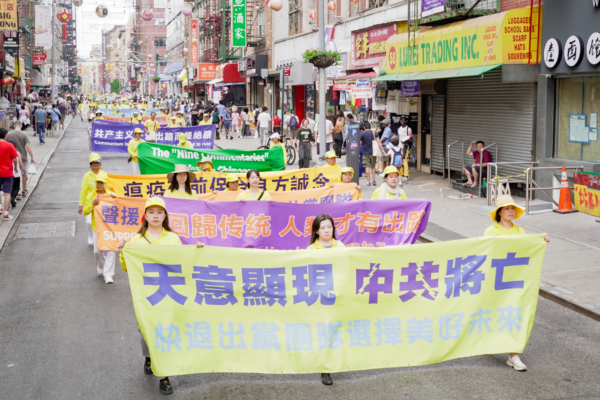
With the wide dissemination of the Nine Commentaries, a global wave of people choosing to withdraw from the CCP, its youth organizations, and affiliated bodies emerged, known as the “Tuidang Movement”. According to the Epoch Times’ Tuidang website, to date, 440 million Chinese people have withdrawn from the CCP.
The Tuidang movement among the Chinese people signifies a definitive break from the debt-laden CCP, steering away from Marxist-Leninist descendants, returning to their roots as descendants of Yan and Huang; rejecting the CCP’s path of “falsehood, evil, discord,” and instead embracing the universal principle that good and evil will be repaid by heaven, choosing virtue over evil; refusing to take the blame for the CCP, avoiding being scapegoats for its troubles, reclaiming their identities, and aligning with the divine.
The withdrawal of 440 million Chinese people is fundamentally shaking the CCP’s grip on power. In the Tuidang movement, the CCP’s red ship is on the brink of collapse, heading towards total overthrow.
Why did the CCP face the six major signs of decline in 2024?
The key reason lies in the fact that as the world’s largest killing and most corrupt party, the CCP has accumulated sins of a magnitude beyond redemption.
Now, it is time for divine justice to settle accounts with the CCP. In 2025, the CCP may face a great disaster.