
At a time when China’s real estate industry is deeply declining, leading property developers are accelerating their “slimming down” efforts for self-rescue. Real estate giant Vanke recently disclosed that its first-quarter losses continue to widen, and it has announced a complete exit from its long-established pig farming business, signaling a clear message of shrinking non-core sectors under financial pressure.
On April 29th, Vanke released its 2026 first-quarter financial report. The report indicated that the company incurred a net loss of 5.95 billion yuan in the quarter, with operating income dropping by nearly 24% year-on-year, and contract sales amount experiencing a more than fifty percent decline. With the ongoing sluggish sales in the industry and pressure on payments, Vanke’s operational challenges are further evident.
The accumulated losses have been a persistent issue. The company’s previously disclosed 2025 annual report revealed a staggering full-year net loss of 88.56 billion yuan, marking the largest loss since its IPO. When combined with earlier performances, the accumulated losses over two years have exceeded 138 billion yuan.
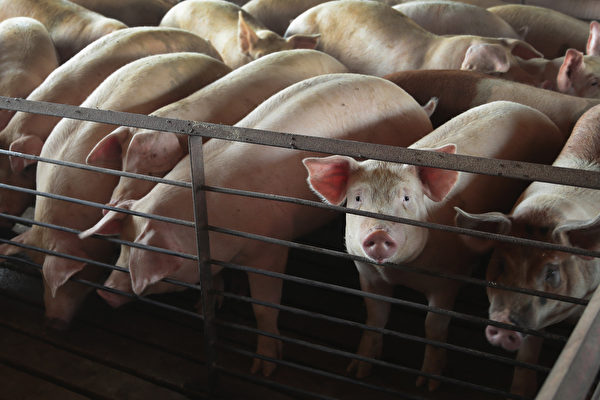
On the evening of April 29th, Vanke suddenly announced the transfer of its core pig farming assets under Huan Shan Group for 3.29 billion yuan, completely exiting the breeding business.
Vanke’s indirectly wholly-owned subsidiaries collectively held 99.4130% of the equity, corresponding to a listing floor price of 32.7 billion yuan; the remaining 0.5870% equity was transferred by another shareholder concurrently. After the transaction is completed, Vanke will completely withdraw from Huan Shan Group, with the company no longer being included in Vanke’s consolidated financial statements.
Vanke stated that the development of the breeding business requires more capital, but the company is currently under liquidity pressure, making it difficult to support the growth of this business.
This sale is seen as an important move to retrieve capital and optimize asset structure.
Looking back, Vanke’s foray into pig farming began when the real estate market was still booming in 2018. That year, the company started internally planning to enter the breeding sector; in November 2019, Vanke officially entered the shareholder list of Huan Shan Group: its wholly-owned subsidiary, Zhuhai Qinshan Jiaye, directly held 21.25% of the shares and also established five joint venture enterprises with the original shareholders, indirectly controlling 15% of the equity, marking an initial entry into the pig farming field.
Around 2020, real estate companies venturing into pig farming briefly became a market trend, with Vanke being considered a representative case.
In July 2020, Vanke’s management officially took over Huan Shan Group and gradually assumed operational management rights; in the first quarter of 2021, it acquired a 51% stake in Huan Shan Group, eventually increasing its holdings to almost full control.
However, with the real estate industry entering a period of deep adjustment, Vanke’s operational pressures have continued to escalate, leading to the gradual contraction of its diversified non-core businesses.
Vanke’s decision to exit now is closely related to the overall downturn in the breeding industry. Data shows that as a leading pig farm in Shandong, Huan Shan Group had an output of over 2 million pigs in 2025, ranking among the top 20 in the industry. In 2024, its net profit reached 656 million yuan, but in 2025, due to a sharp drop in pork prices, the net profit shrank to 450 million yuan.
In April 2026, the national average price of live pigs fell below 5.2 yuan per kilogram, almost halving from its peak eight years ago. Breeders were incurring over 400 yuan in losses for each pig sold, with some operators in Shandong experiencing losses of up to 800,000 yuan per clear-out. The industry faced sharp contradictions of overcapacity: the output of large-scale pig farms increased against the trend by 20%, with the total scale exceeding 200.5 million pigs. For real estate companies already under pressure, the financial significance of continuing to hold such businesses is diminishing.
The sale of pig farming assets is not an isolated event but rather part of Vanke’s recent series of “deleveraging and risk reduction” operations. Vanke stated in its announcement that despite its full efforts to embark on self-rescue this year, having completed 33.21 billion yuan in public debt repayments, risks have not been completely resolved due to various factors, and its operational development still faces severe challenges. Additionally, the concentration of public debt repayments has further increased the group’s liquidity pressure.
During the same period, Vanke has also been expediting the disposal of other assets, including selling the assets package of Guangzhou Yuncheng parking lot, and revitalizing existing projects through adjustments in the nature of land and relaxation of self-holding restrictions.
In addition, as early as August 2025, Vanke had divested its snow and ice business, transferring its related assets such as Songhua Lake International Resort and Beijing Wan Bingxue Sports to the joint capital platform of China Travel International, completely exiting the ice and snow tourism sector.
Chinese media noted that Vanke’s exit from pig farming is both a practical choice for corporate self-rescue and reflects a deep transformation in the entire real estate industry from expansion to contraction.