
Two New Jersey residents have recently confessed to engaging in a large-scale art forgery scam, allegedly producing and selling over 200 counterfeit artworks by renowned artists across the United States, deceiving collectors and involving a minimum of 2 million US dollars.
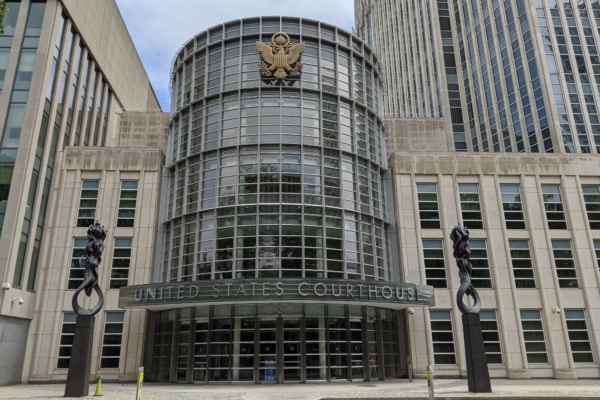
The Eastern District of New York’s federal prosecutor’s office stated that 50-year-old Erwin Bankowski and his 26-year-old daughter Karolina Bankowska admitted to conspiring to commit wire fraud and falsely labeling the origins of Native American art at the Brooklyn Federal Court. The duo could face up to 20 years in prison and are required to pay at least 1.9 million US dollars in restitution.
Prosecutors revealed that between 2020 and 2025, the father-daughter pair submitted over 200 forged art pieces to galleries and auction houses across the United States, claiming these works were created by various world-renowned artists such as Andy Warhol, Pablo Picasso, Banksy, Raimond Staprans, Richard Mayhew, and the Native American artist Fritz Scholder.
To make the fake paintings appear more authentic, the defendants meticulously forged provenance records, concocting false collection histories and asserting that the works had previously belonged to private collectors associated with the artists, closed galleries, or non-existent companies.
It was stated that they deliberately selected defunct galleries and companies as the “sources” to make it harder for buyers to verify. They even bought antique books, used old paper to create fake gallery stamps and certificates, which were then affixed to the counterfeit works to further enhance credibility.
These fake paintings were sold through galleries and auction houses, with individual prices reaching up to 160,000 US dollars. For example, a counterfeit Richard Mayhew piece was sold for as much as 160,000 US dollars; a forged Raimond Staprans piece sold for 60,000 US dollars; a counterfeit Banksy work was priced at 2,000 US dollars; and a fake Andy Warhol piece sold for 5,500 US dollars.
Federal prosecutor Joseph Nocella Jr. stated that the defendants had posed as high-end art dealers for years but were essentially “peddling lies on canvas.”
The Federal Bureau of Investigation (FBI) emphasized that this case not only duped buyers but also undermined the credibility of the art market, especially causing severe harm to Native American artists. The United States Indian Arts and Crafts Act Investigation Unit expressed that selling fake Native American art is not only fraudulent but also undermines the integrity of the entire cultural market.
The sentencing for this case is currently pending judicial deliberation.